





 Portuguese
  English
  Spanish
  3 min of reading
  1 comment


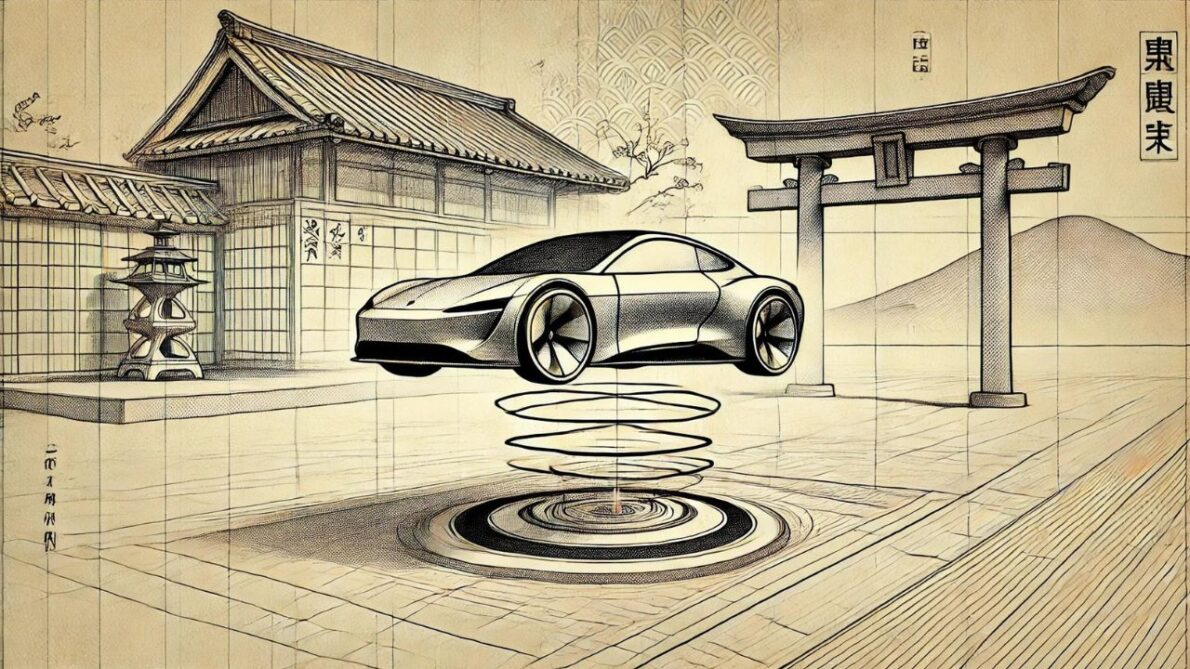

The Okinawa Institute of Science and Technology Reveals Innovation That Could Revolutionize the Automotive Industry, But Still Faces Huge Challenges Before Becoming Reality.
The Japan has taken a step forward in the technological race with the presentation of the first prototype of a maglev car, a technology that, despite the appearance of a science fiction movie, is beginning to take shape in the real world. Developed by a group of researchers at the Okinawa Institute of Science and Technology (OIST), the project promises a revolution in the automotive sector, but it is still far from becoming something we will see on the streets in the near future.
The prototype uses a levitation system based on diamagnetic materials, such as graphite, in conjunction with powerful magnets. This arrangement allows the vehicle to float above specially prepared magnetic tracks, eliminating the friction that typically exists between the car and the road. The idea is that by removing this friction, the maglev car could drastically reduce energy consumption, improve efficiency, and decrease mechanical wear. On paper, all of this is incredible, but practice reveals a series of challenges that still need to be overcome.
Concept of a Maglev Car
Although the concept of a maglev car from Japan is revolutionary, the reality is that it still faces significant obstacles before becoming viable. One of the biggest problems is the need for a completely new infrastructure to accommodate these vehicles. Without specialized magnetic tracks, there is no way for the car to levitate, which would mean adapting entire cities to allow for its mobility. And that is just the beginning.
-
600 km with three Chinese plug-in SUVs, same mode and air conditioning on: Jaecoo 7, BYD Song Plus, and Haval H6 hit the road, and the pump reveals who was truly the most economical.
-
With a price almost R$ 100 thousand lower, the Haval H9 surpasses the SW4 for the first time in March, but Toyota still leads in the accumulated total for 2026; the Chinese SUV bets on technology and premium finishing to compete at the top.

-
6 used cars that cost less than a new Honda CG 160 Titan and still provide trunk space, four seats, and comfort that many new motorcycles cannot offer.
-
Caoa Chery Tiggo 5X skyrockets in sales in Brazil: a 2,318% increase and waiting lists of up to 4 months to acquire the model.

The current prototype is still small and faces difficulties scaling up. Large-scale implementation would require massive investments, not only for the construction of the tracks but also for the adaptation of the entire urban infrastructure. And we cannot forget the technical issues that still need to be resolved, such as vortex damping – small whirlwinds of air that form around the car as it levitates, causing energy loss and instability.
Japan May Have Opened the Doors
The Japan may have opened the doors to a new era with the development of the maglev car, but it is still early to predict whether this technology will become a reality in everyday life. The transition to electric vehicles is already a significant challenge, and the introduction of cars that require completely new infrastructure seems a distant goal, at least for now.
Despite the difficulties, the potential of this innovation cannot be denied. If successful, it could not only transform the automotive industry but also rewrite the rules of energy efficiency and sustainability in transportation. However, as it stands now, the maglev car is still more of a promise than a practical solution for mass transit.
Japan Took an Important Step in Developing a Technology
The Japan took an important step in developing a technology that, if the challenges are overcome, could redefine the future of mobility. However, any excess excitement needs to be tempered by the reality that we are talking about an innovation that is still at its initial goals. The future of the maglev car is undoubtedly fascinating, but we still need time – and many advancements – to see where this journey in transportation takes us.








Gente!! Há poucas semanas , a Vidente Charlene do Brasil, sem conhecimento tecnológico sem contato com empresas de nenhum pais ,teve a visão espiritual em vídeos, que breve haveria carros flutuantes e alguns aviões, não se manteriam no alto. Os japoneses estão mantendo a palavra de Deus também na tecnologia, como veio por Deus, será para a ordem é paz. Com essa nova tecnologia teremos a transformação do nosso planeta na evolução da humanidade, aqueles que sobreviverem, na transformação de tudo, que serão muito beneficiados para um mundo novo, efiente, prático e melhor para todos todos com os carros japoneses flutuantes. VIVACO CARROBDE DEUS!!!