





 Portuguese
  English
  Spanish
  5 min of reading
  0 comments


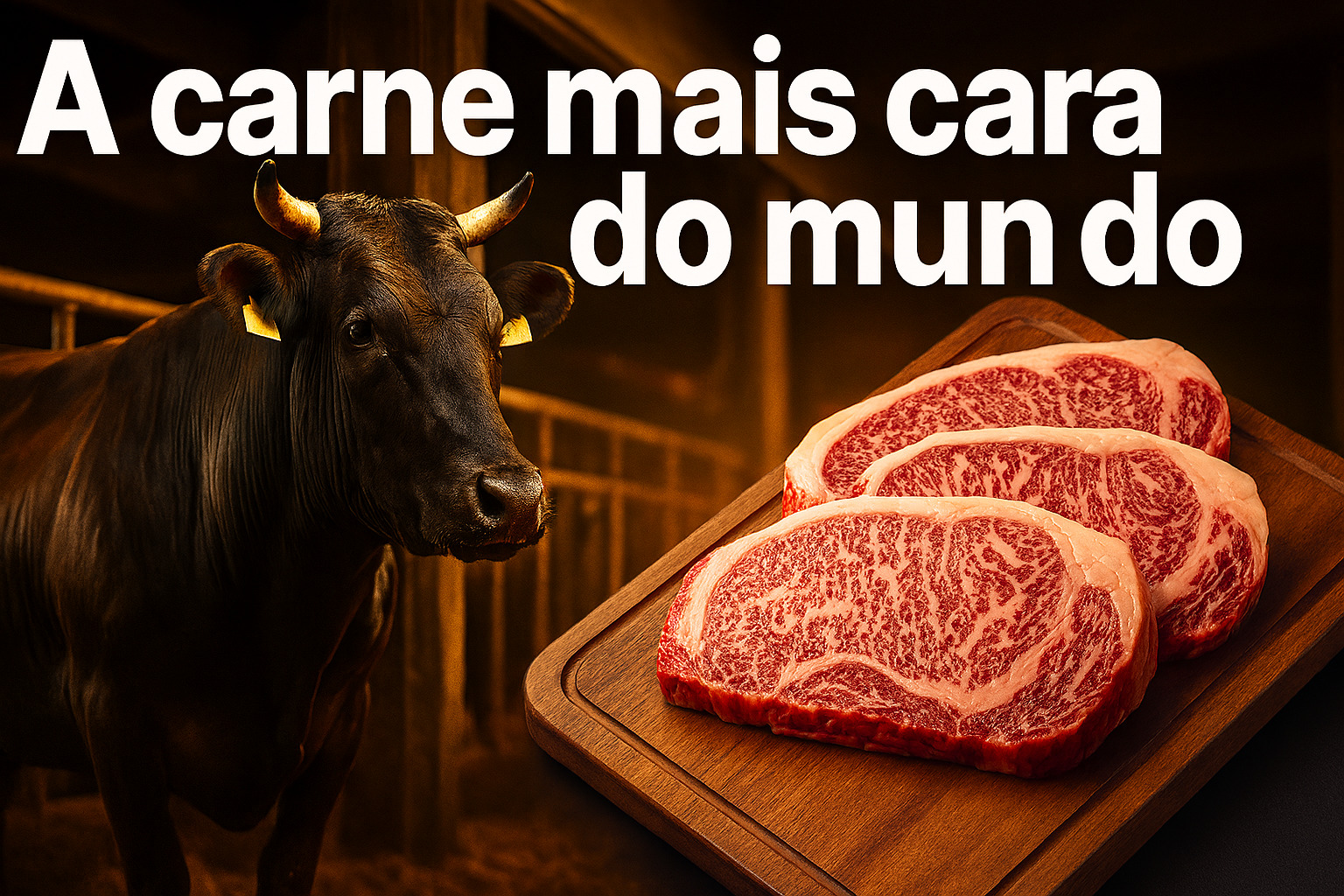
The Most Expensive Meat in the World: How Japan Produces the Rare Wagyu Kobe, with Fewer Than 5 Thousand Animals Per Year, Extreme Strictness, and Prices Above R$ 6 Thousand
Japan has always cultivated a reputation for taking any product to the limit of perfection, whether in engineering, technology, or gastronomy. But no symbol represents this cult of excellence more than Wagyu Kobe, the meat that exceeds R$ 6 thousand per kilogram, has minuscule production, and follows a breeding system so strict that it has turned the animal into a cultural heritage of the country. What few people know is that it is not just about marbled meat or tender texture: behind this billion-dollar market lies a chain of genetics, tradition, and absolute control that has been honed for over a century.
And it is this combination of technical rigor, extreme scarcity, and standards of classification that border on the impossible — that explains why Japan produces fewer than 5 thousand Kobe animals per year, even though it has an industry of about 300 thousand tons of Wagyu annually in total. Kobe is the rarest and most valuable fraction of this chain. There is no improvisation, there is no chance. Each animal is monitored from birth to slaughter and only receives the Kobe seal if it meets the requirements defined and supervised by the Japanese government.
It is a universe where every detail matters, and where the Tajima-Gyu genetics, exclusive to Hyogo Prefecture, has become synonymous with precision. Therefore, understanding why Wagyu Kobe is the most expensive meat in the world requires going beyond the price: it is diving into a breeding engineering that has become a global reference.
-
A single tank in the lake of a plant yields 90,000 kilos of tilapia every six months, and the company wants to multiply this by 500 to take Mato Grosso do Sul from 11th place to the top in the country.

-
Russia recognizes Brazil as free from foot-and-mouth disease without vaccination on June 10, 2026, strengthens Brazilian agribusiness, and paves the way for more meat, fish, nuts, and new business with a billion-dollar market.

-
Fish farming becomes the new giant of Brazilian agribusiness and transforms tilapia into the “water ox,” in a chain that already moves R$ 11 billion per year and exceeds 1 million tons produced.

-
A family from Martins, in the interior of RN, planted seeds in their backyard that no one remembered where they came from and harvested a green and yellow fruit with the face of the Brazilian flag; the nickname “jerimum da Copa” caught on before they discovered what had actually grown there.


The Genetic Engineering Behind Wagyu Kobe: What Makes This Meat Unique in the World
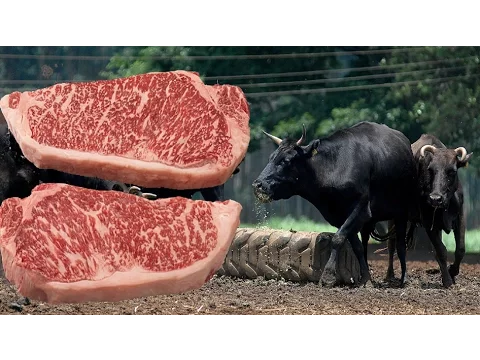

The term “Wagyu” literally means “Japanese cattle,” but within this group, there is a rare subdivision: Tajima-Gyu, considered the gold standard of cattle genetics in the country. It is from this cattle that Kobe Beef originates.
Since the 19th century, families of breeders have maintained tracked lineages, controlled breeding, and preserved specific characteristics that result in the most uniform marbling in global livestock.
The marbling — the intramuscular fat — is not merely an aesthetic visual effect. It completely alters the melting point, flavor, and texture. Studies from the Kobe Beef Association show that the fat cells of this cattle have a melting point of around 26°C, much lower than that of common breeds, which creates the sensation that the meat “melts” in the mouth.
This does not happen by chance: it is the result of decades of selection, controlled crossbreeding, and a national strategy to make Wagyu the culinary showcase of Japan.
Breeding with Absolute Rigor: Controlled Feeding, Monitored Environment, and Extended Fattening Time
The breeding cycle of Wagyu Kobe is three times longer than that of conventional cattle. While European cattle are slaughtered between 16 and 22 months, Tajima-Gyu reaches slaughter between 28 and 32 months, after an extended fattening period that improves marbling and increases the energy density of the cuts.
The feeding follows a protocol that includes corn, rice bran, barley, and carefully balanced vegetable by-products.
There are no folkloric secrets or traditions invented on the internet: the difference lies in the total control of nutrients, the low stress rate, and the monitoring of growth in almost micrometric cycles.

Moreover, each animal has an individual ID that records weight, age, origin, feeding, and sanitary conditions. Everything is audited by the Ministry of Agriculture of Japan (MAFF), one of the most rigorous bodies in the world regarding animal protein control.
Why Is Kobe Beef So Rare: Rules That Few Animals Can Meet
To officially receive the “Kobe Beef” seal, the animal must meet nearly impossible criteria. Among them:
• be of the Tajima breed,
• be born, raised, and slaughtered in Hyogo,
• be a castrated male or virgin heifer,
• present marbling BMS 6 or higher,
• have a carcass weight between 230 and 470 kg,
• be classified as A4 or A5, the top of the Japanese system.
It is not enough to be Wagyu. It is not enough to come from the best lineage. The carcass needs to achieve a score that represents less than 0.6% of all Japanese cattle evaluated annually. That is why only 3 to 5 thousand animals per year officially receive the Kobe seal. The scarcity is real and widely recognized.
The Price That Impresses the World: Cuts Exceed R$ 6 Thousand Per Kilo and Reach Even Higher Values in Premium Restaurants
The value of Wagyu Kobe is a direct consequence of the limit of supply. Cuts like ribeye and sirloin can reach US$ 800 to US$ 1,000 per kilogram (between R$ 4 thousand and R$ 6 thousand at the current conversion) in authorized markets. In restaurants, small portions of 120 to 150 g easily exceed US$ 200.
And there is an important detail: until 2012, Japan did not allow exports of Kobe Beef. This further increased the global desire for the meat, which was restricted for years only to the domestic market. Today, countries like the USA, Singapore, and Hong Kong receive minimal quantities, always audited.
The scarcer it is, the more expensive. And the more expensive, the more Kobe Beef reinforces the image of exclusivity that has made it the ultimate symbol of Japanese gastronomy.
The Billion-Dollar Industry That Sustains the Tradition: Japan Produces 300 Thousand Tons of Wagyu Per Year, but Kobe Is the Rare Gem
Although Kobe is the star, Japan is a giant in the Wagyu market as a whole. The country produces approximately 300 thousand tons per year, according to MAFF, and drives a high-value sector focused on export, culinary tourism, and international prestige.

Within this machinery, Kobe occupies the most noble space. It functions as the flagship of Japanese livestock and reinforces the image of a country that transforms breeding processes into applied science, tradition, and luxury marketing.
The result is a chain where the value lies not only in the meat but in the reputation built over decades.
How Japan Transformed Wagyu Kobe Into One of the Most Iconic Products on the Planet
The case of Wagyu Kobe shows how Japan uses technology, standardization, and cultural heritage to create high-value products. There is no improvisation. There is method. Limited production ensures scarcity and control.
The rigor of quality ensures consistency. And international marketing does the rest, leading consumers to pay exorbitant figures for one of the rarest and most exclusive foods available in the global market.
In the end, Wagyu Kobe is not just meat: it is an experience, a preserved tradition, and a showcase of the Japanese ability to transform any process, even the oldest, like livestock raising into the ultimate symbol of excellence.








-

-

-

-

16 people reacted to this.