





 Portuguese
  English
  Spanish
  5 min of reading
  0 comments


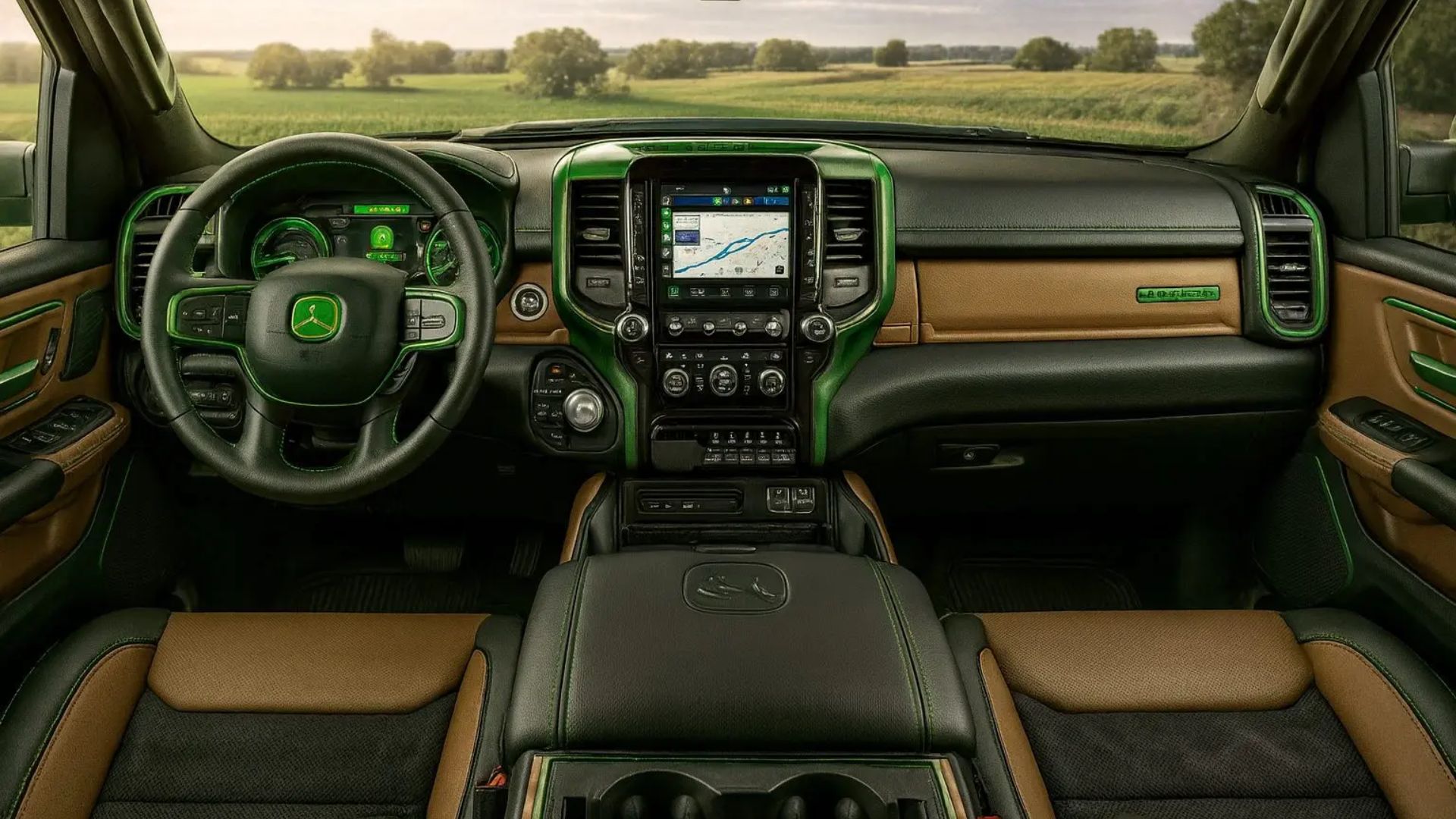
Concept Created With Artificial Intelligence Imagines a John Deere Pickup That Combines Agricultural Robustness and Automotive Sophistication, With Imposing Design, Embedded Technology, and Focus on the Brazilian Utility Market.
John Deere has become the subject of a conceptual study that imagines a pickup with visual and functional inspirations from the brand’s tractors, combining robustness for the field with the conveniences of a sports utility vehicle.
The proposal, created with the assistance of artificial intelligence by the portal Compre Rural and credited to designer Thiago Pereira, is not an official product nor has a release date, but it has reignited the discussion about the demand for a vehicle with agricultural DNA also aimed at daily use.
Conceptualized under the nickname “tractor-truck,” the project seeks to translate elements that are part of the identity of the American manufacturer — resistance, durability, and efficiency — into a pickup format.
-
The car stored for 38 years: when opening the barn door, what appears is breathtaking and looks like a scene from a movie!

-
Fiat works miracles in the Brazilian market, lowers the price of its 0 km hatch to R$ 69,990, reestablishes the model as the cheapest car in the country, and reignites the battle against Kwid and C3.
-
Chevette with cooking gas: How the gas cylinder ends up being used in cars clandestinely and why this makeshift solution can result in leaks, explosions, damaged engines, and seized vehicles.

-
Fiat launches the new 2027 Toro hybrid with 48V, 176 hp, an electric motor of 15.5 hp, a 0.85 kWh battery, up to 7% fuel savings, 8% fewer emissions, and possible exemption from IPVA.

Instead of anticipating specifications, the study focuses on demonstrating how these attributes could appear in a utility vehicle designed for dirt roads, farms, and urban mobility, preserving the technological appeal that today marks top-end pickups.
Design Inspired by John Deere Tractors
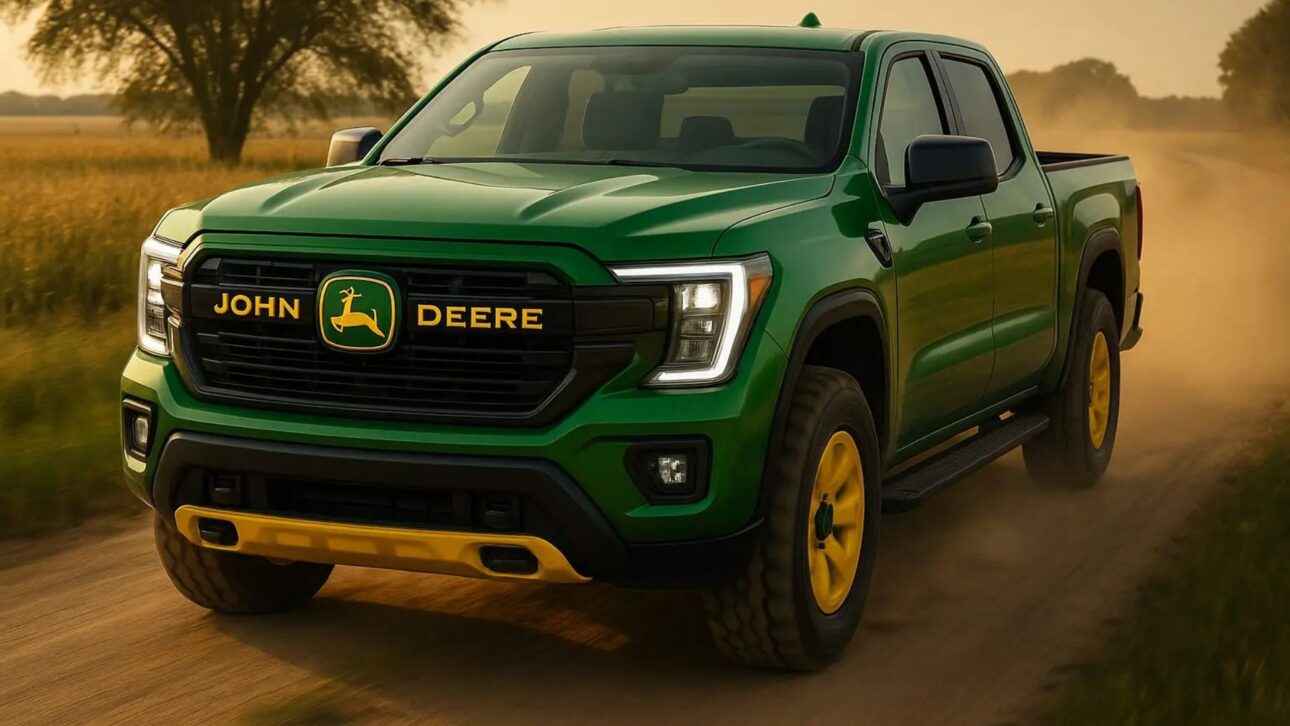
The visual reading is immediate. The body in green with yellow details, John Deere’s trademark, refers to the company’s tractors.
Volumetric lines, reinforced bumpers, and increased ground clearance create a set that evokes heavy equipment, while LED headlights and modern finishes bring the concept closer to what is seen in the market’s more equipped pickups.
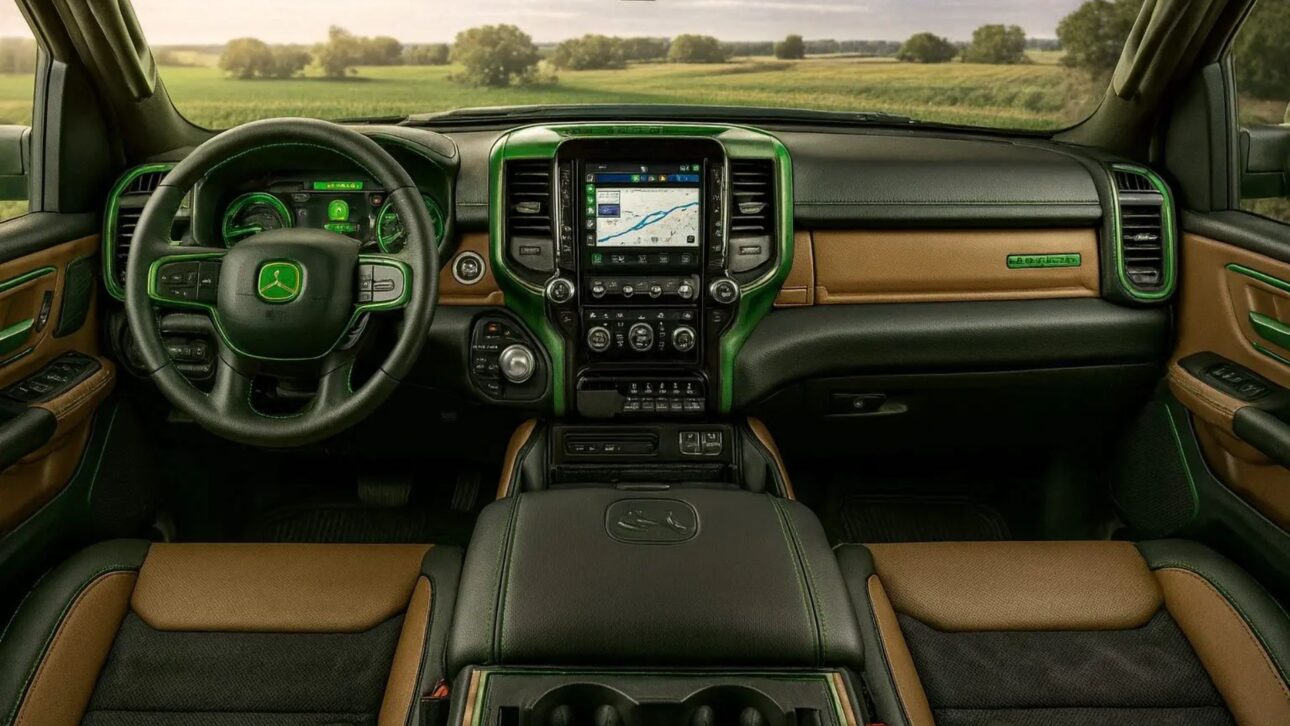
Inside, the cabin was envisioned as a workspace and travel environment.
The concept features a digital touch screen, connectivity, and GPS navigation, along with seats upholstered in materials resistant to heavy use.
The proposal seeks to balance ergonomics for long hours in the field with comfort and silence on board, attributes increasingly valued by those who alternate their day between the farm and the city.
Power and Performance in the Pickup Segment
Although there are no official technical data, the study aligns with the performance parameters that currently define the large pickup segment.
Models sold in Brazil and the United States, such as RAM 2500 and 3500 with turbo diesel engines, are benchmarks in high torque and towing capacity.
Versions like the RAM 1500 highlight power in gas engines and high-end finishes.
These levels help contextualize the type of power delivery and traction that pickup consumers expect when considering a vehicle suited for work and leisure.
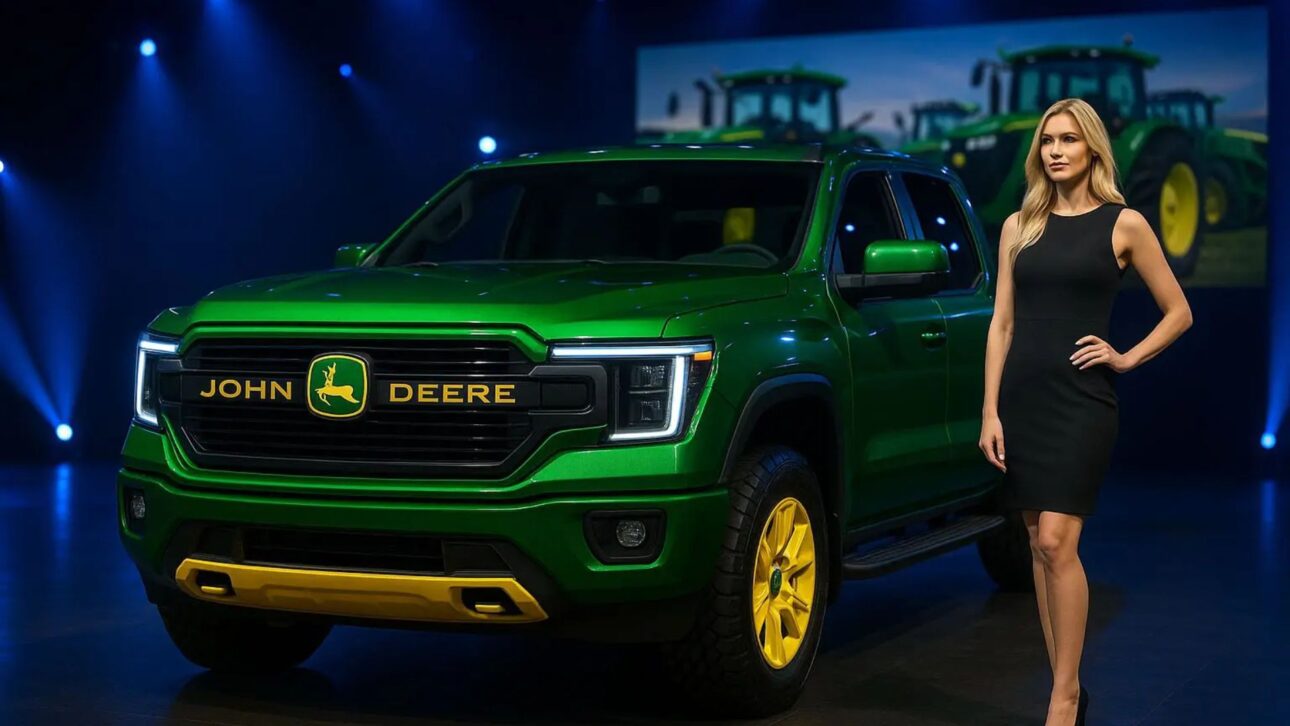
Reinforced suspension,wide tires, and 4×4 traction with electronic management appear in the conceptual material as components of a setup aimed at overcoming mud, gravel, and inclines, while maintaining stability on asphalt.
The combination, if ever adopted in a real product, would meet routines that include towing implements, transporting loads, and tackling varying terrain common in agribusiness operations.
Impact on the Brazilian Market
The discussion naturally reaches the Brazilian market.
The country has a tradition with pickups of various sizes and a substantial user base in the field.
In this context, the strength of the brand among rural producers matters: John Deere is associated with reliability and widespread after-sales support in agricultural regions.
A utility vehicle that carries this identity could win buyers who see value in transferring to the passenger vehicle the same robustness found in farming equipment.
Established competitors, such as Ford Ranger, Chevrolet S10, Toyota Hilux, and RAM, currently form the most visible core of the segment.
A potential model with direct inspiration from the agricultural environment would add a new ingredient to the competition.
Even though the material released by Compre Rural is just a design exercise, it points to a potential space: pickups that engage with the aesthetics and function of field machinery, without sacrificing connectivity and refined finishes.
Agro and Automotive Industry Convergence
There is also a symbolic component.
The approach between agro and the automotive industry gains strength as connectivity, telematics, and off-road assistance technologies migrate from heavy machinery to passenger vehicles.
The “tractor-truck” concept explores this frontier, imagining a pickup that functions as an extension of the “command center” that many producers already have in their tractors and harvesters, integrating everyday steering wheel usage with parts of the digital solutions employed in the fields.
Another point that helps explain the impact is the visual language.
The use of AI enabled renderings with a high degree of realism, facilitating the public’s understanding of how a “John Deere-style” pickup would look if it hit the streets.
Without data on engine specifications, weight, load capacity, or consumption, the focus remains on the design, suggested ergonomics, and anticipated usage scenarios — from the gate inwards and outwards.
A Concept That Provokes Debate
This framing avoids technical projections while highlighting an essential aspect of the pickup market: versatility.
Rural producers, service providers, and urban users who value a high driving position and spacious bed are increasingly seeking equipment that delivers performance with luxury comfort.
It is at this intersection that the concept attempts to position itself, with a visual discourse that blends tractor strength and typical conveniences of modern SUVs.
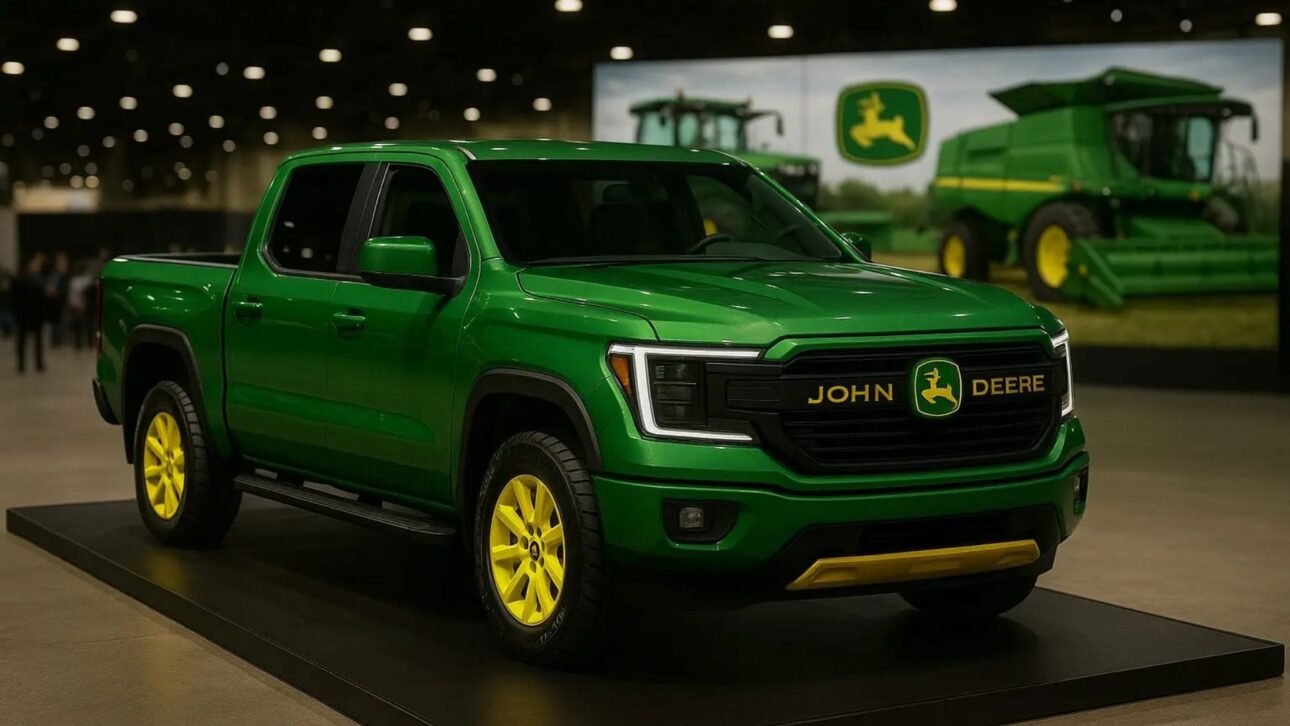
In practice, what exists for now is a visual concept by Compre Rural/Thiago Pereira, inspired by John Deere’s iconography and aimed at provoking discussion.
There are no announcements from the manufacturer, nor a timeline, price, or confirmed technical features.
However, given the public’s interest, it signals that the idea of a pickup with an “agricultural accent” resonates with Brazilian consumers accustomed to blending work and leisure in the same vehicle.
Until official communications emerge, the proposal serves to test perceptions: to what extent can the design associated with agricultural machinery migrate to a mixed-use utility vehicle without losing practicality?
And what would the consumer’s response be to a product that openly bets on the aesthetics and values of the field?
If this study came to life as a real project, would you consider putting a John Deere-branded pickup in your garage, or would it be more of a miss in your farming routine?







-

-

-

-

-

-

106 pessoas reagiram a isso.