





 Portuguese
  English
  Spanish
  6 min of reading
  0 comments


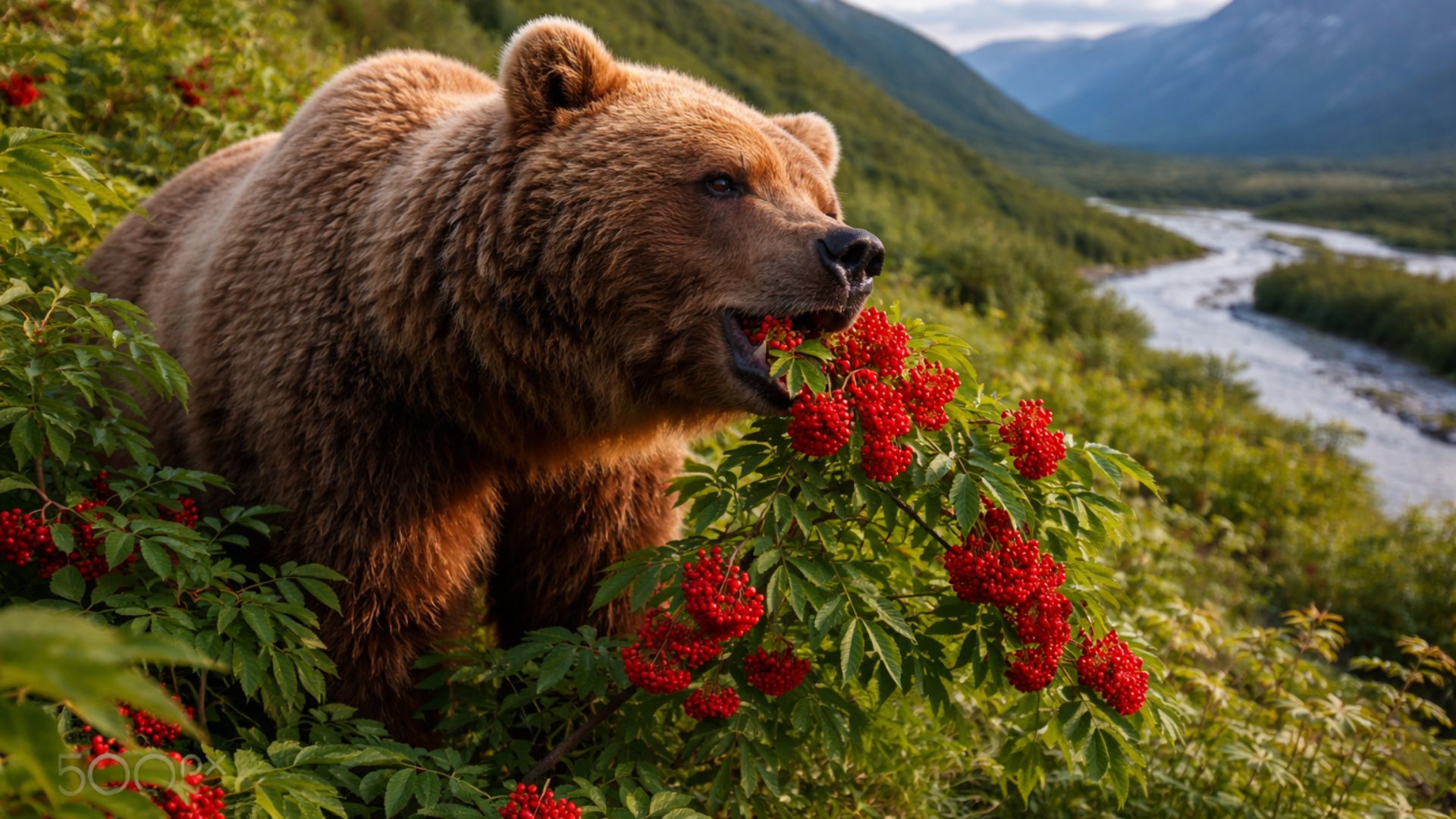
Icon Of Alaska Gains New Reading When Bears Swap Fishing For Berries On The Slopes And Change Nutrient Circulation Between River And Land In A Change Registered By Scientists In Kodiak, Where Natural Cycles Align In Unusual Ways And Reorganize The Search For Food.
The image of bears catching salmon in shallow streams is one of the most repeated icons of wildlife in Alaska.
In Kodiak, an archipelago in the Gulf of Alaska known for housing some of the largest brown bears in the world, researchers recorded a striking contrast: during certain periods, even with rivers full of migrating salmon, some bears simply stopped appearing on the banks and began to concentrate on the slopes, where the food supply was different.
The behavior was not described as a lack of fish.
-
He started running at 66 years old, broke records at 82, and is now a subject of study for having a metabolic age comparable to that of a 20-year-old, in a case that is intriguing scientists and inspiring the world.

-
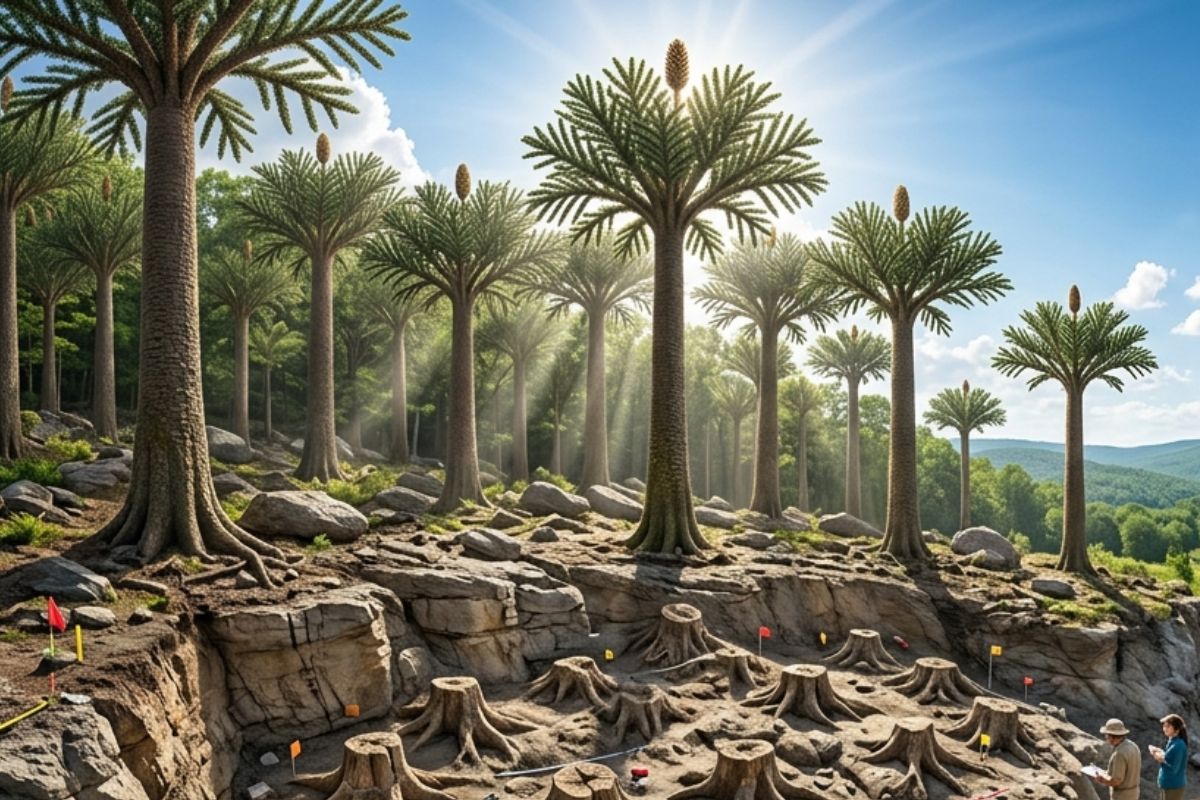
Oldest tree on the planet reappears after 130 years of searches: Wattieza, 385 million years old, was 10 meters tall and had no leaves or seeds; Gilboa fossils in New York solved the mystery in 2007.
-
A 48-square-meter house assembled in hours with 4,000 bricks made of recycled plastic that does not absorb moisture, has natural thermal insulation, and costs less than 90,000 reais in a complete kit.

-
Luciano Hang revealed that Havan’s air fleet has already accumulated more than 20,000 landings, 10,000 flight hours, and 6 million kilometers traveled, and he says that without the planes, the company would never have grown so quickly.


What scientists observed was a shift in dietary priority, triggered when two essential resources began to occur simultaneously.
Instead of spending long hours fishing, Kodiak bears were seen consuming large amounts of red elderberries, a fruit that, under traditional conditions, ripens later in the season, after the peak of salmon spawning.
When the ripening of the berries was advanced and “overlapped” with the peak of the fish’s arrival, the animals adjusted their routine and changed locations.
What Researchers Registered In Kodiak
The phenomenon was analyzed by a team led by William Deacy and Jonathan Armstrong, in work conducted with the participation of researchers from Oregon State University, the Flathead Lake Biological Station (University of Montana), and the Kodiak National Wildlife Refuge, a unit of the U.S. Fish and Wildlife Service.

The study was published in the journal Proceedings of the National Academy of Sciences (PNAS) and described how the synchronization of seasonal events — the biological calendar of fruits and salmon migration — can alter an ecological relationship that, for decades, seemed stable.
How The Diet Swap Was Proven
To understand what was happening, researchers combined different forms of monitoring.
Aerial surveys, continuous recording cameras, and GPS collars helped map where the bears spent time throughout the season, while feces analysis provided direct evidence of what was being consumed.
The team also estimated the abundance and timing of salmon spawning through images and historical records and reconstructed ripening dates of red elderberries based on long-term air temperature models.
Nature Calendar And Phenological Synchronization
The focus was on a simple yet decisive principle: many animals rely on predictable cycles to take advantage of food at times of highest energetic return.
In Kodiak, salmon — especially sockeye — is one of those food bases, offering high-density fat and protein.
The berries, in turn, provide carbohydrates and can appear in large volumes in the landscape, forming foraging patches that attract bears to areas outside the streams.
The central point of the study was to show that when two “peaks” overlap, the generalist predator chooses, and this choice alters the functioning of the ecosystem.

The red elderberry (Sambucus racemosa) typically ripens later, when the salmon season is already weakening and the remaining fish become less available.
In years with warmer springs, the ripening was advanced by weeks, coinciding with the period when streams receive the highest volume of migrating salmon.
This advancement was treated by researchers as part of a larger process of ecological “rescheduling” associated with elevated temperatures, able to bring together species and resources that used to occur at different times.
The Impact On The Relationship Between Bears And Salmon
What seemed like just a dietary curiosity revealed broader impacts. The relationship between bears and salmon involves more than just predation.
By catching fish and consuming part of the carcasses out of the water, bears redistribute marine nutrients to land, fertilizing riparian areas and leaving remains that feed birds and other animals.
When fewer bears frequent the streams, this nutrient transport decreases and the landscape receives fewer “pulses” of organic matter derived from the sea.
The research described this chain as an interruption of an important ecological link for the productivity of terrestrial environments near waterways.
Field observations helped consolidate the change.
In summers when the phenomenon became evident, researchers reported surprise at finding streams with salmon and almost no bears nearby, a scenario that contrasted with previous periods when the banks displayed large amounts of partially consumed fish carcasses.

In these episodes, the diet swap was not inferred solely by the “disappearance” of the animals from the banks: confirmation came from the content analyzed in the samples, which indicated significant consumption of berries during the same period one might expect strong fishing pressure.
Why Kodiak Is A Natural Laboratory To Observe Adaptation
Kodiak is an emblematic case because it brings together conditions that favor both the abundance of bears and the possibility of food choices.
The archipelago concentrates spawning streams, areas of productive vegetation, and a bear population with a great capacity to explore diverse resources throughout the year.
This generalist profile increases the likelihood that the animal will adjust its behavior when the environment changes, without the need for physical alterations or a slow transformation over many generations.
The study, by documenting the change, drew attention to a lesser-discussed mechanism in ecology: instead of impacts caused solely by events that “desynchronize” species, the opposite can also occur when warming brings resources that used to alternate closer together in the calendar, eliminating a temporal separation that organized consumption.
Official Monitoring And Relevance For Management In Alaska
The scientific interest is also connected to local management and monitoring.
The U.S. Fish and Wildlife Service, through the Kodiak National Wildlife Refuge, describes programs for monitoring the phenology and abundance of fruiting plants important for bears, including red elderberry itself, partly to understand how annual variation in fruit availability may influence habitat use and diet.

This type of monitoring reinforces that, in environments where large predators coexist with human activities and observation tourism, knowing where and when animals seek food is not just a curiosity: it influences safety, area management, and the very interpretation of how ecosystems respond to climate.
Less Fishing, Chain Effects In The Landscape
By reporting the swap of salmon for berries, researchers also highlighted that the consequences can spread beyond the bear’s “plate.”
Less predation in streams may alter how salmon die after spawning, change the availability of carcasses for birds, modify nutrient distribution in the soil, and even reconfigure, albeit locally, interactions that depended on the bear’s frequent presence in the water.
The Kodiak episode, therefore, was presented as a concrete example of how seasonal changes can reorganize behaviors and reverberate in a chain, even when resources remain present.
If the natural calendar continues to change and overlapping resources that were previously separated in time emerge, how many other scenes considered “classic” wildlife might disappear without most people noticing?








-

-

-

-

-

-

66 pessoas reagiram a isso.