





 Portuguese
  English
  Spanish
  4 min of reading
  46 comments


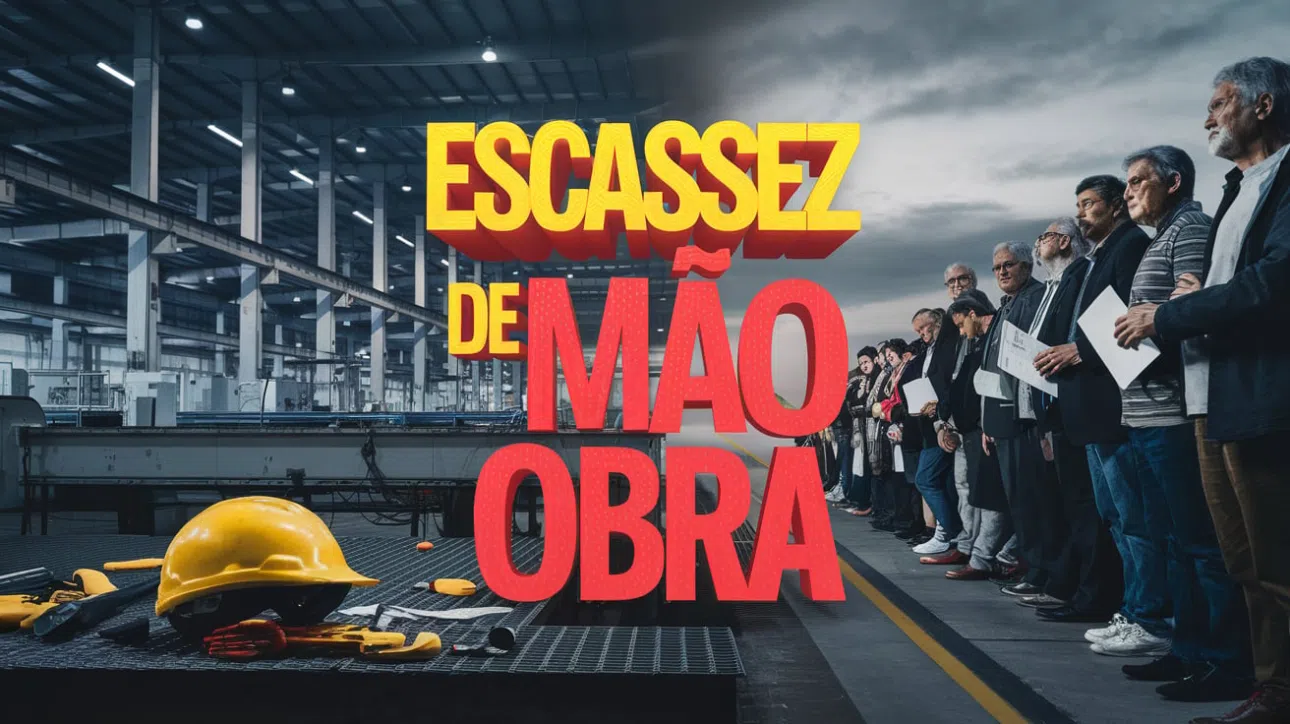


In 2024, The Brazilian Industrial Sector Grew More Than The GDP, But The Lack Of Skilled Workers Threatens The Future Of The Market. Will Brazil Be Able To Overcome This Challenge?
When discussing industrial growth, it is natural to envision a scenario of prosperity, opportunities, and economic advancement.
But what happens when this exponential growth encounters an unexpected problem?
The Brazilian industrial sector, despite registering impressive numbers in 2024, faces an obstacle that threatens to limit its potential: the lack of qualified labor.
-
The institute that trained the greatest aerospace engineers in Brazil has just opened its first campus outside São Paulo after 75 years: ITA Ceará will have R$ 445 million, new courses in energy and systems, and classes are expected to start in 2027.
-
Luciano Hang, owner of Havan, goes to Juiz de Fora after the tragedy in February, brings R$ 1 million, hands out R$ 2,000 cards, and donates up to R$ 15,000 to victims in the region.

-
The Brazilian passport allows legal residence in dozens of countries without the need for a prior visa, and most Brazilians are unaware that they can apply for residency directly upon arriving in nations in South America, Africa, and even Europe.

-
Petrobras sends a message to Brazilian truck drivers after fuel collapse and reveals plan to have 100% domestic diesel.


Record Growth In 2024
The industrial sector in Brazil recorded a growth of 3.5% by the third quarter of 2024, according to data released by the Federation of Industries of the State of Minas Gerais (Fiemg).
This performance exceeded the national GDP growth, which was 3.3% during the same period.
In Minas Gerais, the scenario was even more positive: the mining industry grew 4.2%, while the state GDP increased by 2.8%.
Among the highlights of the sector, the extraction segment showed an impressive growth of 6.3% in Minas Gerais, well above the national average of 2%.
The construction industry also had a year of robust expansion, with a rise of 8.9%, while the energy and sanitation sectors advanced by 7.5%.
This industrial performance is linked, according to Fiemg, to the increase in the average income of Brazilians since 2022, which boosted family spending.
With the unemployment rate hitting 5% in Brazil, the lowest level since 2012, the job market appeared lively.
In Minas Gerais, 11 million people were employed in the third quarter of 2024, with 2.53 million working in the industrial sector, a growth of 5.7% compared to the previous year.
The Lack Of Skilled Labor
Despite the positive numbers, the president of Fiemg, Flávio Roscoe, pointed out a significant bottleneck for the continuity of this growth: the shortage of qualified professionals.
“The biggest problem for the industry today is the lack of skilled workers to meet the growing demand”, said Roscoe.
The situation is even more critical in sectors that require specific technical knowledge.
Many employers are having difficulty filling vacancies, even with the unemployment rate at historically low levels.
Proposals For The Labor Market
To mitigate this problem, Fiemg suggested integrating income transfer programs with the formal job market.
Flávio Roscoe highlighted that it is necessary to modernize the Bolsa Família to encourage inclusion in the job market without the risk of immediate loss of benefits.
Among the proposals is the creation of a “suspended registration”, which would allow beneficiaries to return to the program in case of unemployment without having to go through the entire registration process again.
Additionally, Roscoe suggested penalizing those who repeatedly refuse job offers.
“It is not the society’s goal for a person to remain exclusively in income transfer programs throughout their life”, declared the president of Fiemg.
Economic Outlook For 2025 In The Industry
Although the results of 2024 are encouraging, projections for 2025 are more modest.
According to Fiemg’s chief economist, João Gabriel Pio, the expected growth for the industrial sector in Minas Gerais is 2.8%, while the projected increase for the state GDP is 2.1%.
Nationally, the GDP is expected to advance by only 1.8%, and the industry by 1.7%.
These forecasts reflect the challenges faced by the Brazilian economy, such as high public debt, persistent inflation, and high interest rates.
Roscoe stated that, although revenues have increased in recent years, public spending has grown even more, raising concerns in the market.
Impacts Of The Devaluation Of The Brazilian Real
Another point raised by the president of Fiemg was the devaluation of the Brazilian real.
Although this trend benefits exporting sectors, such as agribusiness and mining in Minas Gerais, it also brings challenges.
“A higher dollar drives inflation and reduces consumers’ purchasing power”, explained Roscoe.
However, he emphasized that the positive impact on exports may partially offset these losses for the mining economy.
Criticisms And Praises Of The Federal Government
Flávio Roscoe criticized the spending cut packages presented by the federal government, calling them insufficient to solve the country’s fiscal problems.
He defended stricter and long-term measures to balance public accounts.
Despite the criticisms, Roscoe praised the performance of the Minister of Finance, Fernando Haddad, stating that he has adopted a responsible stance in the face of difficulties.
The Challenge Of Qualification In The Industry
With a challenging economic scenario ahead, the Brazilian industrial sector needs to invest in the training of qualified labor to ensure continued growth.
The integration between government, industry, and education will be crucial to overcome this bottleneck and transform the current moment of expansion into a sustainable development cycle.
And you, do you believe that Brazil will be able to solve the problem of the lack of qualified workers in the coming years? Leave your opinion in the comments!









Essa conversa de falta de mão de obra é só para inglês ver você gasta um absurdo para estudar depois querem te pagar 1500 Reis mesal igual a sese logística paga é muita outras que tem pro aí
ohn oh, pequenos gafanhotos……”AUMENTAI OS SALÁRIOS que a Mão de obra APARECERÁ “
O erro vem do mercado de trabalho, pois não dá chance aos mais movos ter a experiência em cursos gratuitos, pois a maioria é pago os cursos , aí vem o problema de onde vai arrumar dinheiro pra pagar o curso?