





 Portuguese
  English
  Spanish
 5 min of reading
  0 comments


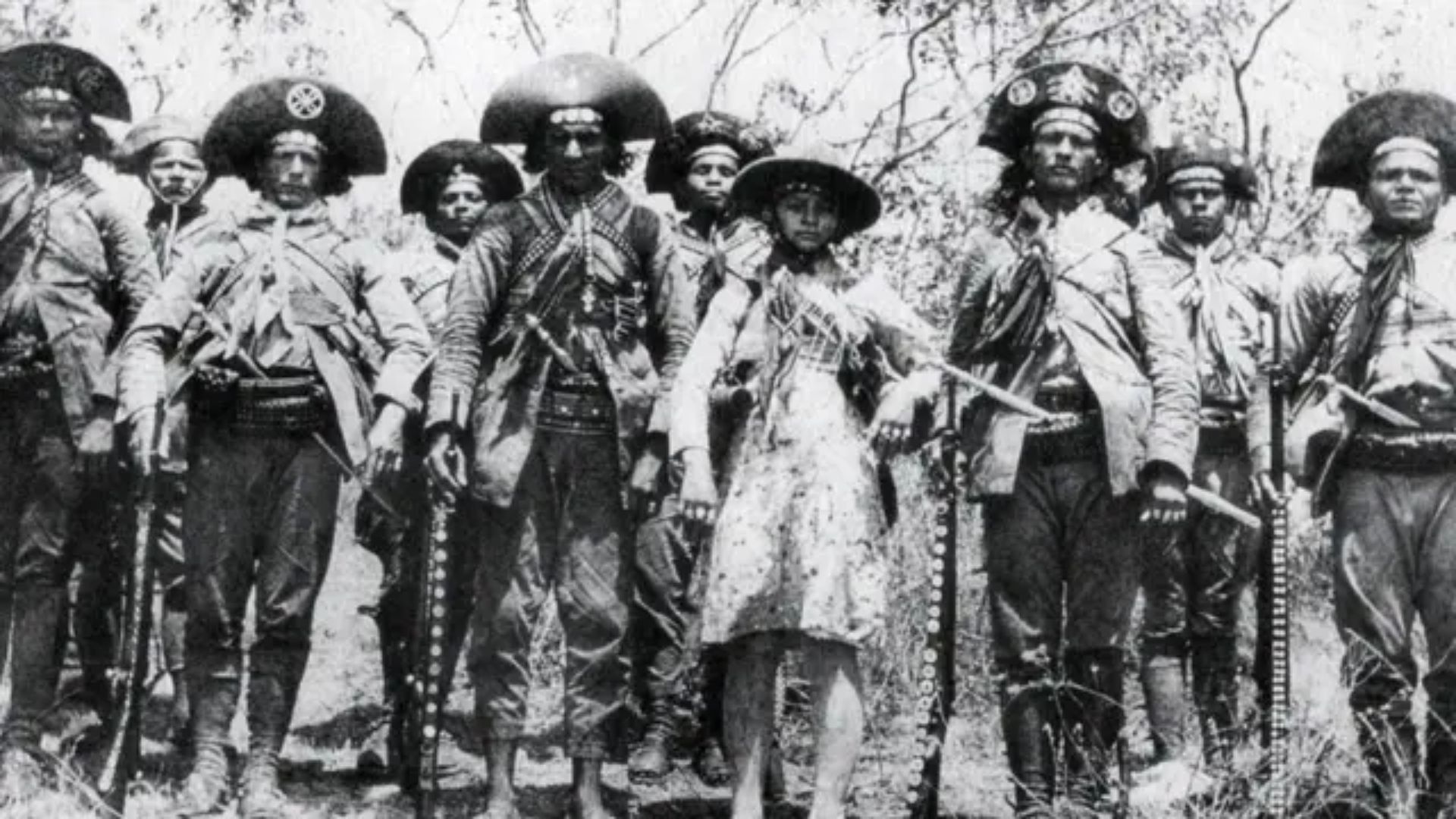
Between Popular Myth and Concrete Violence: How the Most Feared and Admired Character of the Sertão Emerged
Few Figures in Brazilian History provoke as many divisions as Lampião. While some see him as a social avenger, others point to him as a ruthless criminal. Precisely for this reason, understanding who the so-called King of Cangaço was requires looking beyond the myth and analyzing the social, political, and economic context of the northeastern sertão.
The information was released by historical content widely analyzed by cangaço researchers, as well as documentary records and specialized audiovisual productions, according to reports and historical studies published by Brazilian media over the past few decades.
In this context, cangaço did not arise in isolation. On the contrary, it developed amidst extreme poverty, land disputes, coronelismo, and the almost complete absence of the State in vast regions of the Northeast. Therefore, before judging Lampião, it is necessary to understand the environment that enabled his rise.
-
He started running at 66 years old, broke records at 82, and is now a subject of study for having a metabolic age comparable to that of a 20-year-old, in a case that is intriguing scientists and inspiring the world.

-
Oldest tree on the planet reappears after 130 years of searches: Wattieza, 385 million years old, was 10 meters tall and had no leaves or seeds; Gilboa fossils in New York solved the mystery in 2007.

-
A 48-square-meter house assembled in hours with 4,000 bricks made of recycled plastic that does not absorb moisture, has natural thermal insulation, and costs less than 90,000 reais in a complete kit.

-
Luciano Hang revealed that Havan’s air fleet has already accumulated more than 20,000 landings, 10,000 flight hours, and 6 million kilometers traveled, and he says that without the planes, the company would never have grown so quickly.


The Cangaço in the Sertão: Origin, Survival, and Popular Support

The cangaço consolidated mainly between the 18th, 19th, and early 20th centuries. The term derives from the word “canga,” a piece used to harness oxen to carts, directly analogizing how the cangaceiros carried weapons and equipment on their bodies.
Initially, many cangaceiros were poor peasants who lost their lands. Over time, these groups began to live in the bushes, mastering the caatinga, knowing water points, hidden trails, and strategic escape routes. In addition, they employed guerrilla tactics, making police action difficult.
At the same time, part of the poor population provided support to the bands. These collaborators, known as coiteiros, provided shelter, food, and information. For this reason, the cangaceiros were able to hide efficiently and escape frequent encirclements. Nonetheless, although some groups carried out occasional acts of charity, the cangaço was also marked by theft, kidnappings, extortion, and murders.
It is precisely in this contradictory scenario that Virgulino Ferreira da Silva was born.
From Virgulino Ferreira to Lampião: The Formation of a Leader

Virgulino Ferreira da Silva was born on July 7, 1897, in Pernambuco, into a family of farmers with a financial condition considered reasonable by the region’s standards. Unlike many peasants of his time, he learned to read and write. Additionally, from a young age, he accompanied his father in transporting goods throughout the Northeast.
As a result of these travels, Virgulino accumulated deep knowledge of paths, resting areas, and water points in states such as Pernambuco, Ceará, Sergipe, Alagoas, and Paraíba. At the same time, he built relationships with various local families, something that later became fundamental for his survival in the cangaço.
However, land disputes completely changed the fate of the Ferreira family. An influential neighbor, known as Zé Saturnino, began to use his political power to take the family’s land. For this reason, the Ferreiras found themselves forced to move repeatedly, losing cattle, properties, and resources.
Eventually, in 1921, violence reached its peak when José Ferreira, Virgulino’s father, was murdered. At this moment, Virgulino was already living in the bush and had joined the gang of Sinhô Pereira, one of the most well-known cangaceiros of the time. From that point on, his transformation into Lampião intensified.
The Rise of the King of Cangaço and the Use of Violence as a Strategy
Within the gang, Virgulino refined combat, ambush, and camouflage techniques. Moreover, he combined this learning with the territorial knowledge acquired throughout his youth. In this way, he quickly stood out among the cangaceiros.
The nickname Lampião emerged because, during confrontations, he fired so quickly that the barrel of his weapon seemed to illuminate the environment. In 1922, after Sinhô Pereira’s departure, Lampião took command of the group.
From this point on, the attacks became more frequent and aggressive. Lampião began invading villages, towns, and the properties of large landowners. Additionally, he started sending letters demanding payments under the threat of attack. When he appropriated items of sentimental value, he demanded a ransom for their return.
At the same time, his network of coiteiros grew. Consequently, even with the deployment of various police troops — the so-called volantes — capturing the gang proved extremely difficult. To mislead the police, the cangaceiros would invert footprints, walk in circles, and spread rumors, including that Lampião had died.
Apex, Glamour, and Contradictions of the Popular Myth
With the increase in fame, Lampião began investing in his image. He created extravagant clothing, used silver daggers, and adopted a hat full of symbols. For this reason, many sertanejos began to see him as a symbol of power, respect, and resistance.
At this apex, the gang managed to gather over 100 men. Meanwhile, the government intensified its fight against cangaço. Even so, Lampião continued winning confrontations. In a Remarkable Episode, his group faced around 300 policemen. Although surrounded, the cangaceiros simulated surrender and, at the moment the police advanced, reopened fire and forced the troops to retreat.
On the other hand, despite the extreme violence, Lampião maintained a strong connection to religion. He avoided attacking churches and respected priests’ requests. These actions, albeit occasional, helped reinforce his image as a social avenger. However, in practice, his deeds included kidnappings, murders, and brutal attacks.
In one of these kidnappings, Lampião demanded a ransom equivalent to R$ 78 thousand in current values. As the amount was not paid in full, the episode ended in armed confrontation.
Maria Bonita, Decline of the Gang, and the Fall in 1938

During his peak, Lampião met Maria Gomes de Oliveira, then 19 years old, in the village of Malhada da Caiçara, in Sergipe. Married, she left her husband and joined the gang, becoming the first woman to officially integrate the cangaço. From then on, she became known as Maria Bonita.
With her entry, the gang began to change. Other cangaceiros started bringing their companions, which made movements slower. Additionally, Lampião showed himself to be more sentimental, weakening his leadership. As a consequence, internal conflicts and betrayals arose.
Finally, on July 27, 1938, the gang stopped to rest on a farm in Poço Redondo, Sergipe. Betrayed by an informant, their position was reported. In the early morning of July 28, 1938, the volantes attacked the camp by surprise. Lampião, Maria Bonita, and several members of the group were killed. Their heads were severed and displayed as trophies, marking the definitive end of the King of Cangaço.
In your view, was Lampião a result of social injustice in the sertão or a criminal who used chaos to justify his own violence?
Source: Did You Know?









-

-

2 pessoas reagiram a isso.