





 Portuguese
  English
  Spanish
  5 min of reading
  1 comment





The Release of Up to R$ 30 Billion Outside the Fiscal Framework Opens a Unique Window for the Brazilian Army to Increase Investments, Restructure Strategic Programs, Accelerate Sisfron, Modernize Armored Vehicles, and Reinforce Capabilities by 2031
The Brazilian Army plans to double its modernization investments after the enactment of a complementary law that allows up to R$ 30 billion to be excluded from the fiscal framework, reorganizing strategic projects and forecasting annual contributions of R$ 3 billion between 2026 and 2031.
Fiscal Window and Budgetary Shift
According to a report from CNN Brasil, the expectation of the land force is to move from an annual budget that fluctuated between R$ 1.2 billion and R$ 1.4 billion in the PAC to reaching R$ 3 billion annually in the 2026-2031 period.
This six-year cycle is treated internally as a window of opportunity to recover historical delays and accelerate programs considered structural for the operational capacity of the Brazilian Army.
-
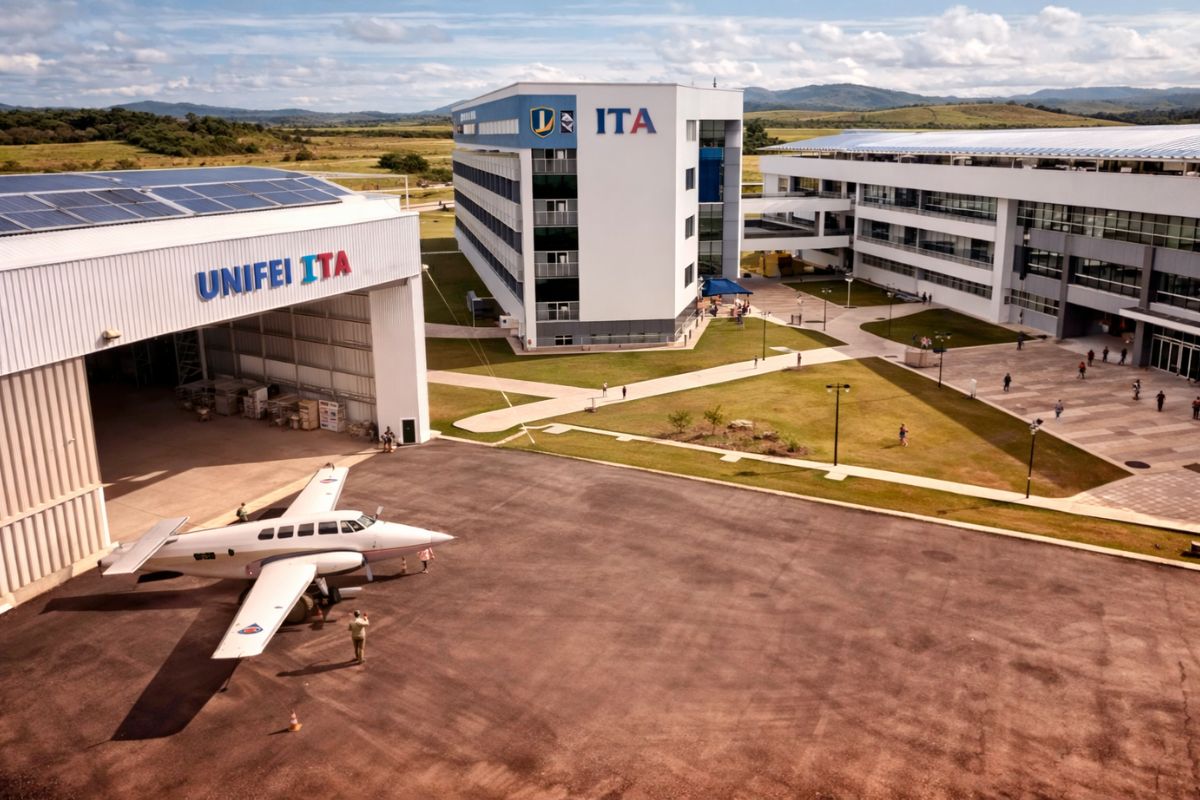
The institute that trained the greatest aerospace engineers in Brazil has just opened its first campus outside São Paulo after 75 years: ITA Ceará will have R$ 445 million, new courses in energy and systems, and classes are expected to start in 2027.
-
Luciano Hang, owner of Havan, goes to Juiz de Fora after the tragedy in February, brings R$ 1 million, hands out R$ 2,000 cards, and donates up to R$ 15,000 to victims in the region.

-
The Brazilian passport allows legal residence in dozens of countries without the need for a prior visa, and most Brazilians are unaware that they can apply for residency directly upon arriving in nations in South America, Africa, and even Europe.

-
Petrobras sends a message to Brazilian truck drivers after fuel collapse and reveals plan to have 100% domestic diesel.


The new fiscal margin, guaranteed outside the framework, allows for medium-term planning, predictability of disbursements, and a complete reassessment of the portfolio of strategic projects, currently marked by lengthy schedules and successive budgetary restrictions.
Sisfron and the Delay in Border Monitoring
One of the main focuses of this new cycle is Sisfron, considered essential for combating drug trafficking and smuggling along Brazil’s land borders.
So far, only two of the nine planned phases have been effectively implemented, one in Dourados, Mato Grosso do Sul, and another in the Amazon border region.
The original deadline for completing Sisfron was 2021, but it has faced successive delays over the past decade, directly reflecting resource scarcity and technological complexity.
Currently, the official forecast is that the system will be fully operational only in 2039, unless there are new interruptions in the flow of financing.
Sisfron operates with a continuous flow of data generated by radars, thermal and optical sensors, remotely piloted aircraft, electromagnetic sensors, simulators, and cybersecurity structures.
With the new resources, the Army intends to implement three more phases in critical border areas, gradually expanding the system’s coverage.
One of these phases will be the responsibility of the 1st Jungle Infantry Brigade, at the border in Roraima, an area considered sensitive due to the regional geopolitical context.
The other two phases are planned for the regions of the 13th Motorized Infantry Brigade and the 18th Pantanal Infantry Brigade in Mato Grosso and Mato Grosso do Sul.
The third new implementation will occur in the area of the 15th Mechanized Infantry Brigade, covering territories in Paraná and Santa Catarina, enhancing control in strategic corridors in the South.
Centauro II-BR and the Modernization of Armored Vehicles
Another central axis of modernization involves the Centauro project, aimed at renewing the Brazilian Army’s fleet of wheeled armored vehicles.
After the incorporation of two prototypes this year, the delivery of an additional 96 Centauro II-BR vehicles is expected by 2033, consolidating the program over the next decade.
The contract with the Iveco-OTO Melara consortium, estimated at R$ 5 billion, is expected to be signed between February, in the most optimistic scenario, and May, in the more conservative scenario.
The agreement includes not only the vehicles but also offset clauses, technological compensation, and a complete package of integrated logistics for operational support.
The armored vehicles are equipped with 120 mm cannons, have 8×8 traction, and develop 720 horsepower, characteristics that significantly enhance the combat capability of the force.
The armor has been designed to withstand landmines, improvised explosive devices, and high-pressure kinetic ammunition, increasing survivability in asymmetric scenarios.
Twelve of these vehicles, described as the most powerful of their kind in South America, will be positioned in Roraima, close to the border with Venezuela.
Reorganization of Strategic Programs
In addition to the new investments, the Army is promoting a broad reorganization of its strategic programs, with mergers, reclassifications, and a redefining of institutional priorities.
One of the main changes involves the Astros program, created to equip the land force with a long-range, high-precision rocket system.
In recent years, Astros has lost traction due to the situation of Avibras, a company based in Jacareí, under judicial recovery, responsible for part of the technological development.
Avibras has been working on a tactical cruise missile with a range of 300 kilometers and a maximum error of nine meters, whose progress depends on a solution to the financial impasse.
Despite this, the program will be expanded and renamed Fogos, now integrating three verticals under a single organizational umbrella.
The new Fogos will gather the former Astros, campaign artillery systems, and a new layer of air defense, expanding the operational scope of the project.
An order of up to R$ 3.4 billion is planned for 2026 for a new air defense system, featuring unprecedented technology in Latin America.
This system will allow for the interception of enemy drones and cruise missiles, addressing emerging threats observed in recent conflicts.
Sectoral Programs and Side Effects
Other programs will also undergo institutional redesign, such as Lucerna, focused on military intelligence, and OCOP, centered on achieving full operational capability.
Both will drop the classification of strategic and will be considered sectoral, a change that Army sources claim does not represent a functional downgrade.
The adopted distinction indicates that strategic projects incorporate new capabilities, while sectoral ones focus on current modernizations, with less technological aggregation.
A side effect of this change is that sectoral programs will leave the PAC umbrella and will depend on the discretionary budget of the force itself.
The Protected Amazon and Sentinel of the Homeland programs will be unified, bringing together military infrastructure initiatives in the Amazon region and other areas of national territory.
The Cyber Defense program will be expanded to also include projects related to artificial intelligence, strengthening the protection of critical systems.
The Army Aviation program, which foresees the acquisition of 12 Black Hawk helicopters, remains unchanged, maintaining its original schedule and scope, despite the new budget cycle that is beginning.










Uma noticia dessa e nenhum comentário. Se fosse alguma coisa contra o governo, tava todo mundo comementando aqui e agora.