





 Portuguese
  English
  Spanish
  6 min of reading
  0 comments


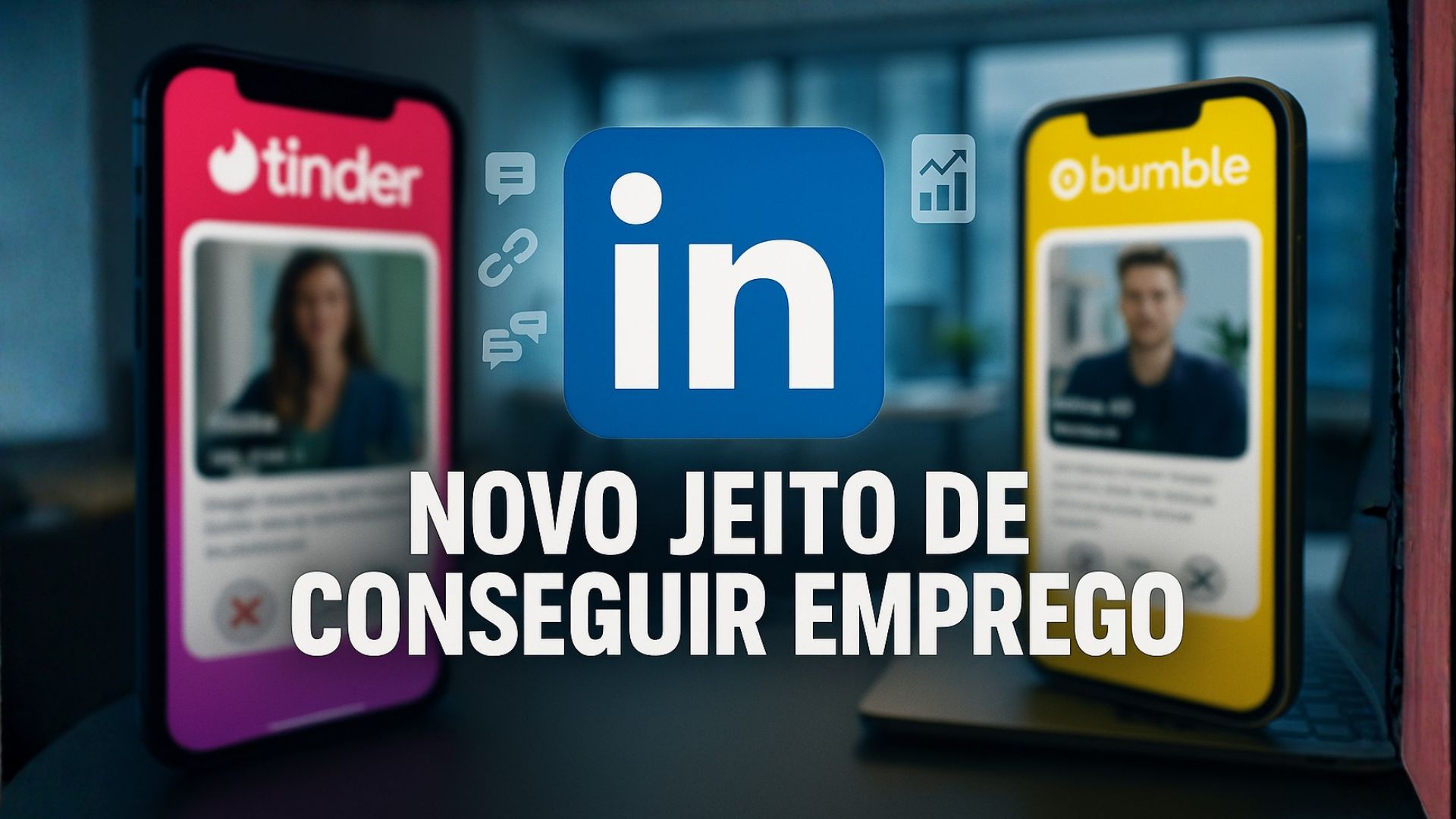
Dating App Users Have Reported That Casual Connections Are Turning into Interviews and Job Offers, Revealing An Unexpected Use of These Platforms and Raising Questions About Ethical Boundaries and New Forms of Networking.
Job seekers have turned to dating apps to network and boost their careers, and a significant portion of them claims to be successfully landing interviews and even job offers on these platforms.
According to a report published by Forbes, a recent survey by the resume-building site Resume Builder, conducted with 2,225 users of dating apps in the United States, indicates that about one in three has used these tools for professional purposes, and nearly one in ten stated that this is the main reason for being there.
The data also shows that men report using dating apps for career purposes slightly more frequently than women across all age groups between 18 and 55 years old.
-
With over 14 million baskets of earth moved, an ancient North American metropolis built a monumental pyramid of 30 meters and established a city with 20,000 inhabitants nearly a thousand years ago.

-
A 1,900-year-old treasure emerges from a Roman house destroyed by fire and sealed since antiquity in Romania, with coins and metals fused among the ashes.

-
The Brazilian colonial city that stopped in time and shares territory with a rocket launch base.

-
79-year-old woman challenges limits, visits 193 countries in the world after 56 years of planning and reveals the behind-the-scenes of a global journey that few have managed to accomplish.


The study found that 37% of men said they turn to apps for networking, compared to 30% of women.
The practice is growing among higher-income users: among those earning over US$ 200,000 a year, almost half reported using these platforms to seek professional advantages, information also highlighted by Forbes in its coverage.
Tinder, Bumble, Facebook Dating, and Hinge are the most cited services by those trying to turn matches into job opportunities.
Professional Networking on Dating Apps
The interactions do not stop at just exchanging messages.
Among users who reported networking through the apps, nearly half stated they received some type of career advice or guidance.
Additionally, 39% said they managed to secure at least one job interview, and 37% reported receiving a concrete job offer after connections made in these environments.
Only about one in ten respondents claimed they did not receive any professional benefit from using dating apps for this purpose.
The survey does not detail the order in which these conversations occur, meaning whether users start flirting and then change the focus to professional matters, or if they present themselves from the beginning with career objectives.
However, most stated they were transparent with matches about their interest in networking.
Even so, 38% reported that they ended up meeting in person and forming relationships with people they initially connected with for professional reasons, and those who had in-person meetings reported, on average, more positive outcomes related to work.
The study’s authors emphasize that this is a market research survey conducted by a private resume company, with participants recruited through the Pollfish platform.
This means that the group surveyed may not perfectly represent all dating app users, and the results have not undergone independent academic review.
Tinder, Bumble, and Grindr at the Center of the Trend
Although the intersection of love life and career seems improbable at first glance, the data adds to other signs that this movement is gaining traction.
According to an investigation by Forbes, Grindr, an app aimed at the LGBTQ+ audience, estimates that about a quarter of its users also utilize the platform for networking, and company executives have reported hiring people they met through the app.
Bumble created a specific mode for professional contacts, Bizz, designed precisely for this type of connection, although the feature is being phased out in several markets.
At the same time, companies are trying to impose limits.
Tinder updated its guidelines to emphasize that the focus should be on personal connections and not commercial ones, and included in its rules a directive that users should not use the platform as a showcase for services or for business purposes.
The Job Market and the Search for New Networking Routes
Behind this migration of part of networking to dating apps lies a job market that many professionals consider challenging.
Among participants in the study who turned to these apps for career purposes, almost half said they were motivated by difficulties in finding positions through traditional means.
About one-third admitted that their choice was driven by feelings of desperation due to the difficulty of securing work.
Career consultants cited in the report say they have begun recommending this strategy to some clients, especially when they are already accustomed to the world of dating apps.
For these specialists, platforms like Tinder or Bumble may have an advantage over traditional professional networks like LinkedIn because users tend to access them more frequently and with a less formal approach.
In a statement from Resume Builder, career advisor Stacie Haller highlights that dating apps provide an environment seen as more personal and with less pressure, which would facilitate the building of what are considered “authentic” relationships.
Risks, Discomforts, and Ethical Boundaries
Despite the success stories, the experience of mixing dating and work is far from simple.
Accounts included in the research indicate that various users felt uncomfortable trying to network on dating apps.
One participant described the situation as “definitely strange,” explaining the impression that “the system is so broken that people have to resort to this.”
Another stated that the strategy worked but added that “it takes courage to ask” for a referral or opportunity within this context.
One of the points of tension is how to approach the subject.
If the match is initiated under the guise of romantic interest and then the conversation shifts to a request for professional help, there is a risk of frustration or feeling misled on the part of the other person.
On the other hand, declaring right at the beginning that the goal is networking may come across as cold or overly utilitarian on a platform officially geared towards romantic encounters.
For those already in a relationship, the scenario becomes even more complicated.
Even with complete transparency with their partner, the mere act of using a dating app can generate discomfort at home, even if the declared intention is strictly professional.
Career and behavior specialists point out that, in practice, the boundary between work-related conversations and more intimate messages is fragile in these environments.
The dynamics of power also weigh in.
When one party has hiring power or direct influence over selection processes, the risk of crossing ethical lines increases.
The very research shows that users who had some type of physical relationship with contacts known through the apps were, on average, more likely to report professional benefits, which raises questions about unequal exchanges and potential implicit pressures.
Reputation, Corporate Environment, and Future Impacts
Even when using dating apps results in a job offer, complications can continue after hiring.
If coworkers discover that the new employee matched with the boss or someone key in the selection process, questions arise about merit, favoritism, and transparency.
Women may face additional barriers in this scenario.
In many environments, the blending of personal and professional life continues to be judged more harshly when it involves female employees, increasing the risk of rumors and impacts on reputation.
The risks are not limited to candidates.
For managers and recruiters, hiring someone known from a dating app can raise labor and compliance concerns.
Even in consensual relationships, allegations of conflict of interest, improper favoritism, or, in more severe cases, accusations of harassment may arise.
Alternatives to LinkedIn That Don’t Involve Dating Apps
While the use of dating apps for networking is gaining visibility, specialists emphasize that this is a high-risk strategy that blurs personal and professional boundaries in a difficult-to-control environment.
Forbes also pointed out that, despite the growing popularity of this approach, safer alternatives continue to dominate the professional market.
In-person conferences, industry events, professional groups, associations, alumni networks, and specific digital platforms remain safer and more structured avenues for seeking referrals or building professional relationships.







-

-

-

-

6 pessoas reagiram a isso.