





 Portuguese
  English
  Spanish
  4 min of reading
  0 comments


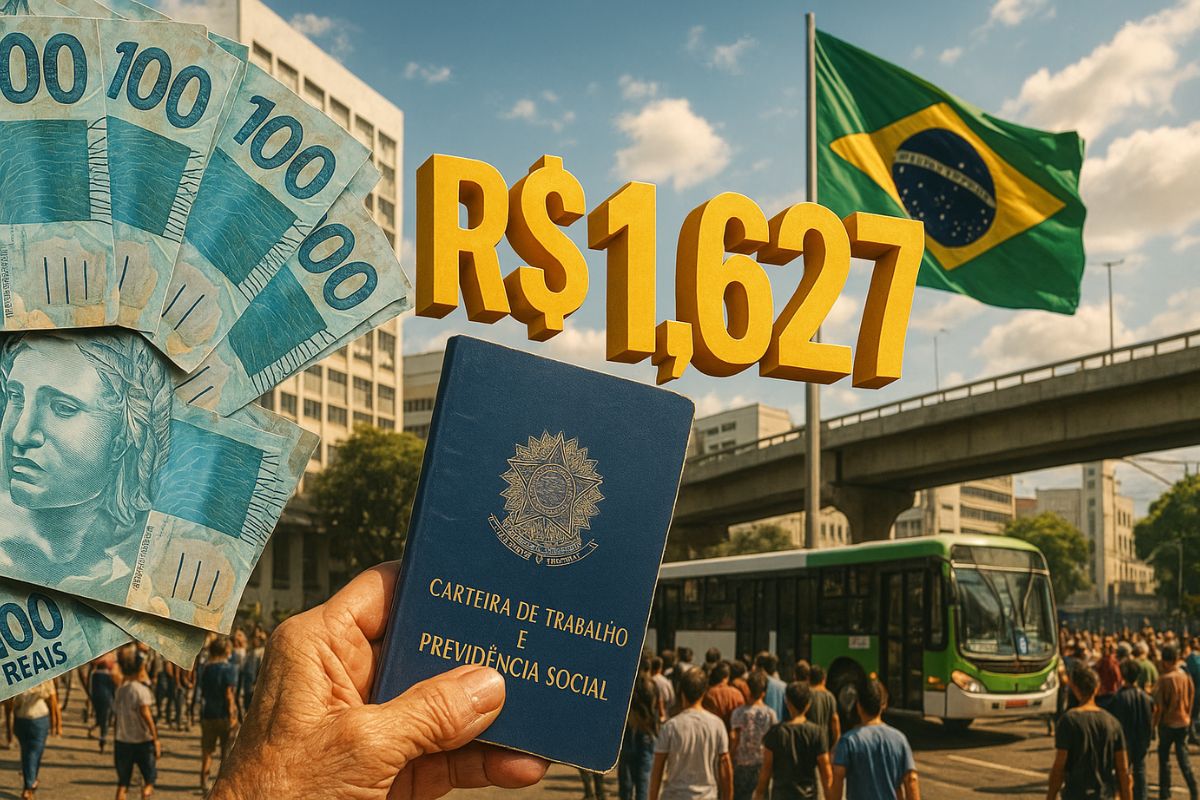
Government Decision Adjusts Minimum Wage Projection for 2026 After Lower Inflation, Reducing the Expected Value from 1,631 to 1,627 Reais, While Maintaining a Real Gain of 7.18 Percent and Putting Pressure on the Budget with Direct Effects on Pensions, INSS Benefits, and Social Benefits Linked to the National Minimum Wage.
The Government reduced the official forecast for the minimum wage in 2026, which drops from 1,631 reais to 1,627 reais, following an update of the inflation projections for this year. Despite the 4 reais cut, the projected floor still represents a 7.18 Percent Increase Compared to the Current Value of 1,518 Reais, adhering to the policy of valuing the minimum wage with adjustments above inflation.
According to the Government, the new value is still preliminary and will only be confirmed in December. The definitive number will be known on the 10th, when the INPC for November is released, an index that serves as the basis for determining the minimum wage. The revision of the parameters feeding into the Annual Budget Law project for 2026 was communicated by Minister Simone Tebet of Planning and Budget, to the President of the Joint Budget Committee, Senator Efraim Filho.
Revision After Lower Inflation
The change occurs because the most recent projections indicate lower inflation than originally estimated by the Government when the Budget was submitted to Congress in August. At that moment, the PLOA was working with a minimum wage of 1,631 reais for 2026.
-
The institute that trained the greatest aerospace engineers in Brazil has just opened its first campus outside São Paulo after 75 years: ITA Ceará will have R$ 445 million, new courses in energy and systems, and classes are expected to start in 2027.

-
Luciano Hang, owner of Havan, goes to Juiz de Fora after the tragedy in February, brings R$ 1 million, hands out R$ 2,000 cards, and donates up to R$ 15,000 to victims in the region.

-
The Brazilian passport allows legal residence in dozens of countries without the need for a prior visa, and most Brazilians are unaware that they can apply for residency directly upon arriving in nations in South America, Africa, and even Europe.

-
Petrobras sends a message to Brazilian truck drivers after fuel collapse and reveals plan to have 100% domestic diesel.


Now, with the new estimate, the value has been recalculated to 1,627 reais, preserving real gains while reducing the impact on mandatory expenses.
The Government claims that the adjustment is part of the normal process of updating the macroeconomic parameters that guide the budget document.
The Lower the Projected Inflation, the Lower the Need for Nominal Adjustment of the Minimum Wage, which creates a slight relief in the public accounts, without eliminating the real increase promised during the resumption of the minimum wage valuation policy.
Minimum Wage Affects Pensions and Social Benefits
The minimum wage serves as a benchmark for a series of mandatory expenses of the Executive, starting with pensions and benefits paid by the INSS. It also serves as a reference for the BPC, a benefit aimed at low-income elderly individuals and people with disabilities, as well as for other policies linked to the minimum wage.
Therefore, any Government decision regarding the minimum wage value has a cascading effect on the federal budget. A slightly higher floor automatically increases expenditures on benefits tied to it.
A slightly lower value, such as the 4 reais reduction now projected for 2026, eases the pressure on these expenses, even though the difference may seem small from an individual point of view.
Lower Projections for 2027, 2028, and 2029
The revision does not only affect 2026. In the updated projections for the following years, the Government has also begun to work with slightly lower minimum wages than the values originally stated in the PLOA.
For 2027, the new forecast is 1,721 Reais, down from 1,725 reais. In 2028, the projected floor has dropped from 1,823 to 1,819 Reais. By 2029, the estimate has decreased from 1,908 to 1,903 Reais.
These adjustments show that the Government is trying to calibrate the pace of minimum wage growth to the available fiscal space, maintaining some real gain but avoiding an excessive rise in mandatory expenses that strays too far from the fiscal framework rules.
The more contained trajectory aims to reconcile the promise of recovery of purchasing power with the need to keep public finances under control.
How the Minimum Wage Valuation Policy Works
The minimum wage valuation policy resumed by the Government combines two components. First, the wage is adjusted for inflation measured by the INPC accumulated over 12 months up to November of the previous year.
Then, the variation of the Gross Domestic Product from two years prior is added, which, for the 2026 minimum wage, means looking at the economy’s performance in 2024.
Last year, the economy grew 3.4 Percent, according to IBGE. However, the real gain incorporated into the minimum wage is limited to 2.5 Percent, because current rules tie this portion to the same range of growth of the fiscal framework, which allows for expenses to grow between 0.6 and 2.5 percent above inflation per year.
Thus, even if the GDP grows more, the Government cannot fully pass this result to the minimum wage, for fear of excessively pressing mandatory spending.
The Goal is to Contain Pressure on the Fiscal Rule
The limitation of real gains was designed precisely to prevent the accelerated increase in spending on pensions, allowances, and social benefits from compromising the space for discretionary expenses, such as public administration costs and investments in infrastructure, health, and education.
If the minimum wage rises too quickly, the share of mandatory expenses increases, leaving less room within the fiscal rule for other policies.
By reducing the 2026 forecast from 1,631 to 1,627 reais, the Government signals that it is willing to adjust Cent by Cent the trajectory of the minimum wage to keep the new fiscal anchor intact, without abandoning the promise of real gains.
At the heart of this debate is the question that directly affects those living on the minimum wage and benefits tied to it: Do you think the Government was right to reduce the 2026 minimum wage forecast to 1,627 reais or should it guarantee a higher value for those who depend on the minimum wage?










-

2 pessoas reagiram a isso.