





 Portuguese
  English
  Spanish
  5 min of reading
  0 comments


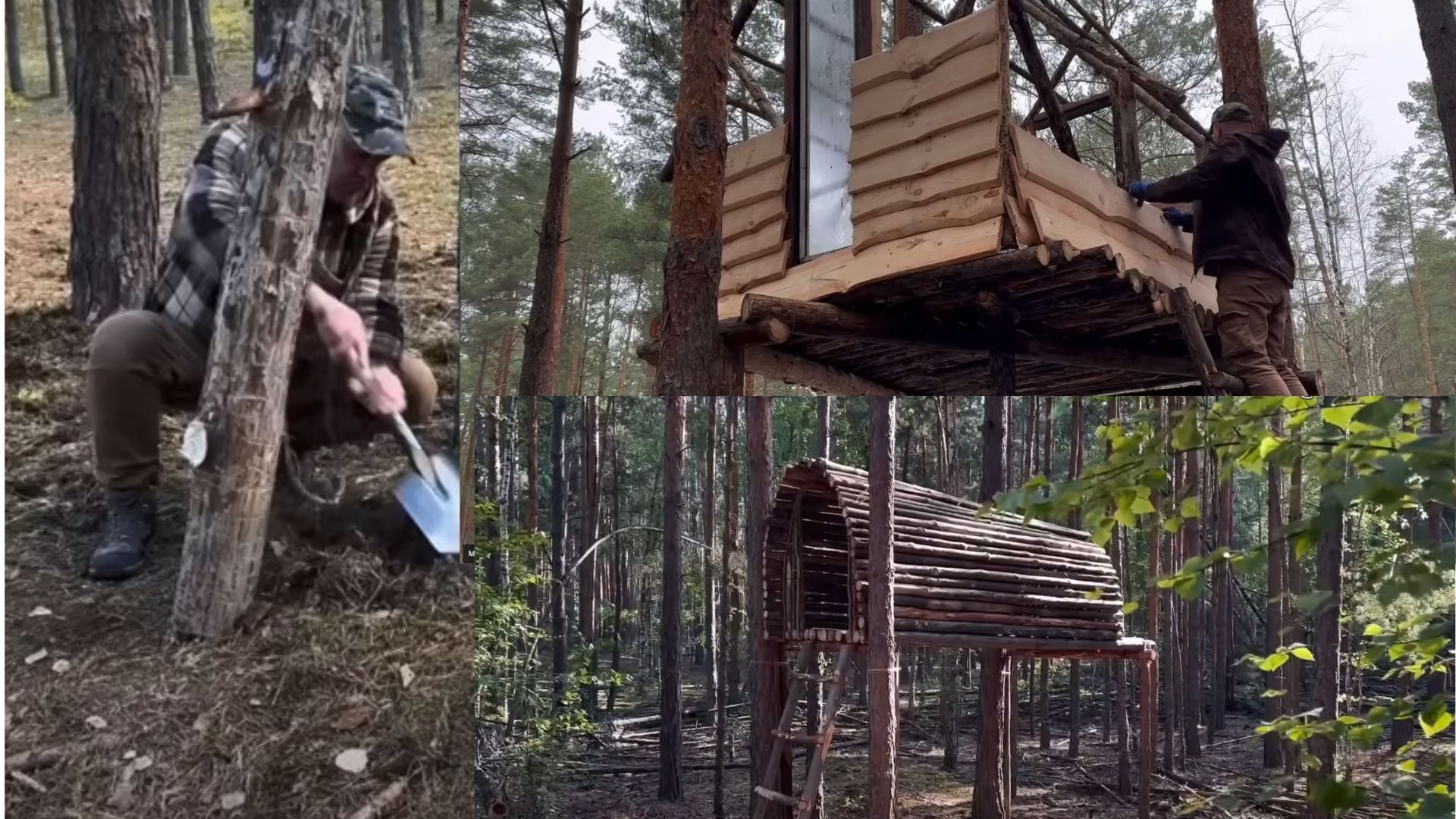
Suspended Shelter Two Meters Off the Ground Becomes a Low-Impact Alternative for Those Seeking Silence, Simplicity, and Direct Contact with the Forest.
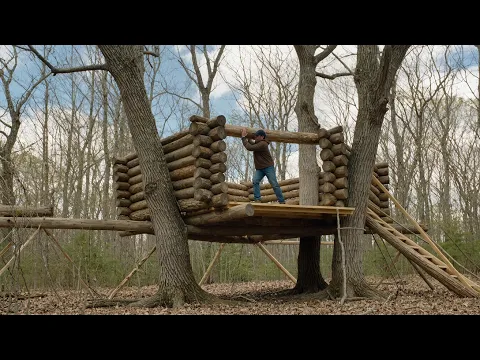
An elevated rustic shelter about two meters off the ground, built with logs and lighter wood, has caught attention for combining low intervention on the land and an occupation mode that prioritizes the essential.
Attached directly to trees, the structure dispenses with screws by betting on manual joints, in a logic of assembly that seeks to take advantage of the resistance of the set itself.
Without internal divisions, the space serves as a compact and direct refuge, aimed at temporary stays in forested areas.
-
He started running at 66 years old, broke records at 82, and is now a subject of study for having a metabolic age comparable to that of a 20-year-old, in a case that is intriguing scientists and inspiring the world.

-
Oldest tree on the planet reappears after 130 years of searches: Wattieza, 385 million years old, was 10 meters tall and had no leaves or seeds; Gilboa fossils in New York solved the mystery in 2007.

-
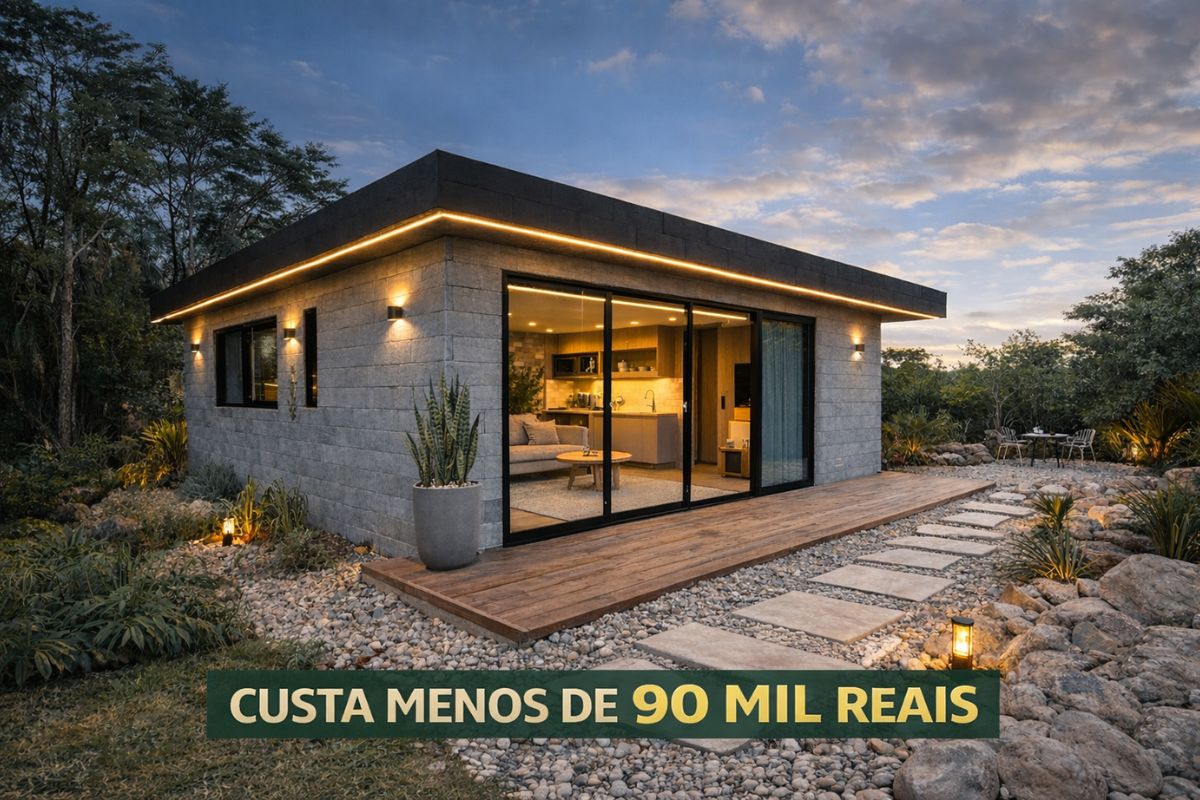
A 48-square-meter house assembled in hours with 4,000 bricks made of recycled plastic that does not absorb moisture, has natural thermal insulation, and costs less than 90,000 reais in a complete kit.
-
Luciano Hang revealed that Havan’s air fleet has already accumulated more than 20,000 landings, 10,000 flight hours, and 6 million kilometers traveled, and he says that without the planes, the company would never have grown so quickly.


In recent years, projects of this kind have begun to circulate more frequently in discussions about low-impact constructions and experiences of immersion in nature.
The proposal usually starts from a simple goal: to get off the ground level, reduce contact with moisture, and create a protected observation point without relying on complex industrial solutions.
At the same time, the choice of natural materials tends to contribute to an internal environment with a sense of thermal stability, even though the shelter does not feature conventional insulation.
Elevated Shelter Between Trees and Support Logic
The main structural characteristic is the elevation.
By raising the floor to approximately two meters, the project distances itself from the humidity of the ground and gains natural ventilation under the platform, which influences comfort and wood preservation.

This distance also reduces contact with small animals and terrain irregularities, as well as decreasing the need for leveling or earthmoving.
Rather than relying on traditional foundations, the described shelter is anchored to sturdy trees, using joints that connect beams, bracing, and the floor.
The support can depend on a combination of support points, distributing the weight in a way that keeps the platform stable.
The absence of internal divisions, in turn, concentrates loads in a single volume, simplifying the design of the structure and making the interior more flexible for different uses.
Another recurring feature is the rustic aspect.
When the finish remains close to the natural state of the wood, with logs and minimally processed pieces, the construction preserves marks of the material and varies according to what is available in the surroundings.
This alters the final appearance and also affects assembly, as each piece may require adjustment in fitting and floor accommodation.
Manual Joints and Durability of the Construction
The manual construction process, from cutting to fitting, tends to alter the relationship between design and execution.

Instead of relying on standardized pieces, the assembly follows the actual behavior of the logs and the position of the trees used as support.
Thus, each connection can be adjusted at the time of installation, reducing gaps and correcting misalignments that arise when the material is not uniform.
At the same time, manual construction allows for observing, step by step, where the structure works the most: support points, bracing, and areas of the floor that receive the greatest load.
This monitoring can favor targeted reinforcements and a more balanced distribution of weight, which helps avoid concentrated stresses over time.
Even though the text highlights the lack of screws, the central logic remains the same: to join wood pieces with sufficient precision so that the structure remains cohesive.
The performance, in this scenario, starts to depend directly on the quality of the joints, bracing, and fastening of the floorboards, especially because the shelter remains suspended.
Light Wood, Thermal Comfort, and Safety Points
The predominant choice for logs and light wood seeks to balance strength and weight reduction.
Logs tend to offer structural robustness, while lighter pieces can facilitate the assembly of the floor and enclosure, when existent, without overloading the support points.
As the shelter does not have internal divisions, the environment results in a single space, and the thermal behavior is more linked to the type of wood, the gaps, the ventilation, and the means of protection against wind and rain.

In terms of comfort, natural material is often associated with the feeling of “organic” insulation because wood does not conduct heat in the same way as metal surfaces and, in many situations, helps reduce sharp variations.
The thermal stability mentioned in the text depends on how the shelter was closed, exposure to sunlight, air circulation, and the level of floor protection, factors that vary according to execution.
When it comes to safety, the priority falls on the structural assembly.
Well-laid floor, firm bracing, and consistent joints are crucial to prevent unwanted movements.
Moreover, any suspended structure requires attention to the total weight supported and how that weight is distributed, as oscillations can arise with wind, movement of people, and natural settling of the material.
Refuge in the Forest and Usage Profile of the Shelter
The described use approaches a temporary refuge, aimed at periods of rest, contemplation, or outdoor activities.
The proposal does not present itself as urban housing or as a solution for continuous stays with typical city infrastructure.
In general, its appeal lies in distancing from routine and the experience of remaining in a simple space, where the essential stands out.

There is also a profile component: people seeking direct contact with nature and accepting limitations of space tend to see value in a shelter without internal divisions.
For families, use tends to be recreational and occasional, with shorter stays.
For practitioners of activities in forested areas, the structure can serve as a support point, provided that safety and access conditions are appropriate for the environment.
Differences from Tiny Houses and Urban Compact Houses
Although it may resemble the appeal of “compact houses,” the elevated shelter among trees comes from a different logic.
The focus is not on finish, urban regularization, or integration into conventional networks, such as energy and sanitation.
Instead, the central idea is autonomy in a minimal space and direct coexistence with the surroundings, with low impact on the ground.
Urban and prefabricated models generally prioritize standardization and solutions for daily use, while the suspended shelter prioritizes a more discreet presence in the environment and a sensory experience that depends on the location.
The comparison, therefore, highlights distinct proposals: one aimed at daily life in regulated contexts; the other conceived as a simple refuge for limited stays.







-

-

-

-

-

20 pessoas reagiram a isso.