





 Portuguese
  English
  Spanish
  5 min of reading
  18 comments


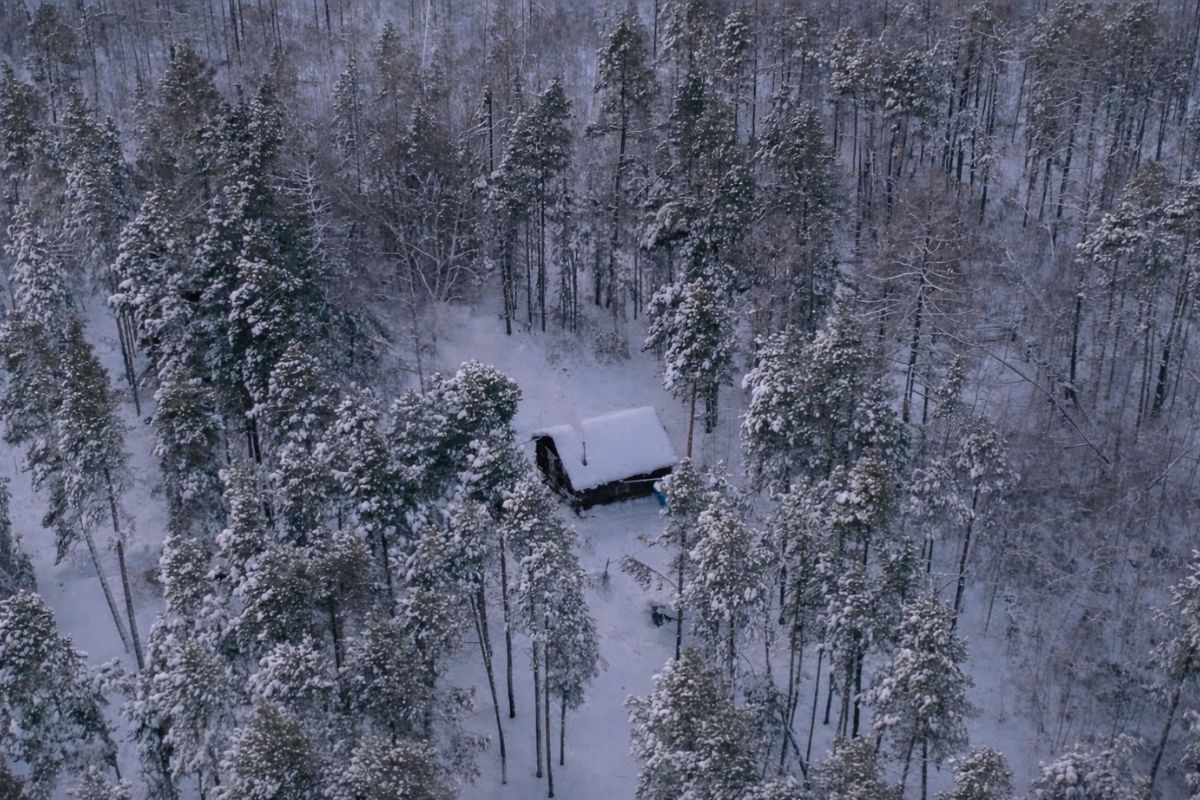


In Yakutia, Siberia, Samuil Lives Alone in the Coldest Forest on the Planet for Two Decades, 30 km from the Nearest Village, in a Log House with Burlap and Cellophane, Keeps a Wood Stove, a Radio with Homemade Batteries, Lake Ice Water, and Trap Meat for Hares
A man has lived alone in the coldest forest on the planet for 20 years, in the frozen interior of Yakutia, Siberia, in a setting where temperatures can reach extreme levels, close to -70°C, and survival depends on a physical, repetitive routine with no room for distraction.
The wooden house, made from logs from the forest itself, serves as a minimal shelter against a cold described as painfully biting. Even with electricity at times, constant heating becomes a daily obligation, while bears and wolves roam an environment that demands caution with every decision.
The Morning Routine in Siberia Begins with the Radio and Ends with Firewood

The days start early, with Samuil turning on the radio to listen to the news.
-
He started running at 66 years old, broke records at 82, and is now a subject of study for having a metabolic age comparable to that of a 20-year-old, in a case that is intriguing scientists and inspiring the world.

-
Oldest tree on the planet reappears after 130 years of searches: Wattieza, 385 million years old, was 10 meters tall and had no leaves or seeds; Gilboa fossils in New York solved the mystery in 2007.

-
A 48-square-meter house assembled in hours with 4,000 bricks made of recycled plastic that does not absorb moisture, has natural thermal insulation, and costs less than 90,000 reais in a complete kit.

-
Luciano Hang revealed that Havan’s air fleet has already accumulated more than 20,000 landings, 10,000 flight hours, and 6 million kilometers traveled, and he says that without the planes, the company would never have grown so quickly.


The central detail is adaptation: the radio is powered by batteries he created, a practical solution to maintain some connection to the world while remaining alone in the coldest forest on the planet.
Shortly after, comes the task that sustains everything: enough firewood to keep the stove active. Collecting firewood is not occasional.
He makes several daily trips to the forest to supply the house, because the structure does not retain heat well, and the fire cannot “rest”.
The Log House, Burlap, and Cellophane That Needs Heat All the Time

Samuil built the house using local logs. To try to retain the internal temperature, he insulated it with burlap, a material made from old rope, common in Yakut houses.
Instead of windows, he uses cellophane, which clearly shows the limit of improvisation: it is not an effective insulator.
The result is straightforward: the house loses heat easily.
Therefore, heating the interior is described as a continuous battle, with the wood stove functioning as the center of the day, from lunch to night.
Extreme Cold Shapes the Body, the Rhythm, and Even Rest

The climate demands respect and care.
The air at such low temperatures is described as biting and very cold.
The survival strategy involves constant movement: physical work to keep the body warm.
He reports that he needs to collect firewood several times a day and keep the house heated non-stop, day and night.
When fatigue wins and he sleeps longer than expected, he wakes up to find that his hair has frozen, a brutal sign of what happens when the fire weakens.
The Distance of 30 km and the Challenge of Food Without Direct Hunting
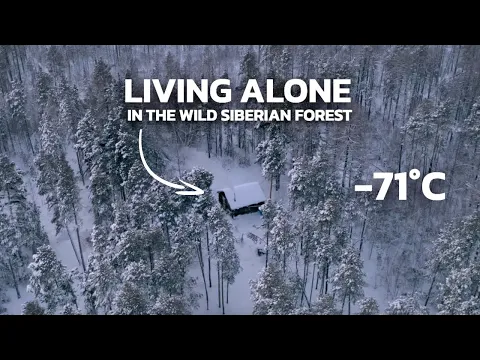

The logistics of food are limited by distance: he lives 30 km from the nearest village. Samuil claims he does not hunt.
His only source of meat comes from hare traps, a method that does not always guarantee results.
When supplies run out, the heaviest part of isolation emerges: a 5-hour walk to the village, described as possible only in the warmest months of spring and summer.
The timing of travel is not a choice; it is imposed by the terrain and the cold, reinforcing the reality of being alone in the coldest forest on the planet.
Water from Lake Ice and the Logic of Seeking What Is Safer
In the late afternoon, before sunset, Samuil fetches water from the lake.
He uses ice as the main source for drinking and washing, as he considers it cleaner and safer than snow.
The justification presented is straightforward: the <strongfreezing process purifies the water, eliminating impurities that existed before freezing.
Within this routine, water is not a detail; it is a health maintenance, repeated day after day.
Pine Needle Tea and Young Alamo Leaves as a Response to the Body
When he feels cold, he prepares tea with pine needles.
Another option mentioned is using young alamo leaves, left in warm water for about 2 hours and then drunk, which he indicates as a way to reduce fever or cough and feel better the next day.
It is a survival repertoire based on resources from the surroundings, practiced by someone who claims to have been born in 1957 and is already used to life away from the village, which he describes as boring.
Dinner Without Refrigerator, Iacut Bread, and Constant Risk of Bears
Living in the coldest place on Earth brings a practical advantage: no need for a refrigerator. The environment acts as a natural freezer, allowing food to be stored outdoors.
The caution, however, shifts: he needs to hide food well because of the bears.
For dinner, he makes iacut bread using baking soda, water, and flour.
He describes the recipe as simple and quick, but emphasizes that it consumes a lot of flour, so it is not something he does often, treating it as a kind of treat.
Why He Chose to Stay and What Keeps the Routine Going
Samuil says he enjoys living in the forest and does not want to leave.
He acknowledges the danger of living alone there and reports seeing bears frequently when the weather warms up and the berries start to grow, but states that they do not bother him, as if they have enough food.
He also mentions that part of the decision to live alone in the coldest forest on the planet relates to family losses in his youth, but the daily routine shows what truly sustains his permanence: radio, firewood, water, food, and a discipline that allows no failures.
If you had to choose, what would be the most difficult in this life: the 5-hour walk to the village, keeping the wood stove active day and night, or dealing with bears near the food supply?








You need food to gain energy to walk 5 hours to the village so I would make sure my stomach is full with the meat from the hare then I would make sure there was enough wood cut to light a fire once I returned from the village with enough food to store away from bears and wolves so I don’t think it would be the hardest thing in life but just pure common sense!! If you live that life!!
He is mentally aligned with the environment so this environment is the part of his life.
There’s Always alternatives than to suffer unnecessary.It is not worth it.