





 Portuguese
  English
  Spanish
  5 min of reading
  2 comments


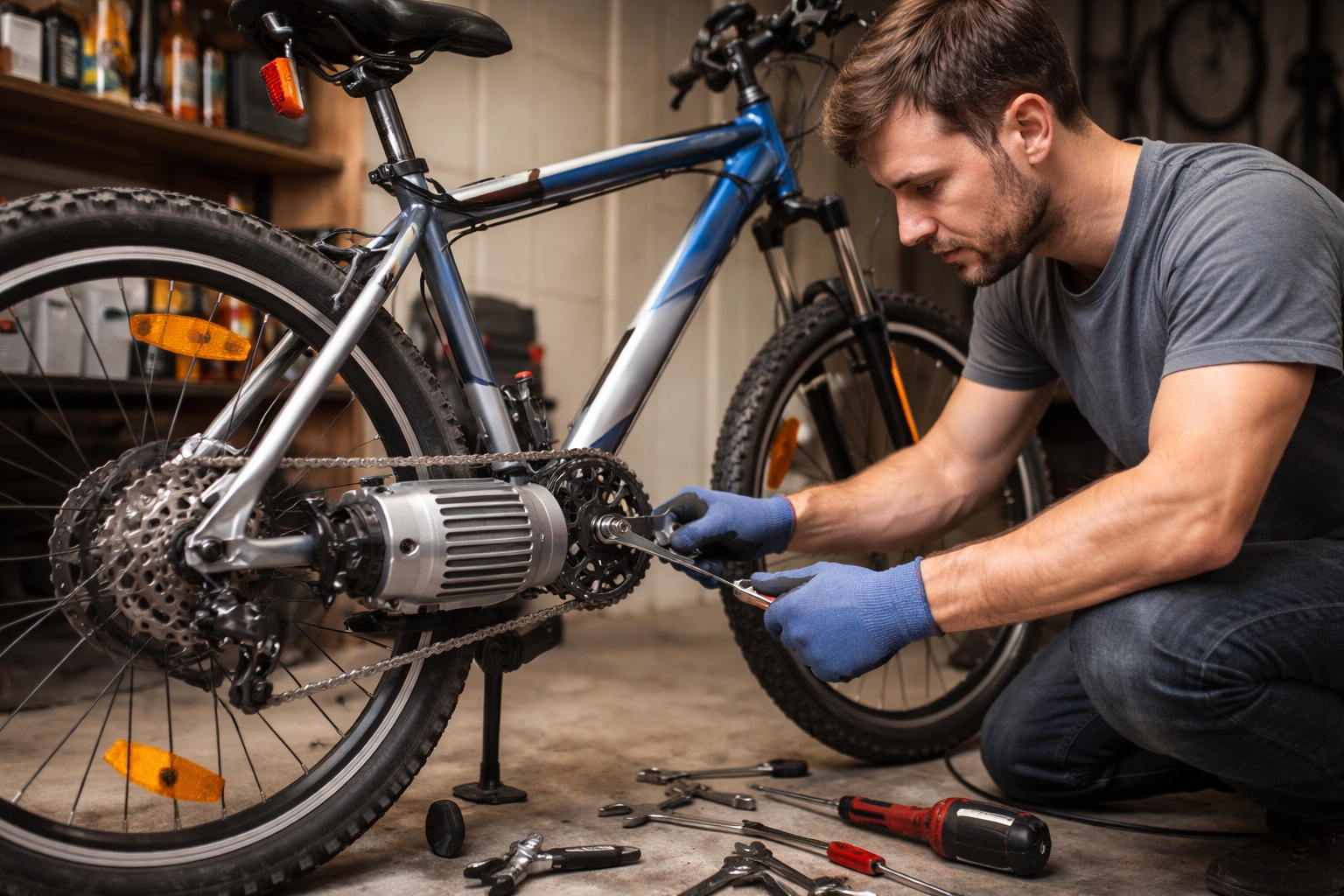


He Did Not Buy A Ready Kit. He Used Gears, Nuts, Chain, And Metal Cutting To Transform The Old Bicycle Into Functional Electric.
Everything starts with a regular bicycle, the kind that doesn’t attract attention. Worn chain, already used crank, metallic frame marked by wear. Nothing there suggests extra power or performance out of the ordinary. Still, by the end of the process, the set behaves differently, responding to movement with mechanical support integrated into the original system.
The transformation does not attempt to hide anything. The motor enters the scene directly, without fairing, without encapsulation, and without the promise of refinement. It starts to work alongside the chain that was already doing the heavy lifting, sharing the effort and changing the pace of movement.
What makes this case relevant is precisely the absence of shortcuts. There is no ready-made solution or final product appearance. What exists is basic mechanics applied with courage, altering the bicycle in its most fundamental aspects.
-
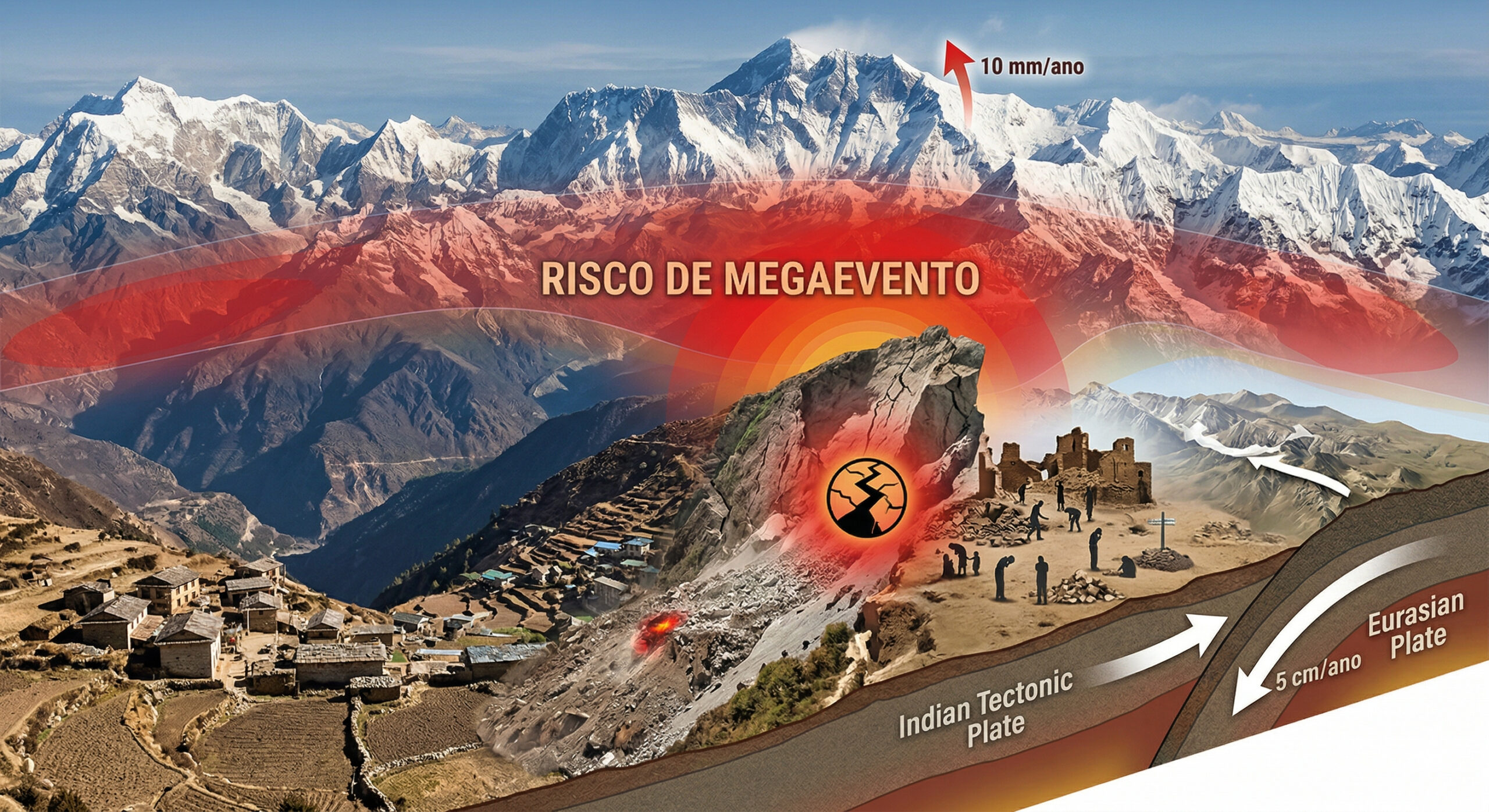
The Himalayas continue to grow to this day, with tectonic plates advancing 5 cm per year, mountains rising up to 10 mm annually, and the 2015 earthquake that killed 9,000 people may have increased the risk of an even larger seismic mega-event.
-
At an altitude of 400 km by astronauts from the International Space Station, Paris transforms at night into a golden mesh so precise that it reveals the outline of the Seine River, avenues, and entire neighborhoods like a luminous map drawn over the Earth.

-
iPhone 17 reaches historic low price with 256 GB, 120 Hz display, and drops to R$ 5,703 on Shopee, featuring A19 chip, dual 48 MP cameras, battery life of up to 30 hours, and advanced AI features.

-
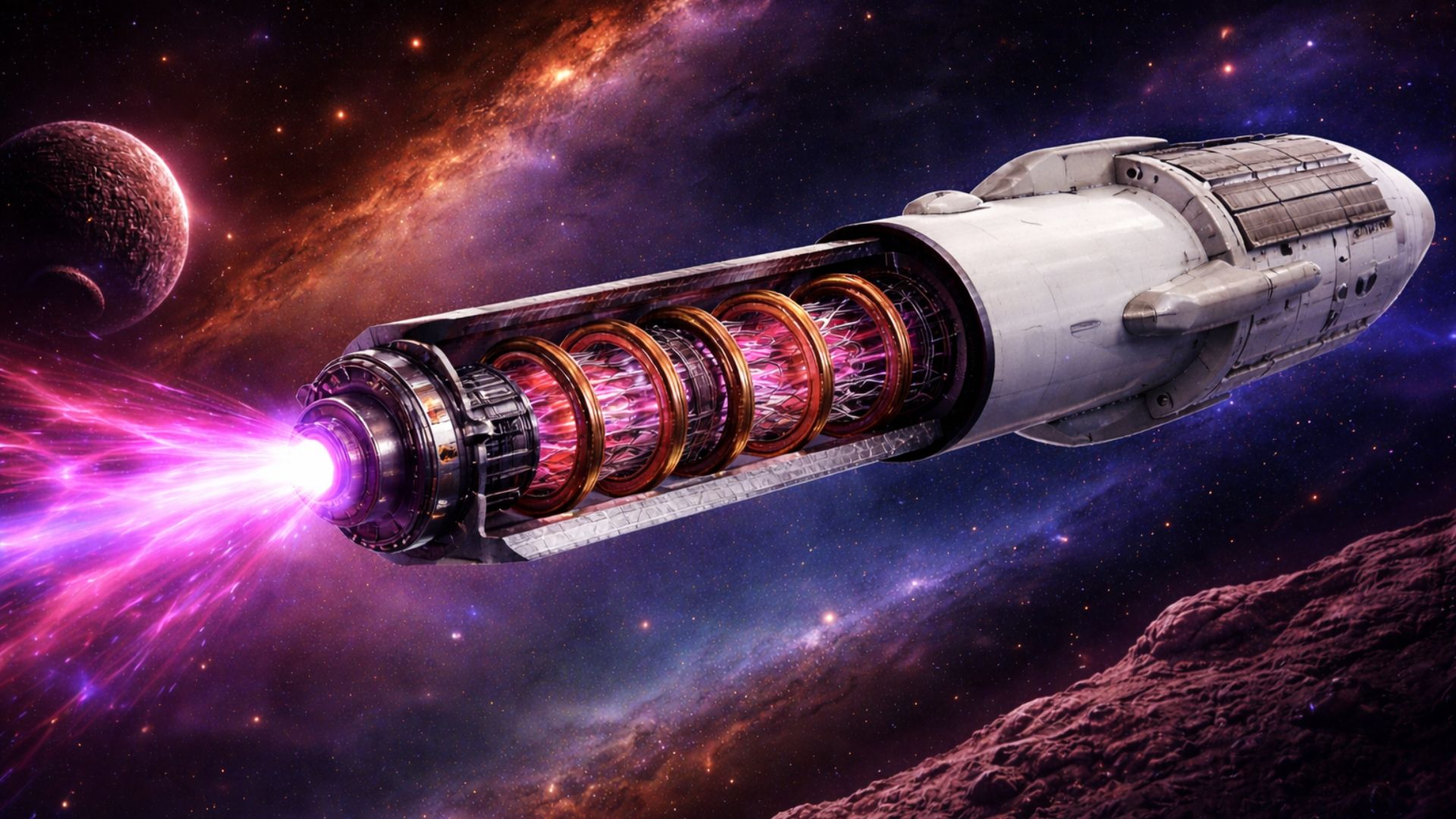
Trip to Mars getting closer: Pulsar Fusion, from the UK, advances with plasma ignition in fusion engine and could drastically reduce space travel time, making crewed missions faster, safer, and economically viable.

Initial Preparation Highlights Transmission And Bottom Area Of The Frame

Organization Of The Set Highlights Chain, Crank, And Rear Wheel
The bicycle is shown resting on the ground, with the rear wheel lifted and free to rotate. The metal chain is exposed, as well as the crank and the sprocket, all with visible signs of use and dirt accumulation around the frame.
The execution begins with direct handling of the transmission. Hands rotate the crank and move the chain over the teeth of the sprocket, monitoring alignment, slack, and contact between the gears. The work is done without complete disassembly of the set.
As a consequence, the bottom area of the frame becomes the focal point of the modification. The space near the chain is clearly designated for the installation of new mechanical components.
A detail that reinforces the scene is the maintenance of the set intact. The bicycle remains assembled, indicating an adaptation aimed only at intervening where necessary.
Cylindrical Motor Receives Metal Gear On The Shaft

Assembly Transforms The Shaft Into Active Transmission Point
The electric motor appears separated from the bicycle, resting on a flat surface. The cylindrical metal casing has a protruding central shaft, still disconnected from other mechanical elements.
The execution involves fitting a toothed metal gear directly onto this shaft. Washers and a nut are positioned manually, followed by progressive tightening with a tool, keeping the set aligned to the center of the motor.
After fastening, the motor now has a compatible element with the chain. The smooth shaft becomes a transmission point capable of interacting with the existing gear of the bicycle.
A striking detail is the controlled use of a hammer to seat the gear before final tightening. The brief gesture indicates precise adjustment and not excessive force.
Set Adjustment Ensures Stable Rotation Of The Sprocket
Final Tightening Ensures Firm Fixation And Visual Alignment
With the gear already mounted, the focus shifts to fine-tuning the set. The hand rotates the metal sprocket and observes for lateral oscillation or slack in the motor’s shaft.
The execution includes re-tightening the central nut and visually checking the position of the gear in relation to the motor cover. The thread remains partially visible, indicating firm fixation without over-tightening.
As a direct effect, the set gains a uniform appearance. The motor now presents a stable rotating element, ready to be integrated into the rest of the transmission.
An observable detail is the presence of grease and usage marks around the sprocket. Cleaning is partial, reinforcing the functional nature of the adjustment.
Cut In The Frame Creates Space To Accommodate The Motor
Metal Structure Is Opened For Physical Fitting Of The Set
The bicycle reappears resting on its side, focusing on the bottom tube of the metal frame. An electric cutting tool is applied directly to the tube, removing material and producing visible sparks.
The execution is continuous and controlled. The disc passes through the metal until forming an opening suitable for the diameter of the motor. The hand that supports the frame maintains stability throughout the process.
The immediate consequence is the permanent alteration of the structure. The tube is no longer closed and now allows for the direct insertion of the motor inside the frame.
The detail that catches the eye is the irregular edge of the cut. There is no visible aesthetic finish, just enough removal to facilitate the assembly.
Motor Positioning Connects Chain To The Original System

Auxiliary Gear Aligns With Chain And Rear Sprocket
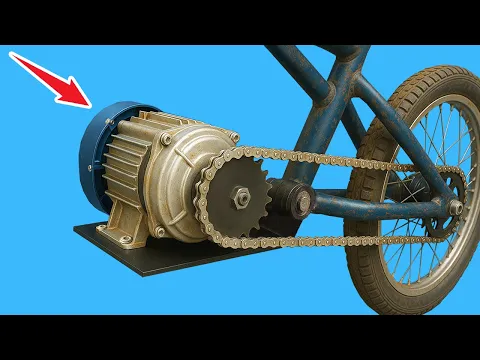
With the frame already modified, the motor is brought close to the bicycle and positioned near the existing chain. The metal sprocket is aligned with the chain’s path, creating a second contact point.
The execution involves fitting the chain over the new gear and manually adjusting the tension. The motor remains supported by improvised support while the alignment is visually checked.
The practical effect is the formation of a combined transmission. The chain now connects the crank, motor, and rear wheel, creating a unique circuit of rotational movement.
An observable detail is the wear on the chain, which adapts to the new path without apparent replacement or sophisticated adjustment.
Practical Test Confirms Additional Traction In Motion

Continuous Movement Shows Pedaling Combined With The Motor
In the final stage, the bicycle appears moving on the asphalt. The cyclist pedals while the set advances continuously, with no bumps or visible interruptions in the transmission.
The execution of the test is straightforward. The bicycle maintains a stable trajectory, with constant rotation of the chain and gears, indicating simultaneous operation of the systems.
The observable consequence is greater fluidity in movement. The apparent effort decreases, while the motion remains steady throughout the path.
Conversion Highlights Limits And Possibilities Of Direct Adaptation
In the end, the story is not about perfection; it’s about decision and adjustment. The most decisive technical factor is the direct link between gear, chain, and rear wheel, which maintains a unique circuit and allows the motor to share the workload without destroying the transmission logic.
The broader impact appears in the simple reading of the case. An old bicycle can regain function when someone understands where to intervene, accepts to cut what is necessary, and insists on alignment until it works. It’s real workshop, direct mechanics, and a result that proves itself on the street.

Leave your comment: would you make such an adaptation to your bicycle? Tell which part of the process caught your attention the most and what adjustment you consider indispensable to keep the chain and gears working aligned in everyday use.







Meu nobre excelente projeto. Vamos pro detalhe final quanto custará?
É isso que eu quero fazer na minha Caloi. estou preparando a minha logo estaremos desfrutando por aí gostei parabéns