





 Portuguese
  English
  Spanish
  4 min of reading
  1 comment


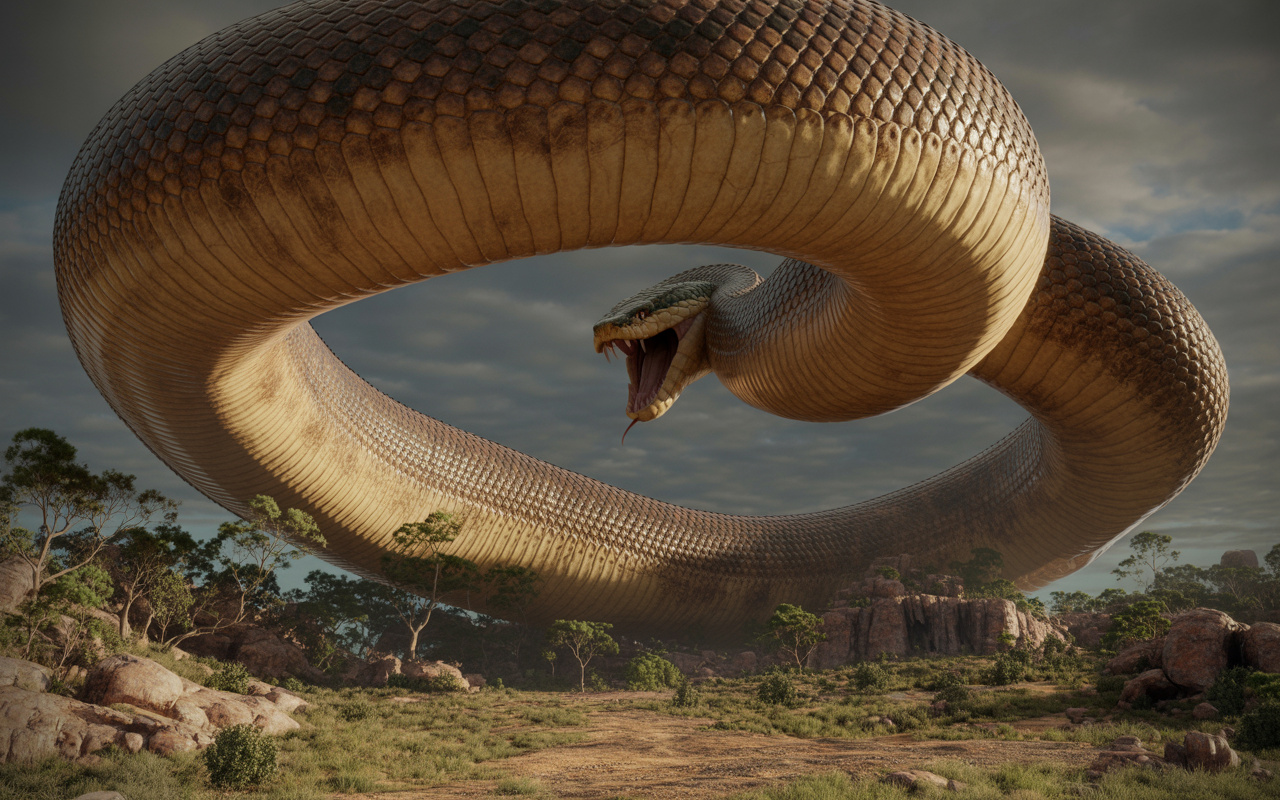


With More Than 6 Meters in Length, the Wonambi Naracoortensis Was One of the Largest Snakes in Prehistoric Australia and Dominated Ecosystems for Tens of Thousands of Years.
Long before the arrival of humans on the Australian continent, rivers, swamps, and open forests were dominated by giant predators that today seem to have come straight out of a science fiction movie. Among them was the Wonambi naracoortensis, a colossal snake that lived until about 40,000 years ago and became one of the largest terrestrial reptiles ever recorded in Oceania. Its size, behavior, and ecological role help understand how Australian ecosystems functioned before the collapse of megafauna.
What Was the Wonambi Naracoortensis and When Did It Live
The Wonambi naracoortensis belongs to an ancient group of snakes known as madtsoiids, a primitive lineage that existed for millions of years and spread across different continents in the southern hemisphere.
Unlike modern snakes, it was not part of the python group or current venomous snakes, representing an already extinct evolutionary branch.
-
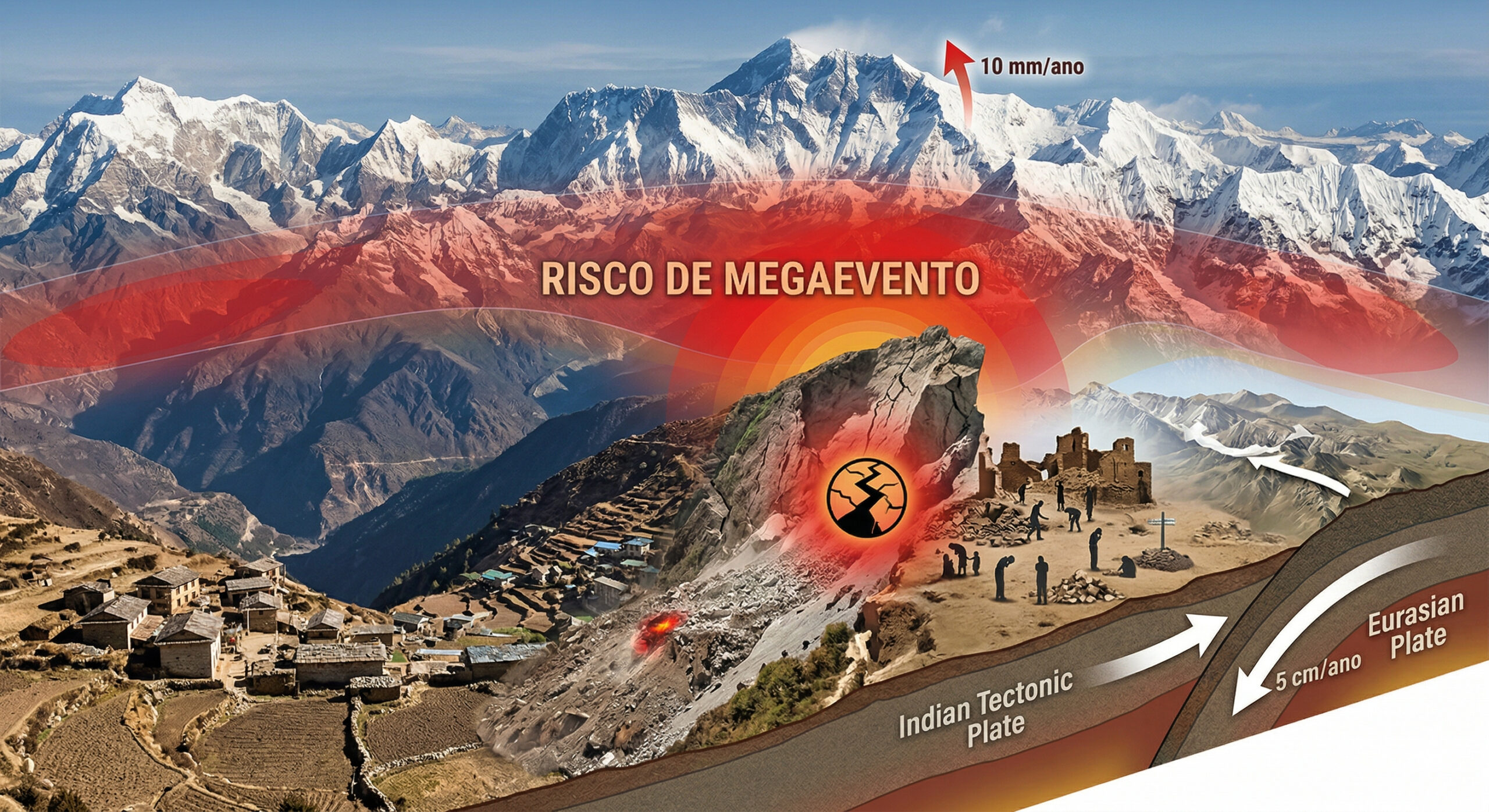
The Himalayas continue to grow to this day, with tectonic plates advancing 5 cm per year, mountains rising up to 10 mm annually, and the 2015 earthquake that killed 9,000 people may have increased the risk of an even larger seismic mega-event.
-
At an altitude of 400 km by astronauts from the International Space Station, Paris transforms at night into a golden mesh so precise that it reveals the outline of the Seine River, avenues, and entire neighborhoods like a luminous map drawn over the Earth.

-
iPhone 17 reaches historic low price with 256 GB, 120 Hz display, and drops to R$ 5,703 on Shopee, featuring A19 chip, dual 48 MP cameras, battery life of up to 30 hours, and advanced AI features.

-
Trip to Mars getting closer: Pulsar Fusion, from the UK, advances with plasma ignition in fusion engine and could drastically reduce space travel time, making crewed missions faster, safer, and economically viable.


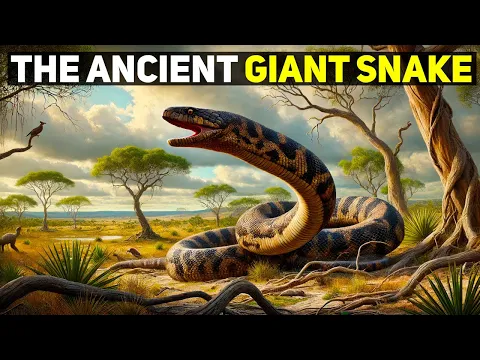

Fossils found mainly in the south of Australia indicate that the species survived until the end of the Pleistocene, coexisting with large marsupials like diprotodonts, giant kangaroos, and bear-sized wombats. This makes the Wonambi one of the last large prehistoric snakes to disappear from the planet.
Dimensions That Place the Snake Among the Largest in History
The most accepted estimates indicate that the Wonambi naracoortensis reached between 5 and 6 meters in length, possibly exceeding this mark in exceptional individuals.
Its body was thick and extremely muscular, adapted to dominate large and resilient prey.
Although it did not reach the extreme sizes of the South American Titanoboa, the Wonambi was among the largest snakes known outside South America and stands out as the largest snake ever identified in the history of Australia.
How the Wonambi Hunted Without Venom
One of the most fascinating aspects of the Wonambi is that it was not venomous. Instead, it used brute force and strategy to capture its prey. Anatomical evidence indicates that it did not have the ability to open its mouth as widely as modern pythons, suggesting a different hunting method.
Scientists believe that the Wonambi killed by partial constriction, crushing, and immobilization, possibly attacking vital areas of its prey’s body or keeping them submerged in flooded areas until exhaustion.
This behavior is compatible with river, lake, and swamp environments, where the snake would have had an advantage over large marsupials needing to drink water regularly.
The Ecological Role of the Snake in the Australian Megafauna
For thousands of years, the Wonambi occupied the top of the food chain. As a predator of large herbivores, it helped regulate populations of giant marsupials, directly influencing vegetation and the balance of ecosystems.
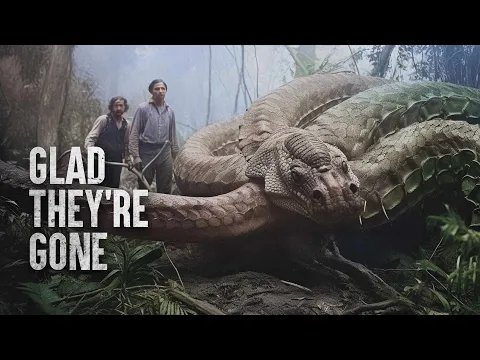
Its presence indicated a stable environment, rich in large prey and with extensive wetlands. The disappearance of the Wonambi coincided with the collapse of the Australian megafauna, an event that drastically altered the ecological dynamics of the continent.
Why the Wonambi Disappeared
The extinction of the Wonambi naracoortensis is linked to a combination of factors. Climate changes at the end of the last ice age reduced wetland areas and altered the availability of prey.
At the same time, the arrival of the first humans in Australia brought intense hunting and profound changes to the environment, such as the systematic use of fire.
With the reduction of large marsupials, the Wonambi lost its main food sources. A predator of this size depends on abundant prey and specific environments, making its survival extremely vulnerable to rapid changes in the ecosystem.
Comparison with Modern Snakes
When compared to current pythons, such as the reticulated python or the Burmese python, the Wonambi stands out for the ecological context in which it lived.
While modern snakes still find abundant prey and favorable environments, the Wonambi depended on a world dominated by giant animals, now extinct.
Even so, its size is comparable to that of the largest snakes alive today, reinforcing how extreme the prehistoric Australian fauna was.
A Symbol of Australia Lost in Time
The Wonambi naracoortensis was not just a giant snake. It represents an era when Australia was inhabited by colossal predators and herbivores, forming one of the most unique ecosystems that ever existed on Earth.
Its study helps scientists understand how environmental changes and human action can lead to the extinction of dominant species.
Today, the Wonambi remains one of the most impressive examples that the planet’s past was inhabited by creatures that far surpassed everything we know in the modern world.









The video is awful. Overdramatic and sometimes incorrect. [Boid snakes don’t chase down their prey — they’re ambush predators. Constrictors don’t smash bones — they merely stop blood circulation, a far easier task