





 Portuguese
  English
  Spanish
  3 min of reading
  5 comments


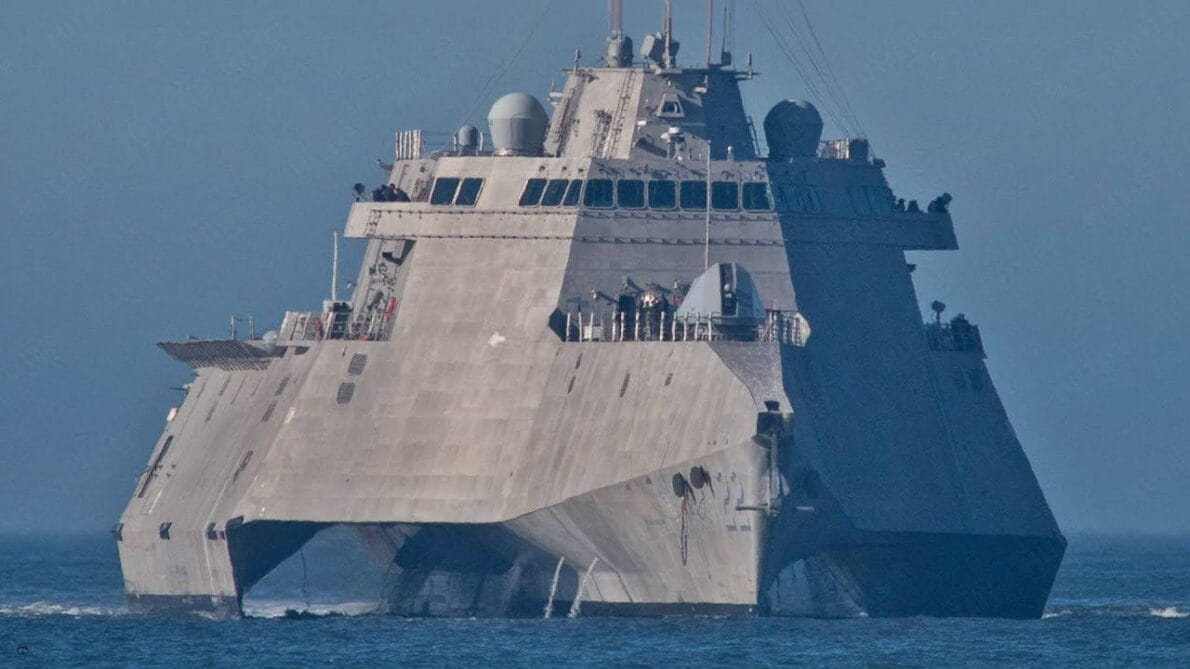


In The World Of Maritime Defense, The United States Navy Has Invested In Ships Designed To Operate Close To Shore. An Example Is The Littoral Combat Ship (LCS), A Fast And Agile Ship Designed To Confront Modern Threats, Such As Missile-Launching Boats, Small Submarines, And Mines. This Ship Represents A Significant Advance In The Combat Capability Of The United States Navy.
The LCS Program Started In 2003, When The Navy Launched Its First Experimental Ship, The Sea Fighter. The Goal Was To Replace Aging Patrol And Mine Countermeasure Ships That Were At The End Of Their Service Lives. Two Companies, Lockheed Martin And General Dynamics, Presented Different Designs That Were Both Funded To Create Two Variants Of The LCS. The First Littoral Combat Ship, USS Freedom (LCS-1), Was Commissioned In 2008.
The LCS Is Designed To Be Fast, Flexible, And Modular. This Means It Can Be Equipped With Different Weapons And Sensor Systems As Needed. It Is Capable Of Operating Independently Or As Part Of A Larger Force In High-Threat Environments. Despite Facing Criticism For Delays And High Costs, The LCS Remains A Central Piece In The United States Navy’s Coastal Combat Strategy.
The Littoral Combat Ship Is Equipped With A Variety Of Weapons And Defense Systems, Including:
57mm Mk 110 Gun System: Can Fire Up To 220 Rounds Per Minute.
-
With 74% of companies facing difficulties in hiring, technicians and engineers in renewable energy are becoming scarce in Brazil and are essential to support the expansion of solar, wind, and green hydrogen projects.

-
Europe is trying to create an ammonia-powered marine engine without auxiliary fuel, which could unlock the race for giant emission-free ships. The technology aims to eliminate one of the biggest obstacles to clean maritime propulsion.
-
A 4,500-ton frigate with just over 100 crew members, state-of-the-art radar, and cruise missiles is being touted as the new standard of naval warfare in the 21st century.
-
The first commercial hydrogen-powered ferry enters operation in the U.S., eliminates the use of diesel, uses fuel cells to generate clean energy on board, and transforms San Francisco Bay into a landmark of the new era of emission-free navigation.

Naval Strike Missile (NSM): With A Range Exceeding 185 Km, This Missile Enhances The LCS’s Strike Capability.
Rolling Airframe Missile (RAM) System: Used For Defense Against Anti-Ship Missiles.
CIWS Gun System: A High Rate Of Fire Gun For Close Defense.
Despite Its Advanced Capabilities, The LCS Program Has Faced Many Criticisms.
Some Experts Question The Ship’s Firepower And Durability In Combat. Issues With Communication And Integration Systems Have Also Been Highlighted. Additionally, The United States Navy Has Struggled To Justify The High Construction And Maintenance Costs Of These Ships.
The Navy Continues To Work On Improving The LCS’s Capabilities. Recently, New Combat Systems And Equipment Provided By The Government Have Been Tested To Enhance The Ship’s Readiness For Maritime Missions. One Of The Most Notable Advances Is The Testing Of The Supersonic SM-6 Missile, Which Could Significantly Increase The LCS’s Strike Capability.
The Littoral Combat Ship Represents A Significant Investment In The Coastal Combat Capability Of The United States Navy. With A Cost Of Approximately US$ 500 Million Per Unit, These Ships Are Designed To Confront Modern Threats And Protect U.S. Interests In Coastal Waters. Although Facing Challenges And Criticisms, The LCS Remains A Vital Part Of The American Naval Strategy, With Ongoing Upgrades To Maintain Its Effectiveness In The Battlefield.








Só mais um elefante branco.Muito dinheiro gasto e pouca efetividade.
Não seria surpresa, especialistas indicarem a compra pela MB.
Notícia no mínimo tendenciosa. Esses navios são uma bomba, deram vários defeitos no projeto, motor e casco de alumínio. Só falta o Brasil comprar essa bomba, junto com o NA da Inglaterra que tb vive no estaleiro.
Junto com os F16 para completar as sucatas.