





 Portuguese
  English
  Spanish
  3 min of reading
  1 comment


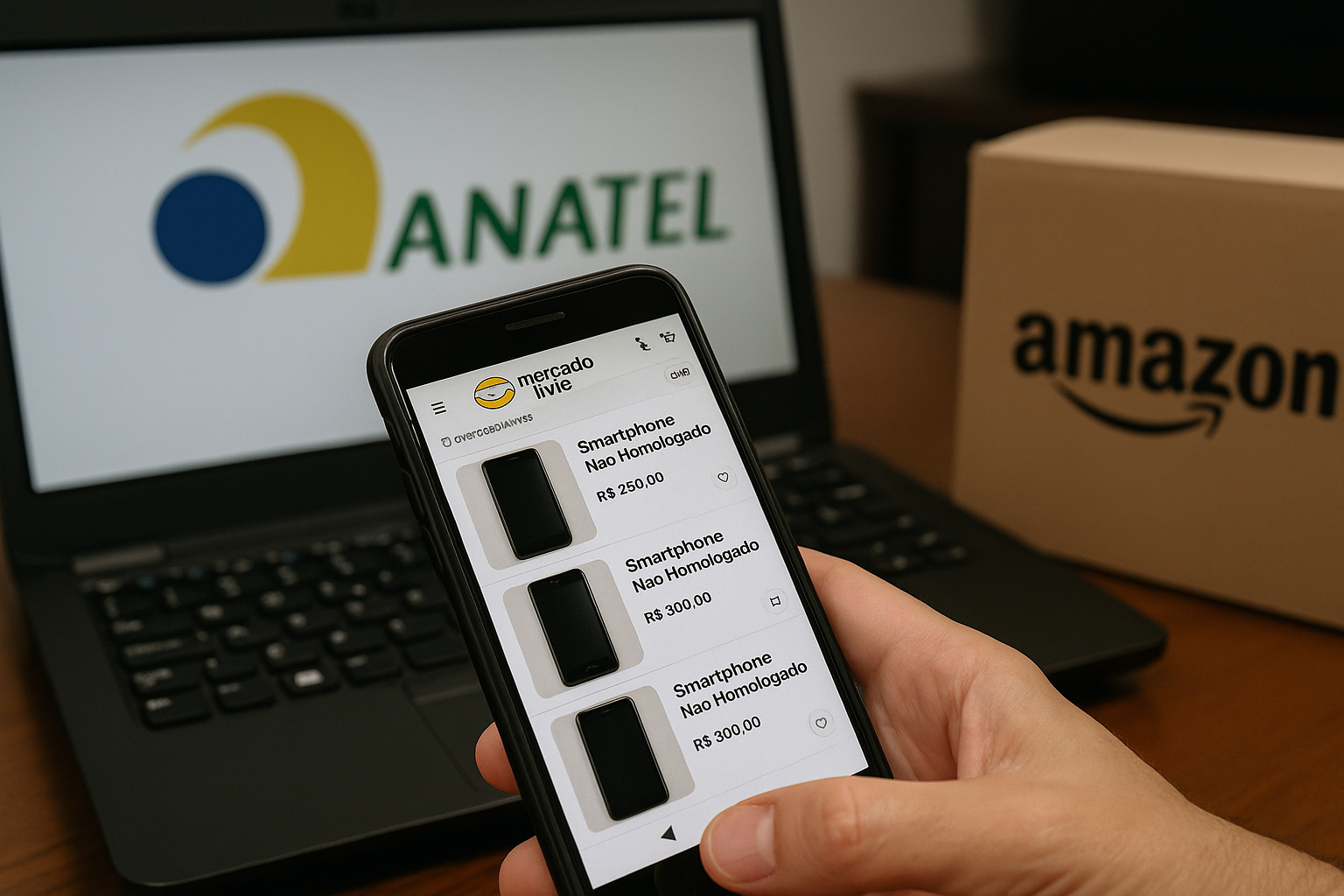

Intense Clash Between E-Commerce Giant and Regulatory Agency Reignites Debate on Responsibility of Digital Platforms
The Mercado Livre and the National Telecommunications Agency (Anatel) starred in one of the most significant clashes in the digital sector on October 13, 2025. The platform attempted to overturn a fine of R$ 6.2 million imposed by the agency for selling unapproved products, but failed to achieve the desired outcome. The case highlighted the increasing rigor of Anatel in controlling e-commerce activities.
During the session of the Board of Directors, prosecutor Thomaz Scheuller Paiva presented a strong and straightforward defense. He accused the agency of acting arbitrarily and claimed that the fine increased by over 238 thousand percent, rising from R$ 2,640.00 to R$ 6.2 million. According to Paiva, the decision represents excessive punishment and ignores the company’s history of cooperation.
Accusations and Reactions During the Meeting
According to the prosecutor, Mercado Livre attempted to negotiate with Anatel since 2011, but did not receive a positive response. He also stated that the agency adopted unequal criteria regarding competitors like Shopee, Magazine Luiza, and Amazon, which would indicate a lack of equality.
-
The Himalayas continue to grow to this day, with tectonic plates advancing 5 cm per year, mountains rising up to 10 mm annually, and the 2015 earthquake that killed 9,000 people may have increased the risk of an even larger seismic mega-event.

-
At an altitude of 400 km by astronauts from the International Space Station, Paris transforms at night into a golden mesh so precise that it reveals the outline of the Seine River, avenues, and entire neighborhoods like a luminous map drawn over the Earth.

-
iPhone 17 reaches historic low price with 256 GB, 120 Hz display, and drops to R$ 5,703 on Shopee, featuring A19 chip, dual 48 MP cameras, battery life of up to 30 hours, and advanced AI features.

-
Trip to Mars getting closer: Pulsar Fusion, from the UK, advances with plasma ignition in fusion engine and could drastically reduce space travel time, making crewed missions faster, safer, and economically viable.


The statements provoked immediate reactions. The reporter Otávio Pieranti rejected the arguments and called the defense’s thesis “absurd.” He emphasized that digital platforms have joint responsibility and that the Consumer Protection Code requires oversight of those who intermediate sales.
Pieranti explained that marketplaces do not only host advertisements, but participate directly in transactions. Therefore, they must ensure the safety and quality of products. He reminded that Anatel Resolution No. 242/2000 requires mandatory approval of telecommunications equipment and that sales without certification put consumers at risk.
Anatel Reacts and Maintains Firm Position
The president of the agency, Carlos Baigorri, responded directly to the criticisms. He stated that Mercado Livre has never shown a real willingness to change and that, even after several meetings since 2011, did not present concrete solutions. Baigorri reinforced that Anatel has always been open to dialogue, but that the power of oversight must be exercised when there is non-compliance with regulations.
According to him, the agency’s actions are unbiased and impartial, regardless of whether companies are large or small. The president also argued that oversight is essential to ensure consumer safety and preserve fair competition in the digital environment.
Decision Reinforces the Responsibility of Platforms
The upholding of the fine reinforced Anatel’s position that platforms must oversee the content published by their vendors. The decision creates a significant precedent in the sector and shows that e-commerce needs to comply with regulations.
The agency highlighted that product approval is mandatory to ensure quality and proper functioning of telecommunications networks. Experts believe that this decision represents a regulatory milestone for Brazilian e-commerce, as it clearly establishes the joint responsibility of platforms.
Impacts and Reflections for the Digital Sector
The episode demonstrates the increased oversight on marketplaces and the need for stricter internal control structures. The decision also signals that Anatel will continue imposing severe penalties on those who fail to meet legal requirements.
Technology and digital law analysts assert that the case strengthens the global movement for holding platforms accountable. This way, Brazil aligns with countries that demand more transparency and security in virtual operations.
The process between Mercado Livre and Anatel marks a turning point in digital commerce. The challenge now is to balance innovation and regulation, maintaining operational freedom without compromising consumer protection.
After all, how far does the responsibility of platforms extend over what is sold in their virtual spaces?










Interessante. E as bugigangas digitais são só UM aspecto da omissão do Mercado Livre. Por exemplo, o famoso e proibido azeite falsificado “Valle Viejo” continua sendo vendido livremente dentro do Mercado Livre, mesmo proibido pela ANVISA. Tem algo errado nisso. Denunciei duas vezes e o Mercado Livre se esquiva dizendo que não “infrinje propriedade intelectual”, ou seja, saem pela esquerda. Claro, continuam ganhando em cima da venda dos produtos ilegais e ainda deixam o ônus para o usuário. Bem feito essa multa de 6,2 milhões. Deveria ser o triplo!