





 Portuguese
  English
  Spanish
  6 min of reading
  1 comment


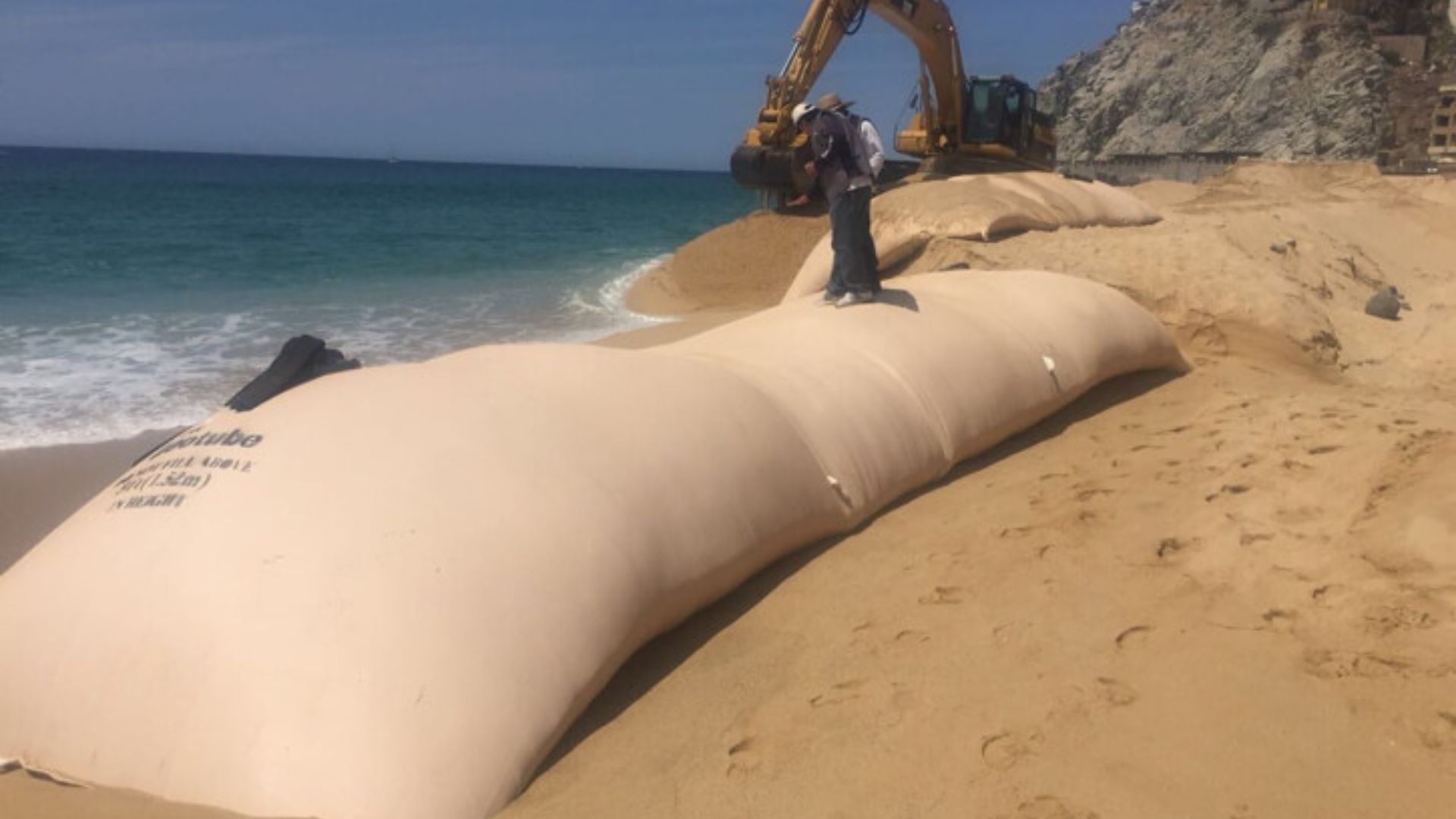


Submerged Line Of Geotextile Tubes Filled With Sand Forms A Barrier Of Kilometers On The Coast Of Yucatán And Seeks To Reduce The Impact Of Waves On The Beach. Structure Works As A Subtle Breakwater And Was Described In A Technical Study As An Alternative To Traditional Rigid Works.
On the northern coast of the state of Yucatán, Mexico, a stretch of beach has begun to receive an unusual barrier for those who imagine coastal works always made of rock and concrete: a line of submerged structures made with large geotextile “tubes” filled with sand, installed along kilometers to act as a low-crested breakwater and dissipate wave energy before it reaches the sand.
The solution is described by coastal engineers as a discreet protection system, designed to reduce the intensity of wave attacks and contribute to a more stable beach profile, without completely blocking water circulation and without imposing a visible rigid barrier on the landscape.
The project was detailed in a technical article published in the scientific journal Geotextiles and Geomembranes, where the authors describe the adoption of geotubes as low-crested structures, installed along 4 kilometers of beach in Yucatán, focusing on erosion control and recovering the sedimentary balance of the coast.
-
With a cost per shot close to zero, the DragonFire laser could change naval warfare in 2027 and provide British ships with nearly unlimited defense against drones.

-
A British startup creates tires that generate electricity in electric vehicles when passing over potholes, speed bumps, and cracks.

-
Scientists have created robots made with living cells that have their own nervous system, swim on their own, explore the environment, and self-organize without any genetic engineering, and now they want to do the same with human cells.

-
Students create a solar-powered ambulance that operates without a plug, without fuel, and still keeps medical equipment running in remote areas.


Submerged Geotubes As A Coastal Barrier In Yucatán
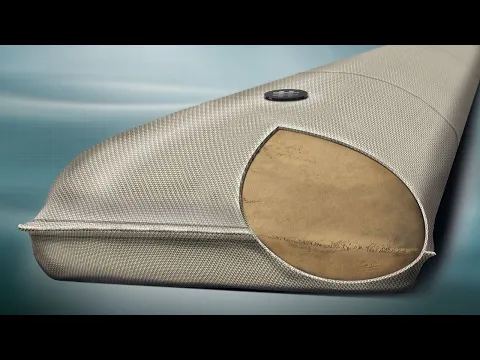
Unlike a conventional breakwater, the geotube works as a flexible and continuous element, formed by a high-strength geotextile shell that is filled with sand and shaped on-site, creating an elongated “body” capable of reducing part of the wave energy when positioned submerged and parallel to the shoreline.

The physical principle behind the method is well-known in coastal engineering: by reducing the energy that reaches the beach face, the capacity of waves to remove and transport sand out of the system is diminished, which helps limit the retreat of the waterline in rough sea conditions.
The choice for submerged and low structures is linked to another equally central concern: preserving, as much as possible, the natural dynamics of sediment transport along the coast, avoiding common side effects of rigid works, such as wave shading, pronounced erosion in neighboring stretches, and sudden changes in coastal current patterns.
Wave Energy Reduction And Coastal Erosion Control
In practical terms, the geotube behaves like a “low” breakwater, which does not aim to completely block the wave but rather to reduce its force and turbulence near the beach, creating a more favorable environment for the retention of sand in the coastal system.
The technical publication on the Yucatán case highlights the importance of measuring and monitoring the performance of such structures, because success depends on variables like wave height and period, installation depth, distance from the beach, sand grain size, and current patterns in the region.
One of the points that stands out in this type of intervention is the relationship between energy dissipation and wave transmission, since structures that are too “efficient” at blocking can cause undesirable changes in sediment balance, while less efficient structures may not reduce erosion to the expected extent.
Sedimentary Balance And Littoral Drift On The Mexican Coast

On the Yucatán coast, the application of geotubes was presented as an alternative to a history of attempts with traditional works that have not always delivered the desired result, especially when the solution does not work well with the local wave regime and littoral drift, a phenomenon that transports sand along the coast continuously.
When the drift is interrupted or diverted by emerging structures, the coast tends to “gain” sand on one side and “lose” it on the other, creating a compensation dynamic that can transfer the problem elsewhere rather than solving it.
The design with submerged geotubes attempts to circumvent part of this risk by keeping the structure below the surface, reducing visual interference and limiting drastic changes in wave direction, while creating a zone of reduced energy where sand can reorganize.
What Is A Geotube And How Is It Installed In The Sea
For readers who have never seen a geotube, the shape resembles a large cylinder, similar to a gigantic “sausage,” made with technical fabric used in hydraulic works, with a strength designed to withstand tensile forces, abrasion, and prolonged exposure to the marine environment.
The assembly usually involves steps for positioning the shell on the seabed, connecting to filling systems and pumping a mixture of water and sand, as well as volume control to ensure the piece reaches the necessary shape and weight to remain stable in place.
Once filled, the geotubes become heavy and elongated masses, with a relatively smooth surface, which can be aligned in sequence to form a continuous stretch of coastal protection on a scale of kilometers.
Beach Profile Recovery And Stability Of The Coastline

The technical article on Yucatán describes the solution as an attempt to stabilize the coastline by reducing negative changes in coastal dynamics in the long term, and presents the system as an intervention associated with the recovery of the beach profile.
The idea of a “stabilized profile” is important because beaches are in constant adjustment: during periods of stronger waves, some sand may migrate to deeper areas, and during calmer periods, this sand may return, as long as the system has not been “emptied” by permanent losses.
When erosion becomes chronic and the sediment balance turns negative, this back-and-forth motion ceases to restore the sand strip, accelerating the retreat and increasing impacts on boardwalks, roads, nearby buildings, recreational areas, and local infrastructure.
Maintenance Challenges And Performance In Extreme Events
In such scenarios, engineering measures usually pursue two objectives simultaneously: to reduce direct wave attacks and to keep the beach in a condition where sand can circulate without being constantly removed from the system.
Geotubes come in as an attempt to achieve this balance with a less intrusive work, and with greater adaptability over time.
The discussion of advantages and limitations is inevitable, as geotextile structures also face practical challenges, such as wear from abrasion, damage from floating objects, the need for inspection and repairs, as well as the requirement for a well-calibrated design to avoid displacements in extreme events.
Therefore, monitoring through measurements and beach surveys is often an essential part of the application, as the morphological behavior of the coast after installation is the most direct performance indicator for those seeking to reduce erosion and recover the sand strip.
Why The Continuous 4 Km Barrier Draws Attention
In the case reported in Yucatán, the 4-kilometer barrier stands out for placing large-scale engineering technology with the explicit proposal to interfere as little as possible with coastal dynamics while creating continuous buffering along a vulnerable stretch.
The choice of a long line, rather than spot interventions, also reflects a common understanding among specialists: coastal erosion is rarely an isolated problem at a single point, because waves, currents, and sediment transport operate in “cells” and connected stretches.
By forming an extended protection, the project aims to address an entire strip that shares the same wave and sand circulation regime, which helps prevent the intervention from generating a “domino effect” with concentrated loss in areas immediately adjacent to the work.
While some solutions rely on volumes of rock, walls, and raised works, the proposal in Yucatán shows a different path: a submerged, discreet barrier constructed with technical material and filled with sand, designed to reduce wave energy and give the beach a better chance to reorganize.
If a 4-kilometer line of geotubes can influence the energy of the sea without becoming a visible wall, which other eroding coasts could test submerged barriers before resorting to rigid and permanent works?






Não tem nada de inovação, os Neozelandeses já tinha feito algo semelhante. Os ingleses também.
Tem prazo de validade, pois a zona costeira é muito dinâmica e o clima de ondas varia ano a ano.
Uma solução temporária e que precisa de constante manutenção.