





 Portuguese
  English
  Spanish
  4 min of reading
  0 comments


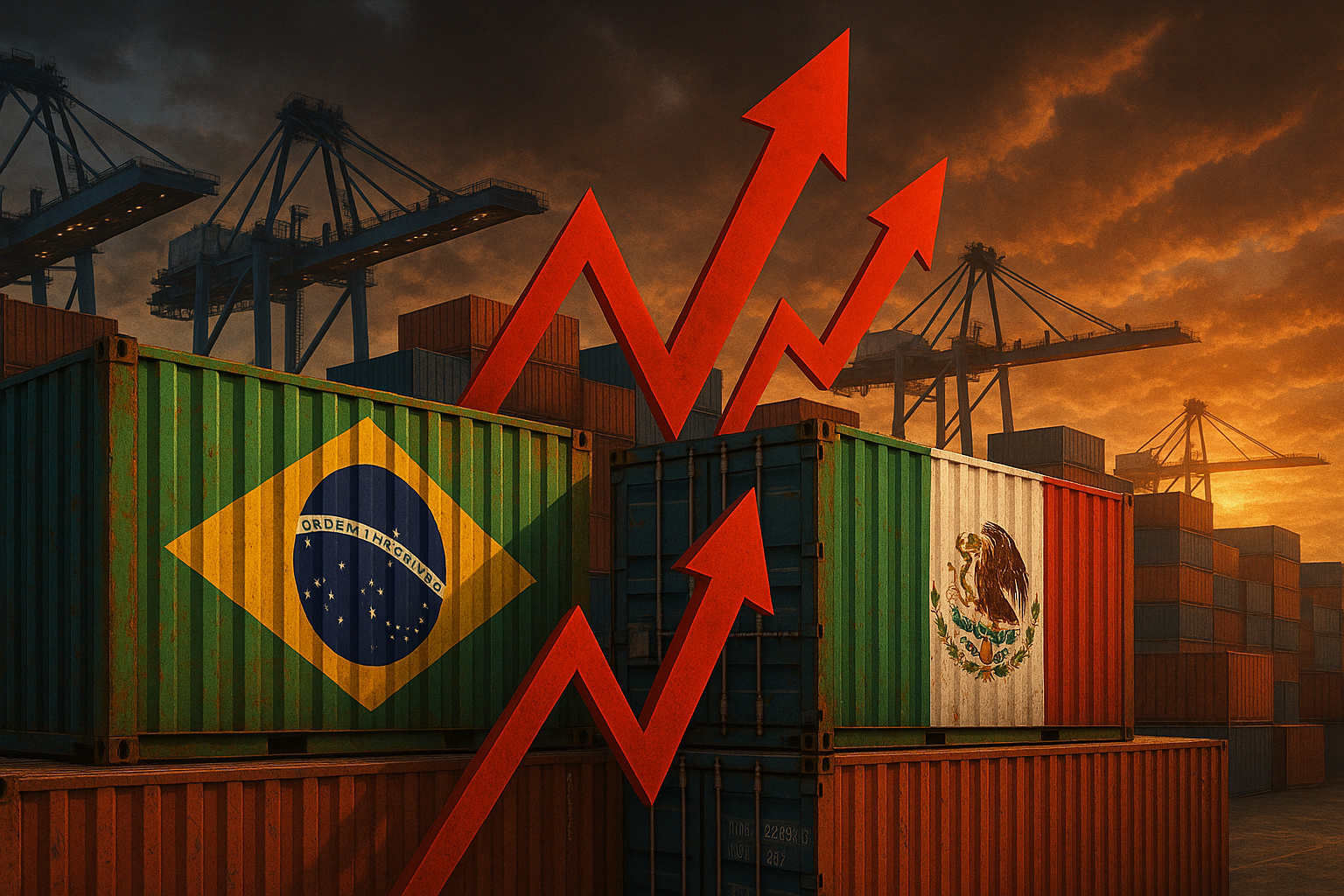
Mexico Raises Tariffs, Escalates Trade Tensions and Pressures Brazilian Exporters in Multiple Strategic Sectors of Industry and Agribusiness
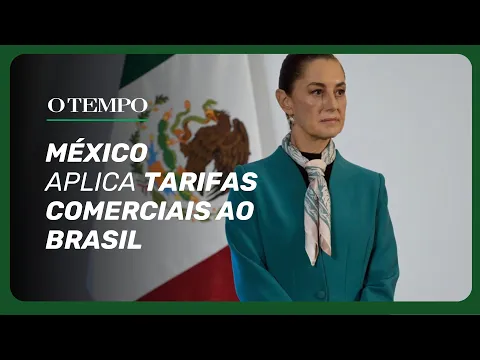
The international market has turned its attention to Mexico after the Mexican Congress approved, on Wednesday (10), an unprecedented tariff increase of up to 50% on 1,463 imported products from 12 countries. The measure, which takes effect on January 1st, will directly affect Brazilian exports and threatens an annual volume of US$ 7.1 billion, according to official data. The strategy popularly dubbed the “mariachi tariff” establishes a minimum tariff of 35% and is already worrying businesspeople from various sectors.
The initiative is part of the so-called Mexico Plan, a program by President Claudia Sheinbaum aimed at strengthening domestic production and combating the triangulation of Chinese products entering the United States through Mexican territory. The measure also seeks to protect 320,000 jobs that are pressured by external competition and the country’s economic slowdown.
According to data released by Gazeta do Povo — used as a reference for the preparation of this content —, the tariff increase was easily approved in both houses of Parliament and is already mobilizing Brazilian authorities and industrial entities. Concern is growing, especially because more than 70% of bilateral trade between Brazil and Mexico has no tariff protection.
-
The institute that trained the greatest aerospace engineers in Brazil has just opened its first campus outside São Paulo after 75 years: ITA Ceará will have R$ 445 million, new courses in energy and systems, and classes are expected to start in 2027.
-
Luciano Hang, owner of Havan, goes to Juiz de Fora after the tragedy in February, brings R$ 1 million, hands out R$ 2,000 cards, and donates up to R$ 15,000 to victims in the region.

-
The Brazilian passport allows legal residence in dozens of countries without the need for a prior visa, and most Brazilians are unaware that they can apply for residency directly upon arriving in nations in South America, Africa, and even Europe.

-
Petrobras sends a message to Brazilian truck drivers after fuel collapse and reveals plan to have 100% domestic diesel.


Direct Impact on Brazilian Exports and Risks for Automotive, Textile, and Electronics Sectors
Mexico is currently the sixth largest destination for Brazilian exports, surpassed only by China, the United States, Argentina, the Netherlands, and Spain. Between January and November 2024, Brazil sent US$ 7.1 billion in products to the Mexican market — a slight decline of 1% compared to the previous year. Despite the marginal variation, the country has gained relevance in Brazil’s trade agenda.
Among the best-selling products, five belong to agribusiness: poultry, beef, pork, soybeans, and coffee. Three others are part of the automotive sector, including commercial vehicles, passenger vehicles, and auto parts. Rounding out the list are commercial airplanes and semi-finished iron or steel products.
The Mexican tariff increase directly impacts these segments. The new tariffs apply to textile, steel, household appliance, auto parts, electronics, plastics, chemicals, and semi-finished aluminum and steel products. Therefore, sectors that are already struggling with tight margins may face even more aggressive declines in the coming months.
This information was disclosed by Gazeta do Povo and reinforced by sector analyses that point to the risk of losing competitiveness and a decline in Brazilian exports if there is no tariff renegotiation.
Brazil Pushes for Trade Agreement to Avoid Structural Losses in Bilateral Trade
In light of the new scenario, the National Confederation of Industry (CNI) has intensified efforts to expedite negotiations for a free trade agreement between Brazil and Mexico. According to Ricardo Alban, the entity’s president, “it is necessary to accelerate the negotiation of a free trade agreement” to avoid significant losses in strategic sectors of the Brazilian economy.
Currently, only a portion of bilateral trade is protected by sectoral agreements, involving segments such as automotive, rubber, plastics, machinery, soaps, and dental creams. However, more than 70% of transactions between the two countries remain unprotected, leaving exporters vulnerable to the recently approved tariff increase.
The situation is even more delicate because the products with the highest growth in Brazilian exports to Mexico between January and November 2024 — commercial airplanes, beef (up 235%), and pork (81.1%) — may be directly affected by the lack of formal protection agreements.
Thus, the Brazilian government is considering a diplomatic offensive to avoid structural losses in bilateral trade and prevent high value-added sectors from being compromised in the coming years.
Tariff Increase Emerges Amid Internal Crisis in Mexico, GDP in Decline and Informality Above 55%
The high tariffs were imposed at a time of economic turmoil in Mexico. The country recorded a GDP contraction of 0.3% in the third quarter of 2025 and is expected to end the year with a meager growth of just 0.7%. Domestic demand also shows weakness, marked by declining private consumption due to the slowdown of wage growth.
Gross fixed capital formation — a central indicator for measuring investments — showed a severe contraction of 7.3% for the year. This scenario is exacerbated by uncertainty generated by internal judicial reforms and international political volatility.
The labor market is experiencing its worst cycle since 2010 (except for 2020, due to the pandemic), with informality exceeding 55%. According to analysts, the Mexican economy operates like a car trying to go uphill with the handbrake on: exports to the US continue to drive the engine, but domestic investment and the legal environment limit any robust progress.
A report from BBVA bank, released on the same day as the tariff vote, projected a slow recovery, with a growth of 1.2% in 2026, but warned of increasing fiscal risks. Public debt may reach 58% of GDP by 2030, threatening the maintenance of the investment grade.
All this context occurs on the eve of the review of the trade agreement between Mexico, the United States, and Canada (USMCA), scheduled for 2026 — a stage that is likely to be turbulent given the tariff hardening threats made by US President Donald Trump.










-

-

-

4 pessoas reagiram a isso.