





 Portuguese
  English
  Spanish
  5 min of reading
  0 comments


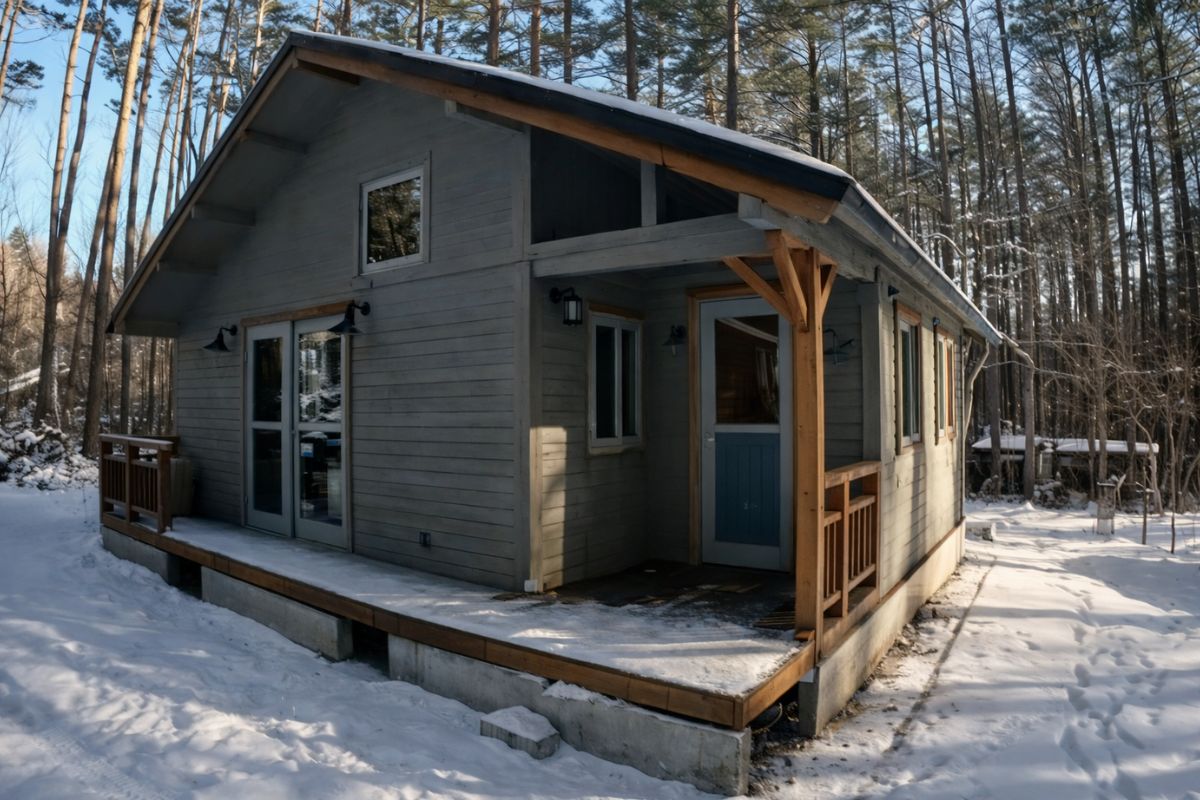
With a Minimalist Gray Facade, Complete Thermal Insulation, and 100% Wooden Interiors, This Wooden House Was Designed to Last Decades and Accompany Retirement Life with Comfort and Low Maintenance
When the structural work is finished, many still see just a plain “box” on the lot. Here is exactly where the transformation begins. From a raw structure, this wooden house was designed to become a complete space: modern gray facade, well-executed thermal insulation, technical wood interiors, and every detail crafted for the retirement phase, when comfort, practicality, and stability matter more than any trend.
Instead of betting on complicated finishes, the project prioritizes function, durability, and a clean look. Everything in the wooden house was designed as a unique system: from the solid base to the final varnish, from the primer layer that holds the paint to the built-in furniture that organizes the interior. The result is a compact, minimalist, and welcoming home, with the appearance of a “dream house,” but grounded in the reality of those who think long-term.
Wooden House with Gray Facade: When Minimalism Also Protects

After the external closure and door installation, the project enters the finishing phase of the facade. This is where the wooden house gains its definitive visual identity: a soft gray color scheme that reinforces the modern minimalist style and still protects the structure.
-
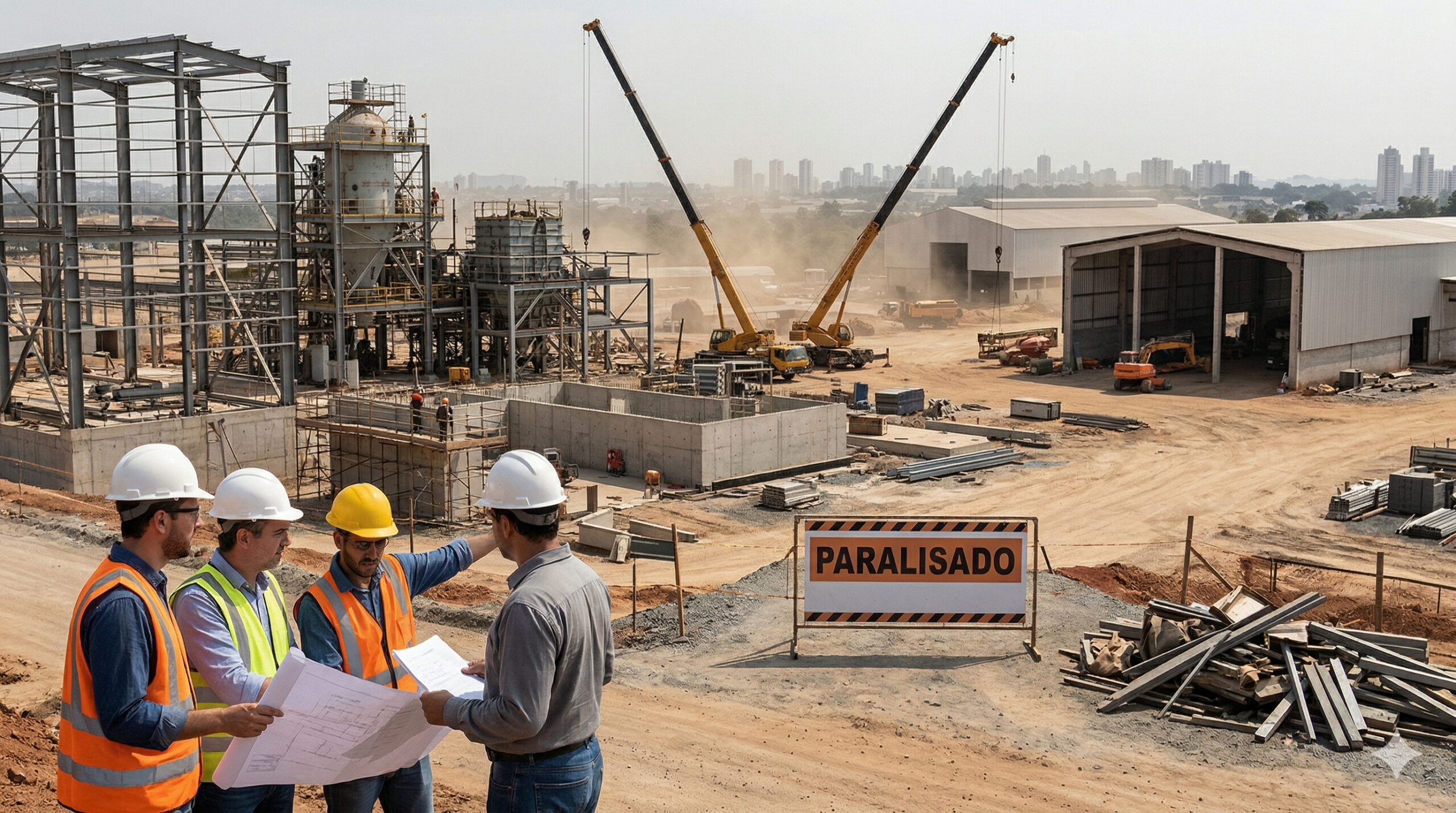
The lack of welders, electricians, and operators becomes a structural threat in 2025, with the construction industry and manufacturing already suffering from delays, cost pressures, and labor shortages in Brazil.
-
Brazil and Paraguay are just 46 meters away from a historic union on the bioceanic bridge that promises to revolutionize trade between the Atlantic and the Pacific.

-
With 55 km over the sea, a cost of US$ 20 billion, and enough steel to build 60 Eiffel Towers, China’s largest project has connected Hong Kong, Zhuhai, and Macau in a colossal bridge that defies the logic of engineering.

-
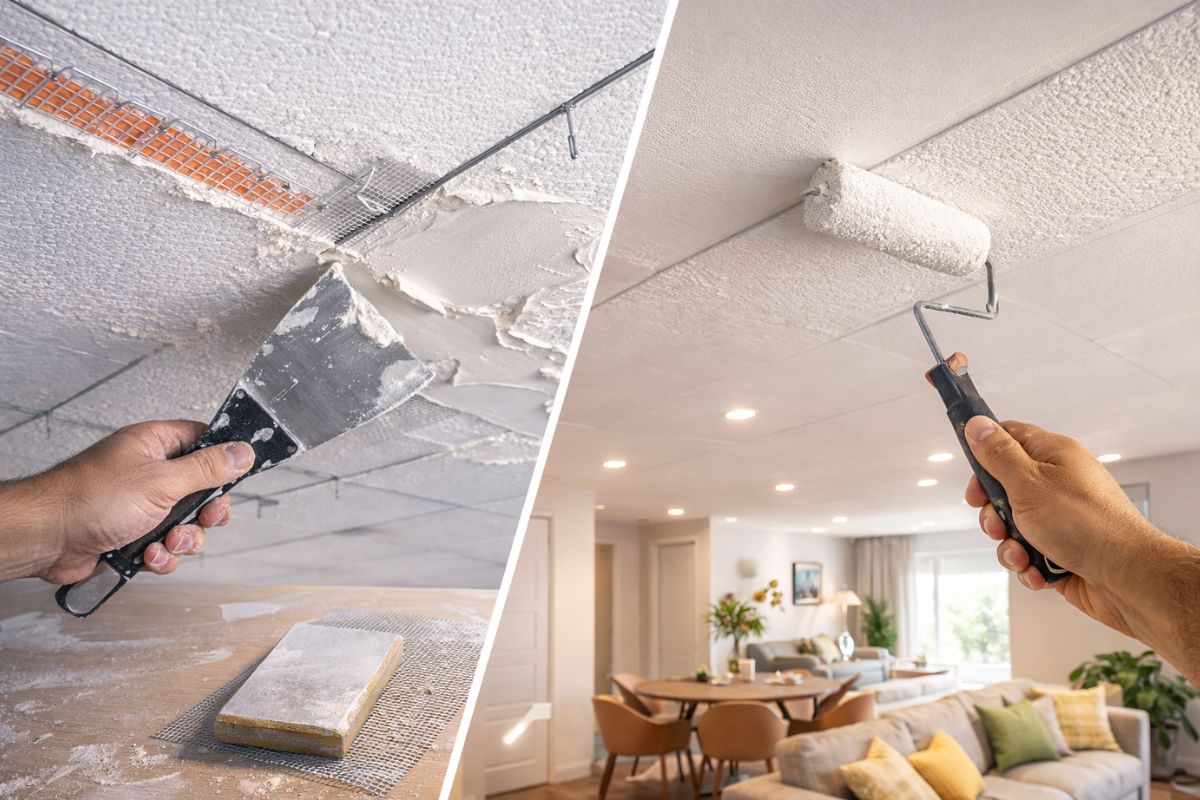
A trick with joint compound transforms a Styrofoam ceiling into a plaster-like ceiling: leveled panels, wires and mesh at the joints, sand, paint, and change the environment while spending little today.

Before any brush touches the surface, all external areas are cleaned, leveled, and treated with a specific primer.
This technical preparation ensures that the wooden house does not peel, fade quickly, and withstand years of sun and rain. The primer improves paint adhesion and reduces moisture penetration, which is critical when working with elements exposed to the elements.
Only then is the gray layer applied uniformly, at the recommended thickness. The goal is not only to look good in photos: it is to ensure stable color, high coverage, and resistance to peeling over time.
In practice, the facade of the wooden house functions as a discreet shield, with a sober appearance and continuous protection of the materials beneath.
Insulation and Thermal Comfort: The Wooden House Designed for the “Heat, Heat”
After the external phase, the focus returns to what’s not visible but is crucial in day-to-day life: insulation. With the structural works, the closure and primary surface completed, the wooden house enters the stage where thermal comfort becomes reality.
The video reinforces the feeling of “heat, heat,” reminding that without adequate insulation, a house can become an oven or a freezer depending on the season.
Here, the wooden house receives insulation solutions designed to reduce drastic temperature variations, prevent heat loss in winter, and excessive heat gain in summer. This ties directly to the idea of retirement: more thermal stability means less spending on cooling and more comfort with less effort.
All these layers, structure, insulation, prepared surface, and correct paint, transform the raw box into a solid, protected volume ready to receive the main protagonist of the project: the entire wooden interior.
100% Wooden Interior: Raw Structure Becomes a Welcoming Wooden House
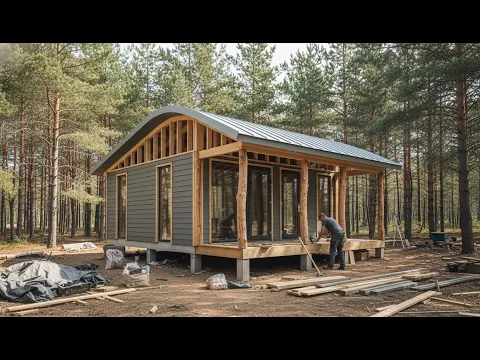

When the insulation and surface are ready, the phase that truly makes this wooden house feel like a complete home begins: the interior finishing entirely in wood. This is where the raw structure gains texture, visual warmth, and a sense of shelter.
Walls, ceilings, floors, and internal details are finished with technically treated wood, chosen to resist moisture, deformation, and pests.
This is not just any wood; it is wood prepared to last and keep the wooden house stable for many years. This choice reduces twisting, warping, and common problems in poorly planned projects.
All built-in elements are custom-made: wall cabinets, storage shelves, seating platforms, work surfaces.
Nothing is improvised. Each piece is crafted with exact dimensions for the available space, ensuring better use of the area, easy circulation, and the feeling that everything is “in the right place” within the wooden house.
Built-in Furniture and Intelligent Use of Space in the Wooden House

One of the great strengths of this wooden house is how the design avoids wasting space. Instead of cluttering the environment with loose furniture, the design opts for built-in and multifunctional solutions.
Shelves integrate with the walls, platforms double as seating, storage, and support at the same time, and work surfaces fit into the structure without crowding the space.
This kind of detail is especially important when the house is designed for retirement. With a well-organized wooden house from the beginning, daily routines become simpler, cleaning is easier, and the resident requires less physical effort to keep everything in order.
The result is an interior that feels larger than it actually is because every centimeter has been planned.
Wooden House for Retirement: Long-Term Vision in Every Layer
In the final stage, the narrator sums it all up: after all phases of structural work, insulation, electrical and plumbing systems, wooden interiors, and housing installations, the house is officially completed. It is not just a finished construction; it is a wooden house designed as a life project.
From the solid base to the robust wooden structure, through insulation solutions and thermal functionality, to the carefully executed wooden interiors, each element reflects planning and skilled craftsmanship.
The central idea is clear: to build a wooden house that accompanies the retirement phase with comfort, efficiency, and simple maintenance.
Rather than just being another pretty project to post on social media, this wooden house seems to have been born with a very specific purpose: to be a definitive, stable, welcoming, and functional space for many years.
And you, would you dare to invest in a minimalist wooden house as a life project for retirement, or do you still prefer a traditional brick house knowing it will heat up more, cost more, and require more maintenance?









-

-

-

7 pessoas reagiram a isso.