





 Portuguese
  English
  Spanish
  5 min of reading
  0 comments



Study Published in Science Advances Analyzed 5 Years of Hourly Data from the U.S. Grid and Concluded That Installing Solar Energy in the Right Places Avoids Much More CO₂ Than Spreading Panels Indiscriminately. Increasing Solar Generation by 15% Could Cut 8.54 Million Tons Per Year.
The discussion about where to install solar energy took a turn with a computational model developed by researchers from Harvard, Rutgers, and Stony Brook. Instead of adopting the logic of “the more, the better,” the study shows that climate impact varies greatly by region and that focusing on the right spots yields much higher emission cuts.
The novelty lies in the use of hourly data from 2018 to 2023 and in measuring immediate and delayed effects of photovoltaic plants, both within each region and in neighboring areas interconnected by the grid. This approach allows us to see what we here call “climate profitability” of each kilowatt-hour of solar power.
The authors estimate that raising solar generation by 15% would reduce 8.54 million tons of CO₂ per year, equivalent to about 12% of the annual reduction target set by the EPA. The data reinforces that prioritizing location is as important as increasing installed capacity.
-
Seagri’s headquarters invests in solar energy with Neoenergia Coelba and promises to cut electricity costs, highlighting a strategic advance in sustainability and energy efficiency within state public administration.

-
Solar Pyramid draws attention by converting solar energy into million-dollar savings and repositioning the City Hall of Curitiba as an example of innovation, sustainability, and intelligent use of public resources.

-
Europe records strong euro economy with solar energy in March and sparks curiosity about which country leads growth that redefines the energy market and reduces costs.

-
Piauí reaches a historic milestone in energy transition: State records nearly 160,000 households powered by solar energy and leads growth in the Northeast.
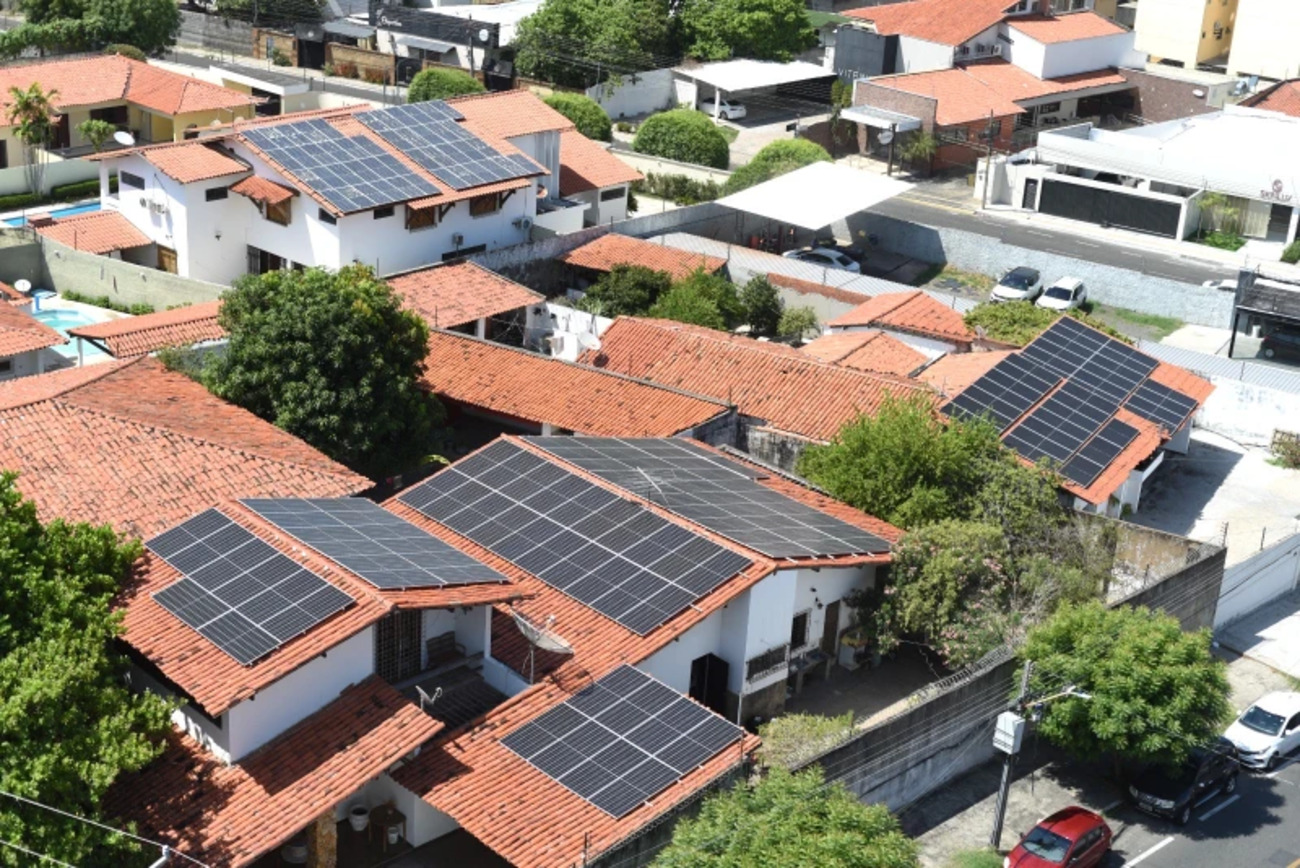

To contextualize, even in 2023, the American energy matrix was still 60% fossil, and only 3.9% solar, a scenario that explains why new photovoltaic megawatts can displace significant emissions in coal and gas-dependent regions.
Solar Energy Where to Install Reduces More CO₂: What the Study Says
The research, published on July 30, 2025, in Science Advances, analyzed 13 regions of the U.S. electricity system with a statistical model that captures how increases in solar affect emissions hour by hour. The objective was to identify where each new panel delivers the greatest climate return.
The central result is easy to understand: not every solar megawatt avoids the same amount of CO₂. In regions where marginal generation replaces coal or gas, the gain is significant. Where the grid is already clean, the marginal benefit is small.
Another advancement was quantifying delayed effects. In California, for example, a 15% increase in solar at noon was associated with 147.18 tons of CO₂ less in the first hour and 16.08 tons less eight hours later, evidence that the solar effect is not limited to peak hours.
Based on these patterns, researchers estimate that +15% solar would lead to 8.54 million tons fewer CO₂ annually, contributing about 12% of the EPA’s annual target. For public policies, this suggests prioritizing projects with greater CO₂ avoided per kWh.
Priority Regions for Installing Solar Panels
The study identifies California, Florida, Mid-Atlantic, Midwest, Texas, and Southwest as areas where small expansions of solar generate large reductions in emissions, precisely because they displace coal and gas plants at critical operational moments.
In contrast, in New England, Central region, and Tennessee, the effect is modest, even with larger increases in solar. The reason is the relatively cleaner grid, with contributions from hydroelectric, nuclear, and more efficient gas, which reduces the marginal CO₂ avoided per solar kWh.
This reading is not a “against solar” in these areas, but rather a practical guide, first invest where the climate return is greater, then expand to regions with lower marginal gain. This way, the country accelerates total decarbonization with the same resources.
Classify projects not only by MWh cost, but also by CO₂ avoided per MWh in each location. This changes the priority of auctions, licensing, and grid connection.
Contagion Effect, Transmission, and Batteries: Why Installing in One Place Cleans the Air in Another
One of the most interesting discoveries is the contagion effect. By connecting regions through transmission lines, the extra solar from one state can replace fossil generation in neighbors. The study measured this spillover of benefits with concrete numbers.
In practice, increasing solar by 15% in California was associated with daily reductions of 913 tons of CO₂ in the Northwest and 1,942 tons in the Southwest. In other words, installing panels in the Arizona desert could reduce emissions in Oregon, as long as the grid can transmit energy at the right times.
The authors highlight that transmission and storage significantly amplify this gain. By exporting daytime solar and storing excess for nighttime hours, emissions cuts spread across multiple hours and multiple regions. This reinforces the urgency of accelerating transmission lines and battery projects along with new solar parks.
For investors and public managers, this means looking at the complete package: right location, reinforced grid, and storage. Only then can climate profitability become a reality across the entire electricity system.
How the Research Was Conducted and Why It Is Reliable
The work used five years of hourly data from the EIA, covering generation, demand, and emissions in 13 regions of the U.S. from July 1, 2018, to 2023. Based on this, it applied a statistical model that estimates the effect of percentage increases in solar on CO₂, both immediately and with a delay.
The combination of hourly granularity and regional breakdown allows for separating what is local effect from what is grid effect, something that previous studies using annual averages did not capture with the same precision. This is the basis for the map of where each panel makes the most difference.
In addition to Harvard, the team includes Rutgers and Stony Brook, with publication in a peer-reviewed journal. Harvard and Rutgers’ institutional communication details numbers and methodology, and the technical coverage by PV Magazine USA relates the finding to the annual 69 MMT CO₂ target set by the EPA, noting that the estimated gain of 8.54 MMT corresponds to about 12% of that target.
To reinforce robustness, the press releases explicitly list the hourly values in California and the daily spillover between regions, which we mention in this article. These numbers can be verified in the cited sources.
What Changes for Public Policies, Companies, and Brazil
For policymakers, the message is to prioritize CO₂ avoided per MWh when defining targets, auctions, and locations of plants. Instead of spreading projects across the entire map, it’s worth focusing first on where the replacement of coal and gas is more intense, while also unlocking transmission and storage.
For investors, the agenda for permitting and connection should consider that a project with greater marginal effect may have superior climate payback, even with similar capital costs. This also guides PPAs and portfolio strategies that value impact by location.
For Brazil, the lesson is to replicate the method, use hourly data from the SIN, estimate CO₂ avoided per MWh in each submarket, and cross-reference with transmission capacity and storage. The country benefits by directing solar expansion to points with maximum climate return, rather than treating every megawatt equally.
In summary, the “where” comes before the “how many”. With smarter choices, solar energy delivers more climate benefits per dollar invested, and more quickly.










Seja o primeiro a reagir!