





 Portuguese
  English
  Spanish
  5 min of reading
  0 comments


In Morocco, the Al Wahda Dam and a Billion-Dollar National Plan Form the Backbone of the Strategy Against Drought, Desertification, and Water Instability in North Africa.
In Morocco, a country in North Africa marked by irregular rainfall and recurring droughts, the government has adopted a long-term strategy to address the water scarcity threatening cities, crops, and economic stability. At the center of this policy are large dams, notably the Al Wahda, and a set of investments coordinated under the National Plan for Drinking Water Supply and Irrigation (2020–2027), led by the Ministry of Equipment and Water and state agencies in the sector. The policy gained momentum starting in 2020, when successive years of drought drastically reduced reservoir levels and exposed the country’s water vulnerability.
The Moroccan bet is not isolated. It combines large-scale storage, regional redistribution, modernization of irrigation and complementary sources, such as desalination and reuse, to create a resilient system in the face of climate change. The dams are the anchor of this architecture.
The Geography of Scarcity and the Advance of Desertification
The Moroccan territory extends from the Atlantic and Mediterranean coast to semi-arid and desert areas near the Sahara.
-
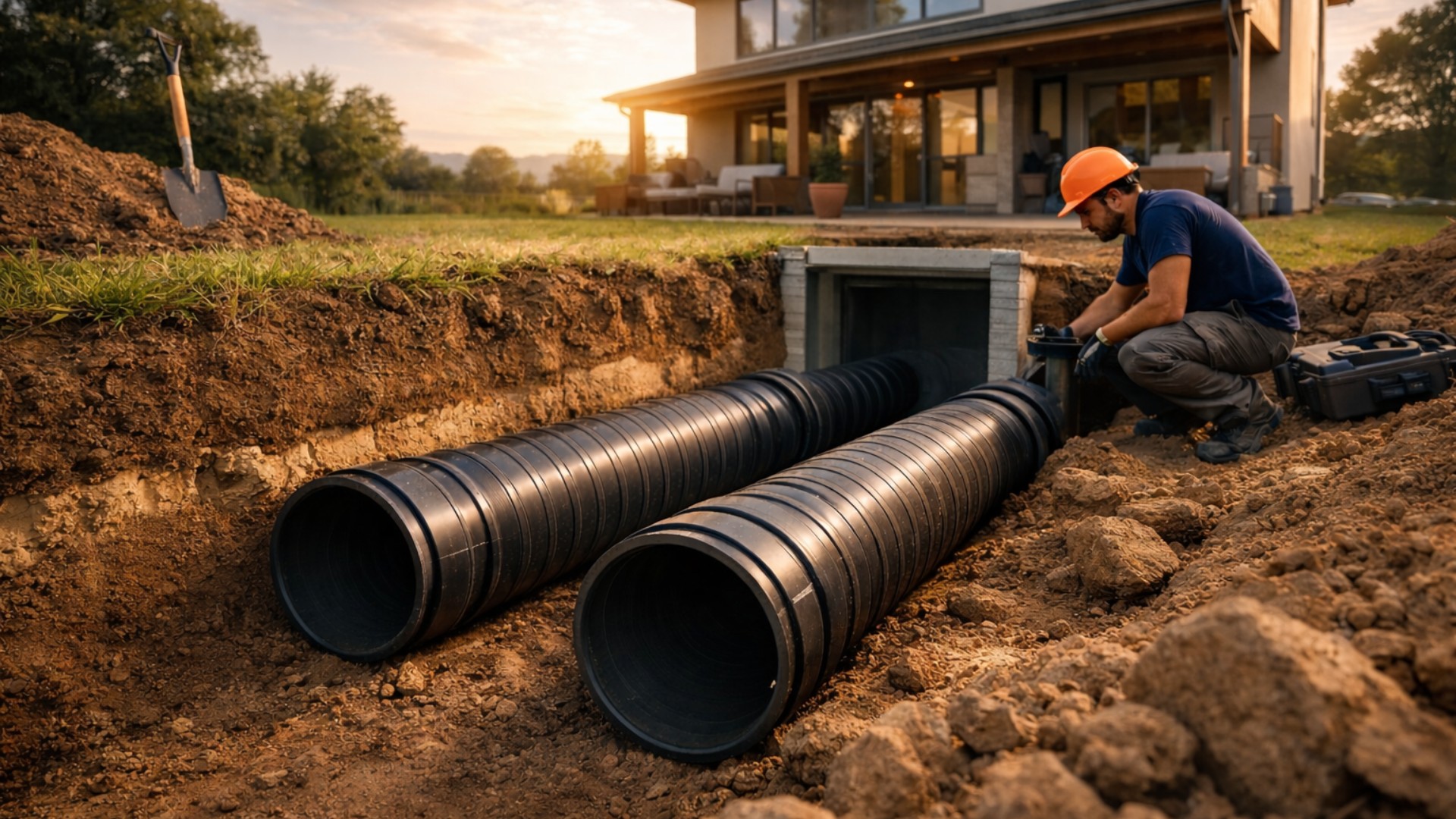
Architects are burying plastic pipes 2 meters deep and using ducts up to 30 meters long to cool homes without electricity, with low-consumption fans and natural heat exchange that drastically cuts the electricity bill.
-
Under São Paulo, Line 6-Orange reaches 15.3 km and 15 stations, promising 23 minutes from Brasilândia to the Center and 633,000 passengers per day; with autonomous trains, it will open a partial section in October 2026.

-
Created by George Lucas with over $1 billion, a futuristic museum in the shape of a spaceship with 1,500 curved panels is about to open in Los Angeles and will house one of the largest private collections of narrative art in the world.

-
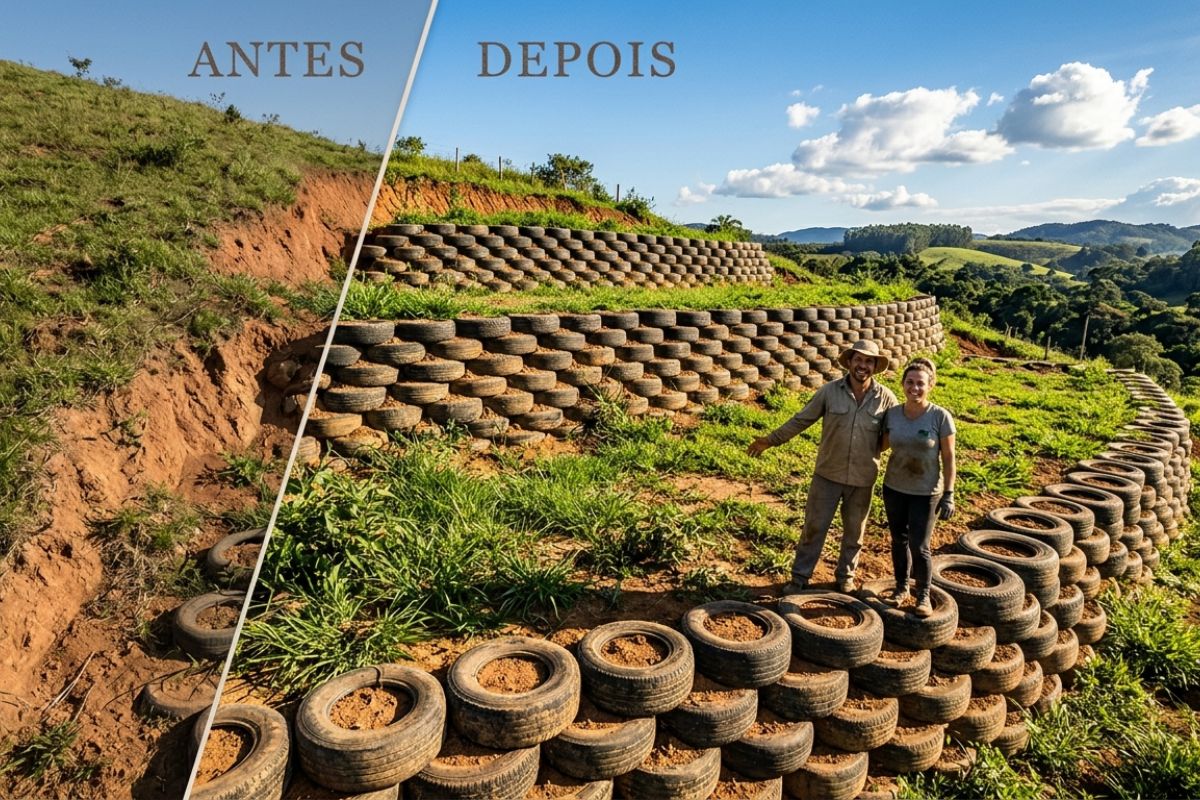
Couple shows how they built a retaining wall on their property using 400 old tires: sloped land turned into plateaus, tires are aligned, filled, and compacted with layers of soil, with grass helping in support and at almost zero cost.

This climatic transition makes the country highly dependent on few rainy periods and rivers concentrated in certain basins. With global warming, drought episodes have become more frequent and prolonged, affecting aquifer recharge and the regularity of watercourses.
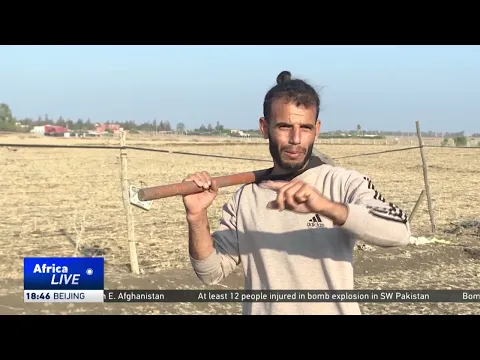

The impact is direct on agriculture — a sector that employs a significant portion of the population — and on urban supply. In recent years, cities have faced water restrictions, while rural producers have seen crops shrink. In this context, the ability to retain water in rainy years has come to be seen as a condition for economic survival.
The Al Wahda Dam and the Heart of the Water System
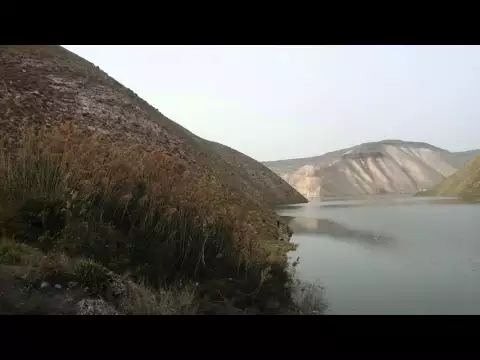
Located in the basin of the Sebou River, the Al Wahda Dam is the largest in the country in terms of storage capacity.
With approximately 3.8 billion cubic meters, it acts as a “water lung” for northern Morocco, catering to irrigation, flood control, and electricity generation. The project is often cited by authorities as a key piece to stabilize the water supply in years of irregular precipitation.
The logic is simple and powerful: retain giant volumes when it rains and release in a controlled manner throughout the year. This reduces losses from rapid runoff to the sea and protects agricultural areas from sudden floods, common in extreme events.
A Country of Dams: Numbers and Scale
Morocco has built dozens of large dams over the past few decades, forming a network of reservoirs distributed across various basins. Together, these structures add up to tens of billions of cubic meters of theoretical capacity, although actual occupancy varies according to the rainfall regime.
The recent focus of the government has been to increase resilience in the system: interlinking basins, reinforcing existing structures, and accelerating new projects where the cost-benefit ratio is most favorable.
This approach explains why dams are treated as strategic infrastructure — not just civil works but instruments of climate and agricultural policy.
The National Water Plan: Coordination and Investment
To integrate the pieces, the government launched the National Plan for Drinking Water Supply and Irrigation (2020–2027), which organizes priorities, timelines, and funding sources.
The plan anticipates billion-dollar investments in storage, water transfer between basins, irrigation efficiency, and alternative sources. Official reports and government communications indicate values in the order of tens of billions (in local currency and international equivalents) over the period, summing new works, modernization, and maintenance.
Governance involves sectoral ministries, basin authorities, and public water and energy companies, with explicit goals of water security, loss reduction and agricultural stability.
Dams as Instruments Against Desertification
Although dams do not “create rain,” they mitigate the effects of climate variability. By securing water during dry periods, they prevent the collapse of irrigation systems and the accelerated degradation of soil, two classic vectors of desertification.
In agricultural regions, water predictability allows for crop planning, the adoption of less vulnerable crops, and investments in more efficient irrigation.
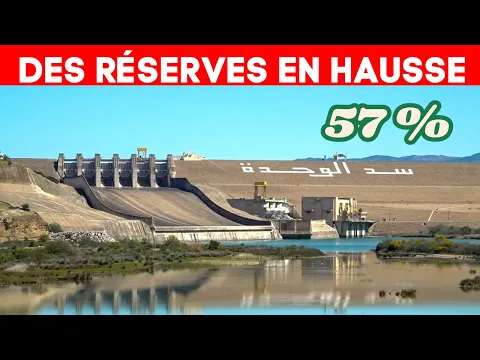
In Morocco, this strategy is complemented by programs for irrigation modernization (replacing open channels with pressurized systems), reducing losses from evaporation and uncontrolled infiltration.
Energy, Water, and Economic Stability
In addition to water, the dams contribute to hydroelectric generation, reducing the dependency on imported fuels during peak times.
Although hydropower is not the largest share of the Moroccan energy matrix, it acts as a balancer in critical periods, helping to stabilize the electrical system when other sources experience fluctuations.
This integration between water and energy is central to the country’s strategy: fewer blackouts, more predictable costs, and greater competitiveness for the productive sector.
Limitations and Criticisms: When Rain Fails
Experts and international organizations warn that dams are not a single solution. In years of extreme drought, reservoirs may operate below ideal levels, reducing the effectiveness of the system. Therefore, Morocco has diversified its strategy, investing in desalination for coastal areas, water reuse and urban and agricultural demand management.
There are also debates about environmental and social impacts — resettlements, changes to ecosystems, and maintenance costs. The government responds by highlighting impact studies, compensations, and the urgency of ensuring water in a scenario of climate change.
Observed Results and Regional Lessons
Despite the challenges, the dam policy has allowed Morocco to weather dry periods with less disruption than neighboring countries without equivalent storage capacity.
The experience has been observed by other nations in North Africa and the Middle East, regions also pressured by increasing aridity.
The central lesson is scale: small reservoirs help, but large volumes offer real maneuverability when the climate fails for consecutive years.
What Comes Next
In the coming years, the Moroccan priority is to consolidate integration of the system: complete projects, interlink basins, increase desalination, and accelerate efficiency in the final use of water.
The dams will remain central to the strategy, not as an isolated solution, but as a pillar of a mosaic of policies.
In a territory where every rainy season counts, retaining water is retaining future. For Morocco, the mega-dams represent exactly that: an attempt to transform finite volumes into security, stability, and economic continuity in one of the most challenging environments in North Africa.








-

-

2 pessoas reagiram a isso.