





 Portuguese
  English
  Spanish
  3 min of reading
  0 comments


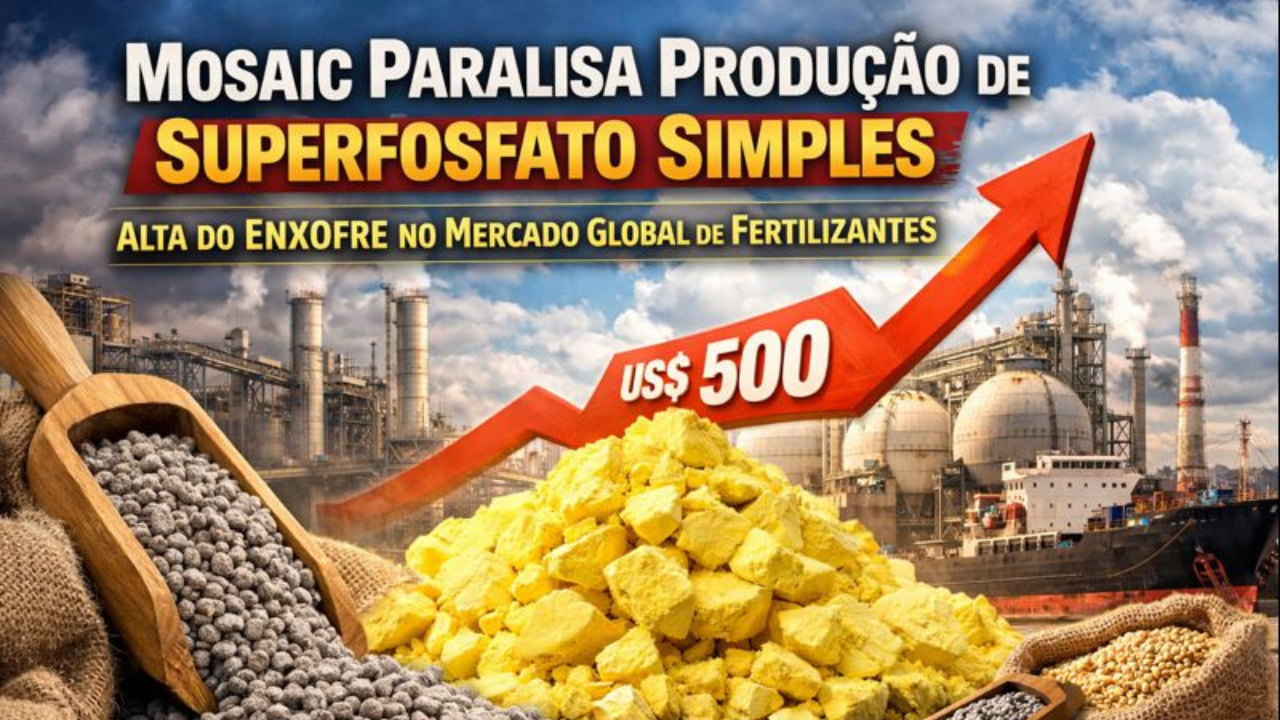
Sulfur Surge Forces Mosaic to Suspend Single Superphosphate, Affecting Phosphate Fertilizers and the Global Market.
Mosaic has decided to halt production of single superphosphate (SSP) at two of its main facilities in Brazil, located in Paranaguá (PR) and Araxá (MG), after a significant increase in the price of sulfur, an essential input for phosphate fertilizers.
The measure was announced recently and comes amid significant changes in the global fertilizer market, pressured by industrial, geopolitical, and energy factors.
According to the company, in addition to the temporary suspension of production, future purchases of sulfur have also been halted.
-
The water that almost everyone throws away after cooking potatoes carries nutrients released during the preparation and can be reused to help in the development of plants when used correctly at the base of gardens and pots, at no additional cost and without changing the routine.
-
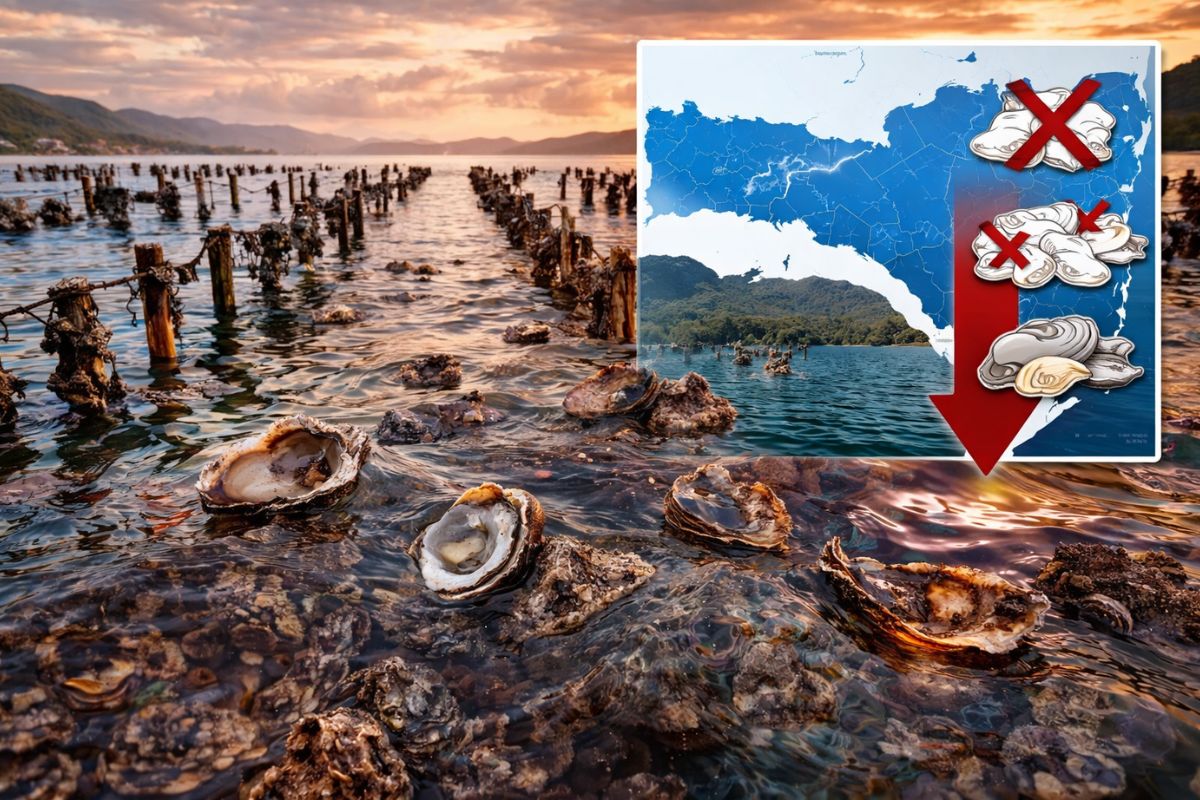
The sea water temperature rose from 28 to 34 degrees in Santa Catarina and killed up to 90% of the oysters: producers who planted over 1 million seeds lost practically everything and say that if it happens again, production is doomed to end.
-
An Indian tree that grows in the Brazilian Northeast produces an oil capable of acting against more than 200 species of pests and interrupting the insect cycle, gaining ground as a natural alternative in soybean, cotton, and vegetable crops.

-
The rise in oil prices in the Middle East is already affecting Brazilian sugar: mills in the Central-South are seeing their margins shrink just as ethanol gains strength.

Mosaic also reported that it may reevaluate the decision after a period of 30 days, depending on the evolution of the international pricing and supply scenario for the raw material.
Sulfur Price Changes Phosphate Fertilizer Market Dynamics
Traditionally treated as a low-volatility byproduct of oil and natural gas refining, sulfur has taken on a strategic position in the international market.
This shift occurs largely due to the growing demand linked to the electric vehicle battery supply chain.
In this context, the input has gained prominence in nickel processing and in the production of LFP (lithium-iron-phosphate) batteries, expanding its use beyond the fertilizer sector.
Meanwhile, a temporary ban on Russian sulfur exports—implemented during efforts to recover damaged refineries—contributed to an additional restriction on global supply.
As a result, the market began to face a significant imbalance between supply and demand.
Sulfur Price Jumps to US$ 500 and Affects Global Supply Chain
According toArgus Media, the combined impact of these factors raised the price of sulfur from a historical range between US$ 80 and US$ 180 per ton FOB Middle East to levels close to US$ 500 per ton.
This surge has had direct effects on the production chain of fertilizers, especially phosphate fertilizers.
In light of this scenario, the production of single superphosphate, which heavily depends on sulfur, has become economically less attractive in certain markets.
Thus, decisions like that made by Mosaic reflect an operational adjustment in response to rising costs and pressured margins.
Single Superphosphate Gained Space in 2025, but Scenario Changed
With the recent appreciation of more concentrated phosphate fertilizers, such as monoammonium phosphate (MAP) and diammonium phosphate (DAP), single superphosphate has gained traction throughout 2025 as a lower-cost alternative for agricultural fertilization.
Despite having a lower concentration of nutrients, SSP has been viewed as a viable option for producers looking to reduce costs.
However, this strategy is beginning to lose strength in light of the current price increase of the product itself.
It remains uncertain whether this preference for SSP will be maintained in 2026, especially if the sulfur market remains pressured.
StoneX Points to Loss of SSP Advantage Against MAP
According to Renato Françoso, fertilizer price risk management analyst atStoneX, the attractiveness of single superphosphate has been consistently decreasing.
When analyzing the historical average of the product—excluding the atypical years of 2021 and 2022.
However, recent prices are already approaching US$ 220 per ton, indicating a rise of over 20% compared to previous levels.
“Is SSP more attractive than MAP? Now we can’t say that with such conviction anymore,” said Françoso.
MAP Dips and May Reach Price Floor in 2025
Meanwhile, MAP has shown an opposite movement. The fertilizer has recorded a significant drop, from about US$ 760 to US$ 630 per ton in recent months.
According to StoneX, this level tends to represent the price floor for the remainder of 2025 and the start of 2026.
This drop reinforces the relative loss of competitiveness of single superphosphate, especially in a context where producers evaluate not just absolute costs.
Impacts on Global Fertilizer Market Remain on the Radar
The halt announced by Mosaic signals a period of caution in the global fertilizer market, which remains sensitive to fluctuations in strategic inputs.
If sulfur prices remain high, new operational adjustments may occur in different producing regions.









Seja o primeiro a reagir!