





 Portuguese
  English
  Spanish
  4 min of reading
  0 comments



High Radiation Solar Storm Surprises Europe and US with Northern Lights and Raises Technology Alerts.
A high-intensity solar storm hit Earth between Monday (19) and Tuesday (20), causing high radiation emissions, localized failures in GPS systems, and the formation of northern lights in unusual regions of Europe and the US.
The phenomenon, monitored by US space weather agencies, was classified as the strongest in the last 20 years and put authorities, airlines, and satellite operators on high alert.
According to the Space Weather Prediction Center of the National Weather Service of the United States, the solar radiation storm reached level four on a scale that goes up to five.
-
With a cost per shot close to zero, the DragonFire laser could change naval warfare in 2027 and provide British ships with nearly unlimited defense against drones.

-
A British startup creates tires that generate electricity in electric vehicles when passing over potholes, speed bumps, and cracks.

-
Scientists have created robots made with living cells that have their own nervous system, swim on their own, explore the environment, and self-organize without any genetic engineering, and now they want to do the same with human cells.

-
Students create a solar-powered ambulance that operates without a plug, without fuel, and still keeps medical equipment running in remote areas.


The activity was caused by an extremely fast and energetic solar explosion that sent charged particles toward the planet in a timeframe considered atypical by experts.
See more: Trump’s Air Force One Returns to Base After Electrical Problem During Flight to Davos 2026
Most Intense Solar Storm in Two Decades Raises Global Alert
According to the Space Weather Prediction Center, events of this magnitude had not been recorded since October 2003.
At that time, known as the “Halloween space storms,” solar explosions caused blackouts in Sweden and damage to electrical transformers in South Africa.
A solar storm of this kind occurs when the Sun releases a large amount of high-energy charged particles.
These particles travel rapidly through space and, when they reach Earth’s magnetosphere, can interfere with communications, satellite navigation, and sensitive electrical systems.
For this reason, the US center previously notified airlines, NASA, the Federal Aviation Administration, the Federal Emergency Management Agency, and operators in the electricity sector. The preventive action aimed to reduce operational risks during the peak of the storm.
See more: Crash Test Exposes Poorly Rated Cars in 2025
Radiation Worries Aviation, Satellites, and Space Missions
When a solar radiation storm hits Earth, the risks are not limited to technological systems.
Radiation exposure can increase for astronauts in low orbit, such as those aboard the International Space Station, as well as passengers and crew on flights crossing polar regions.
Moreover, experts warn that this type of event can cause electrical instabilities and voltage problems in power grids.
Although no significant blackouts were recorded this time, monitoring remained active throughout the entire critical period.
Northern Lights Surprise Europe in Unusual Locations
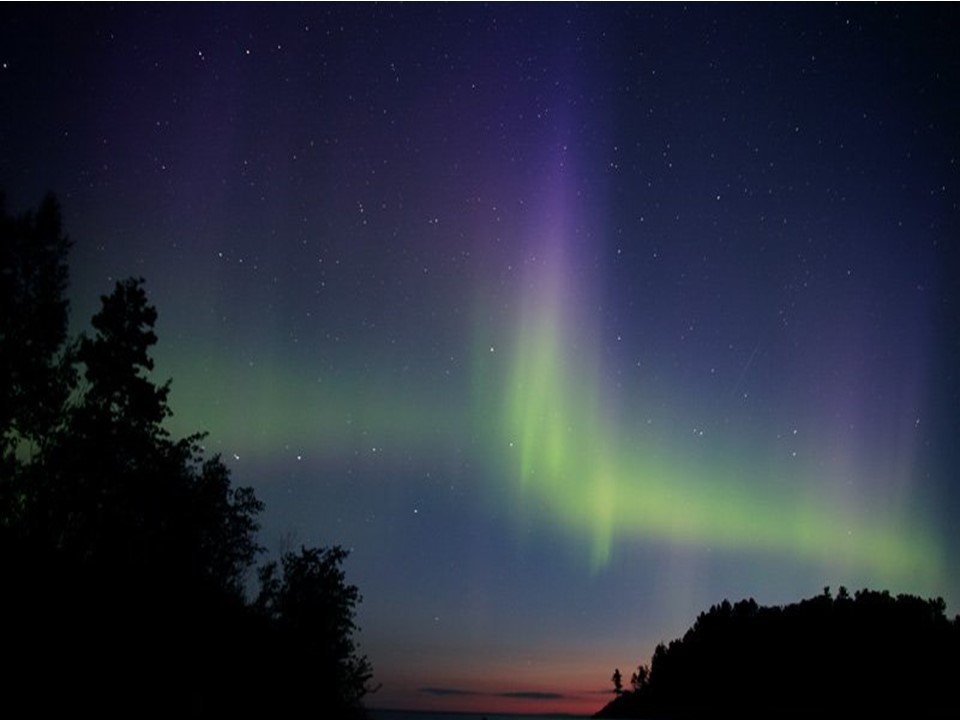
The most impressive visual impact of the solar storm was the formation of northern lights at latitudes rarely associated with the phenomenon.
Due to the power of the solar explosion, the spectacle of the “northern lights” could be observed in northwest England, Greenland, and even Portugal.
In the UK, residents reported intense shades of green and pink illuminating the night sky. In countries like Germany, Switzerland, and Ukraine, the phenomenon was also widely recorded, according to local meteorological services.
The northern lights occur when particles emitted by the Sun collide with gases in Earth’s atmosphere.
This interaction releases energy in the form of light, usually visible in regions near the poles, which explains the rarity of the event in areas further south in Europe.

Phenomenon Also Lights Up US Skies
In the US, the geomagnetic storm allowed the northern lights to be seen across Canada and much of the northern and central parts of the US territory.
NOAA reported that, under favorable weather conditions, the phenomenon could even be observed in states like Alabama and northern California.
The green, red, and purple hues caught the attention of observers and reinforced the exceptional nature of the event.
According to the Spaceweather platform, the cloud of particles traveled the distance between the Sun and Earth in about 25 hours— a journey that would normally take three to four days.
Rare Event Reignites Debate on Technology Vulnerability
For experts, the solar storm reinforces the growing dependence of modern society on sensitive electrical networks and space systems.
“The last solar radiation storm of this magnitude hit Earth in 2003,” said Shawn Dahl, services coordinator at the NOAA Space Weather Prediction Center.
Although the phenomenon provided stunning images of the northern lights in Europe and the US, it also serves as a warning about the potential impacts of future, even more intense solar storms.

(With information from Reuters and Ashley Strickland of CNN)








Seja o primeiro a reagir!