





 Portuguese
  English
  Spanish
  4 min of reading
  1 comment


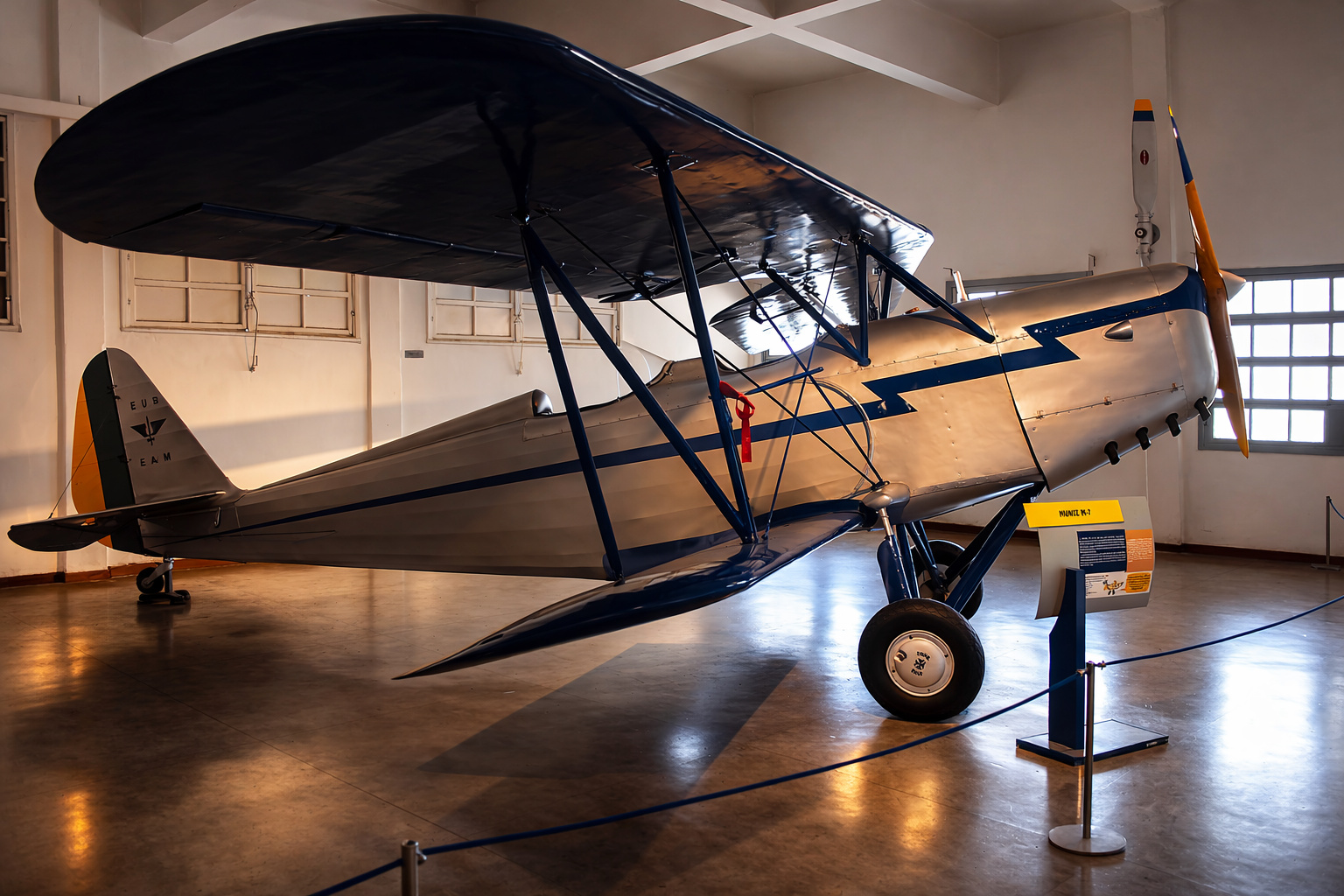


The First Plane Produced in Series in Brazil, the Muniz M-7 Was Designed in the 1930s, Trained Military Pilots, and Today Is Part of the Collection of the Aerospace Museum (MUSAL).
In the 1930s, when Brazil was still taking its first steps in the aviation industry, a simple biplane, made of wood and fabric, began to take shape in makeshift workshops in Rio de Janeiro. The Muniz M-7 was neither a fighter nor a bomber. It was a training aircraft. But its importance went beyond its original function: it became the first airplane designed and produced in series in Brazil.
Developed by engineer Antônio Guedes Muniz and manufactured by the National Air Navigation Company (CNNA), the M-7 marked the beginning of industrial production of aircraft in the country. Between 1937 and 1941, about 28 units were built, consolidating a technical base that would later support the formation of Brazilian military aviation.
The Project That Became a Reality at Campo dos Afonsos
The first flight of the Muniz M-7 took place in October 1935 at the traditional Campo dos Afonsos in Rio de Janeiro — the cradle of Brazilian military aviation. The prototype had been built at the Central Aviation Park.
-
The German “steel monster” weighing 55 tons fires up to 10 projectiles per minute at over 40 km and avoids counterattacks on the battlefield by moving quickly to escape enemy attacks; meet the Panzerhaubitze 2000.

-
USS Gerald R. Ford, the largest aircraft carrier in the world, returns to sea after a fire in the laundry in the Red Sea; repaired in Crete, it resumes missions of Operation Epic Fury against Iran.

-
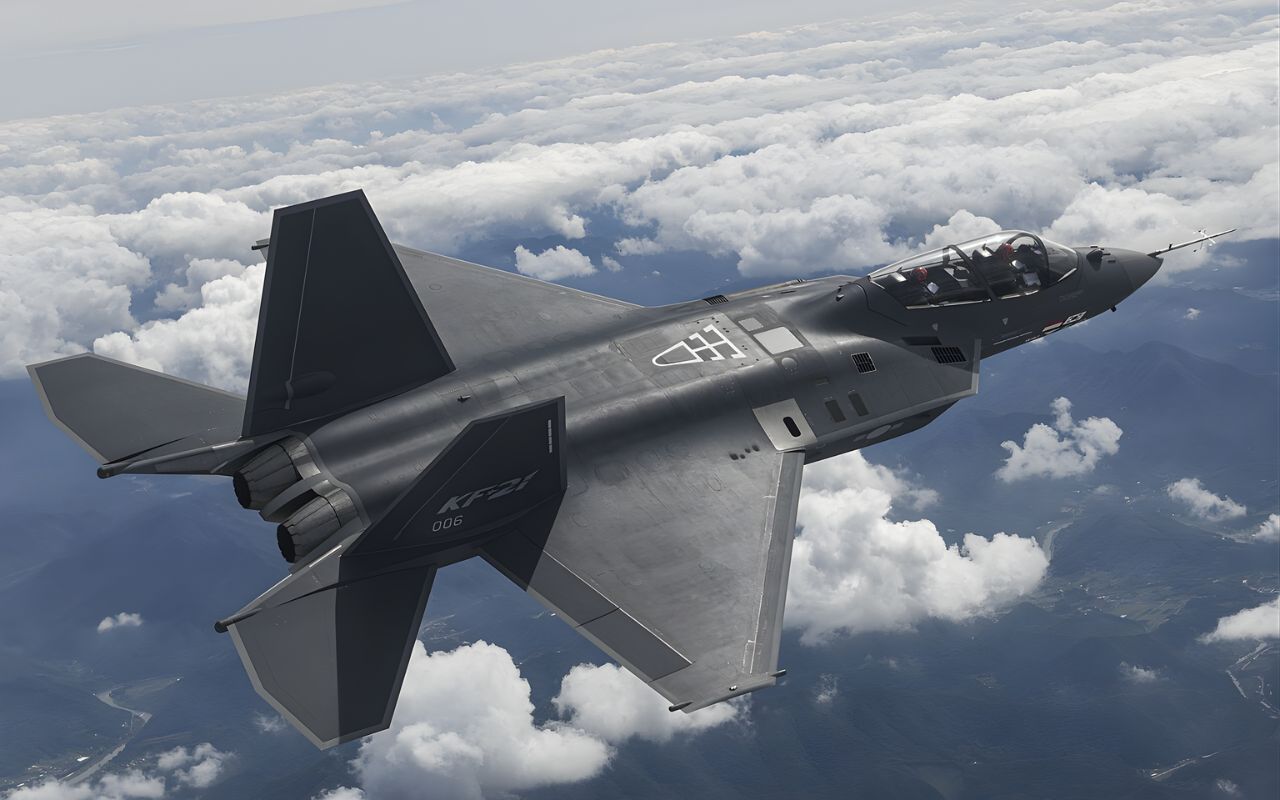
Military power: South Korea’s new KF-21 fighter jet will be a key component in replacing the aging aircraft of the air force, placing the country on the map of air military powers.
-
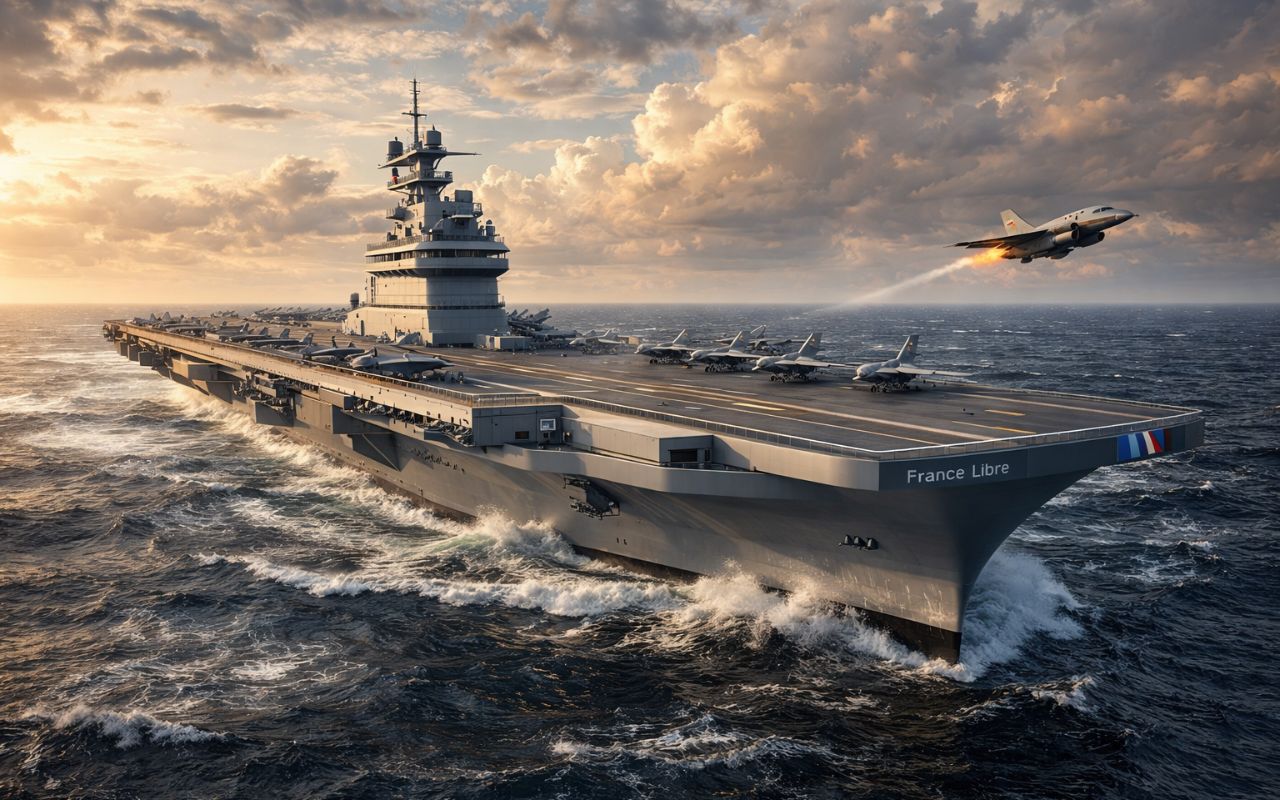
With 310 meters, 80 thousand tons, and capable of operating for 45 years, the new nuclear aircraft carrier France Libre will be the largest in France and will enter service in 2038.



At that moment, Brazil was seeking to reduce its dependence on imported aircraft. The creation of a national training aircraft represented a strategic advancement. Guedes Muniz’s project followed the classic architecture of biplanes of the time: two stacked wings, fixed landing gear, and an open tandem cockpit for instructor and student.
The Muniz M-7 was designed to be robust, easy to maintain, and suitable for Brazilian conditions.
Simple Structure, National Engineering
The aircraft used a mixed structure of wood and metal, covered with aircraft fabric — a common standard in the 1930s. The chosen engine was the British de Havilland Gipsy Major, with about 130 horsepower.
This setup provided sufficient performance for primary flight instruction, with stable control and predictable behavior — essential characteristics for training.
The fact that it was assembled with limited industrial resources in a country still shaping its aviation production chain shows the level of technical organization already present at that time.
The production of the M-7 represented one of the first concrete steps of the Brazilian aviation industry.
Serial Production and Expansion of CNNA
The manufacturing was handled by the National Air Navigation Company (CNNA), a private company working in the construction of aircraft in Brazil.
Between 1937 and 1941, approximately 28 units were delivered. While this number may seem modest, it represented a real capacity for serial production in the Brazilian industrial scenario of the time.
The Muniz M-7 began to equip military aviation schools and civil aeroclubs, helping to structure the training of national pilots.
Training of Pilots in a Decisive Period
During the 1930s and early 1940s, Brazil was experiencing political and military transformation. The consolidation of aviation as a strategic arm required the constant training of new pilots.
The M-7 was used as a primary training aircraft, preparing aviators who would later operate more advanced aircraft.
When Brazil officially entered World War II in 1942, many pilots had already undergone training on national models like the Muniz M-7.
Although the aircraft did not see combat, it was part of the formative chain that structured Brazilian military aviation during that period.
Technical Characteristics of the Muniz M-7
- Type: Primary training biplane
- Crew: Two occupants (instructor and student)
- Engine: de Havilland Gipsy Major (approx. 130 hp)
- Structure: Wood and metal with fabric covering
- Landing gear: Fixed
- First flight: 1935
- Production: About 28 units
These specifications placed the M-7 in line with primary trainers used internationally in the same decade.
Transport and Artisanal Logistics
Historical reports indicate that aircraft were transported between workshops and landing fields using simple means, such as carts and adapted land transport. Brazil still lacked fully developed industrial and logistical infrastructure.
This scenario reinforces the pioneering nature of production.
The M-7 was born in an emerging industrial environment, with limited resources and a great dependence on national engineers.
The Legacy Preserved in the Aerospace Museum
Today, one unit of the Muniz M-7 is preserved at the Aerospace Museum (MUSAL) in Campo dos Afonsos, Rio de Janeiro. The aircraft is part of the historical collection that documents the evolution of Brazilian aviation.
Its preservation represents recognition of the project’s importance in the formation of the national aviation industry.
Foundation for the Future of Brazilian Aviation
Although production was limited and technology still rudimentary compared to current standards, the Muniz M-7 established three fundamental milestones:
- Project conceived by a Brazilian engineer
- Serial production in national territory
- Institutional use in pilot training
These elements helped to establish a technical culture and productive capacity that, decades later, would allow the emergence of companies like Embraer.
The Muniz M-7 was more than just a simple training biplane. It marked the beginning of serial production of aircraft in Brazil and contributed to structuring the training of pilots during a strategic period in national history.
Designed by Antônio Guedes Muniz, produced by CNNA, and used in military aviation schools, the M-7 represents one of the first chapters of Brazilian aerospace engineering.
Its historical importance lies in the foundation it helped to build — a national industry that was beginning to take flight.









Como que ele formou pilotos em 1930, se fala que o primeiro voo foi em 1935 ? Entãi os pilotos se formavam sem voar ?