





 Portuguese
  English
  Spanish
  4 min of reading
  0 comments


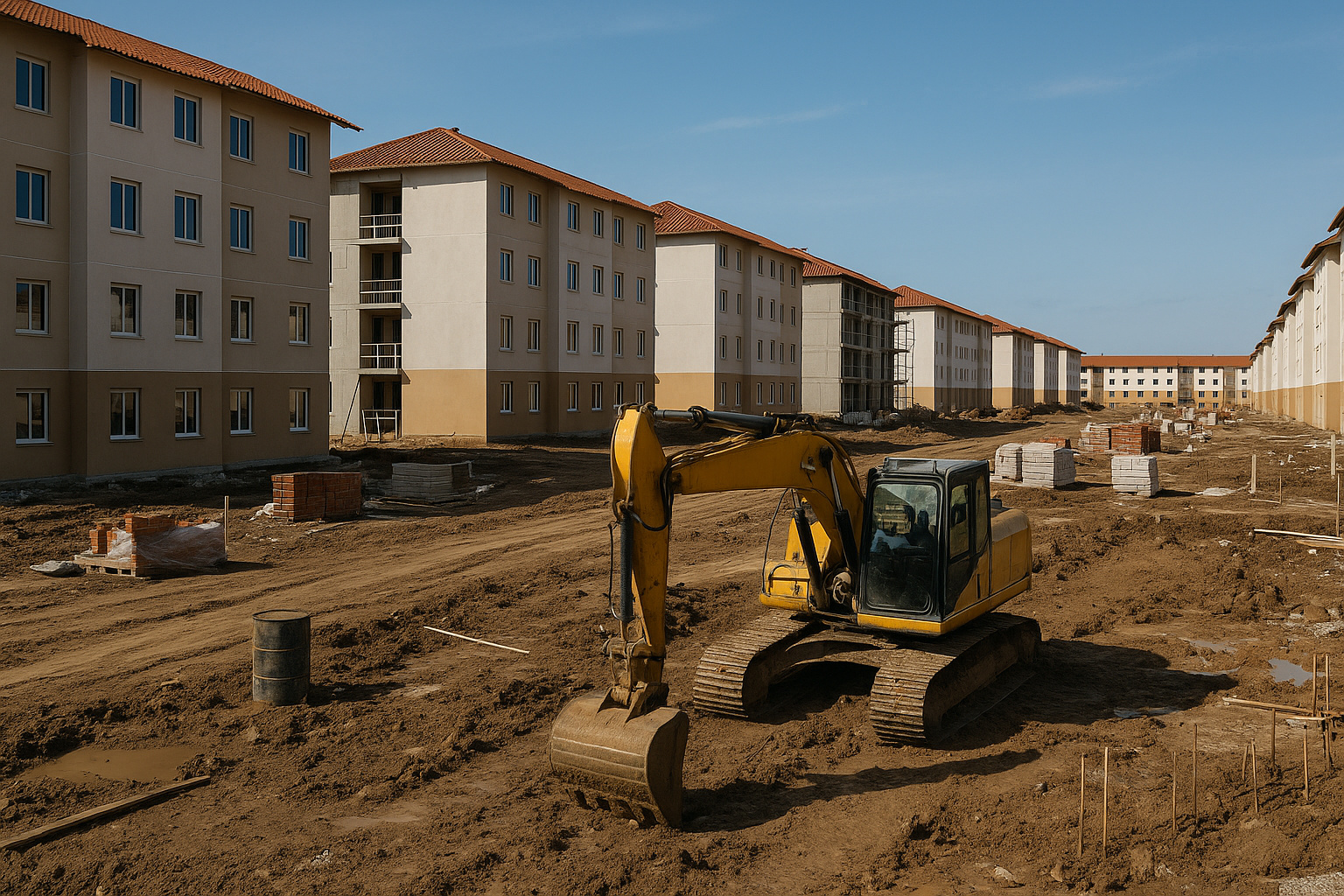
Federal Government Housing Program Accelerates Contracts, Secures Resources, and Maintains Delivery Pace Even with Electoral Calendar
One of the main housing public policies in the country has regained national prominence. The Minha Casa, Minha Vida program aims to finance 3 million homes by the end of 2026, establishing itself as the central axis of the federal government’s social and economic strategy.
The confirmation occurred on December 8, 2025, when the Minister of Cities, Jader Filho, stated during a meeting with journalists that the resources are secured. According to him, the program provides predictability to the real estate market, construction companies, and the families benefited.
Since January 2023, with the beginning of the current mandate of President Luiz Inácio Lula da Silva, the Minha Casa, Minha Vida program has resumed an accelerated pace. In this regard, the housing policy has begun to operate supported by guaranteed resources and the resumption of the construction industry.
-
“No one will make us change the Pix,” says Lula after the US report.

-
Lula responds directly to Trump and says that Pix is from Brazil and will not change under pressure from anyone, after a report from the United States pointed out the Brazilian payment system as an American trade barrier.

-
Amazon has just announced a new fee on all deliveries, and your online purchases will become more expensive starting April 17, including for those buying from the United States here in Brazil.

-
He sold his share for R$ 4 thousand, saw the company become a giant worth R$ 19 trillion, and missed the opportunity of a lifetime.


Contracts Advance and Consolidate Goals Until 2026
According to data from the Ministry of Cities, the program is expected to end 2025 with around 2 million homes contracted. Subsequently, the official projection indicates an additional 1 million units throughout 2026, which consolidates the total announced goal.
According to Jader Filho, the current scenario allows for institutional confidence in the market. Thus, companies can invest securely, while families can obtain loans without risk of interruptions. Furthermore, the minister emphasized that there will be no shortage of resources, even with the increase in the volume of contracts.
FGTS, Budget, and Caixa Ensure the Subsidies
For 2026, the federal government projects R$ 144.5 billion from the Guarantee Fund for Length of Service (FGTS). Of this total, R$ 125 billion will be directed specifically to popular housing.

Additionally, R$ 5.5 billion from the Federal Budget is planned, allocated to cover the subsidies of Urban Tier 1, a proposal still under analysis in the National Congress. Adding to this amount is R$ 17 billion from the Caixa Econômica Federal fund, also used for financing housing subsidies. Thus, the set of resources ensures the continuation of the program until 2026.
Correction of Income Ranges Expands Social Reach
Another confirmed point was the update of income ranges, scheduled for early 2026. Currently, Tier 1 serves families with a monthly income of up to R$ 2,850.
With the correction, the limit should reach families with incomes close to two minimum wages. According to the minister, this change follows the evolution of the labor market. In addition, it expands access to the program for families that cannot obtain financing through the traditional system.
Construction Industry Drives the Economy and Employment
The economic impacts are already visible. In November 2025, there were 80 thousand new financings recorded, exceeding the monthly average of 60 thousand contracts observed up to October.
Additionally, one in three contracts was directed to Tier 1. As highlighted by Jader Filho, the Gross Domestic Product of the construction industry has been one of the main engines of the Brazilian economy. In São Paulo, for example, 67% of real estate launches are linked to the program.
For 2026, the government projects to maintain an average monthly of 80 thousand contracts, sustaining the sector and stimulating job creation throughout the country.
Deliveries Continue Even with Electoral Calendar
Even with the restrictions of the 2026 electoral calendar, the pace of deliveries should not be affected. According to the Ministry of Cities, 60% of the units planned for 2026 are expected to be completed in the first semester.
The next year is expected to be the most robust of the current administration, with around 40 thousand units delivered. Before the end of 2025, the forecast is to complete at least 2 thousand homes in different regions of the country. The average time between contracting and delivery remains between 18 and 22 months.
Finally, Jader Filho confirmed that he will leave the position by March 2026 to run for a federal deputy seat in Pará. Nonetheless, he stated that the technical team is prepared to ensure the continuity of Minha Casa, Minha Vida throughout the electoral period —will the program be able to maintain this pace in light of the growing demand for housing in Brazil?









-

-

2 pessoas reagiram a isso.