





 Portuguese
  English
  Spanish
  3 min of reading
  0 comments


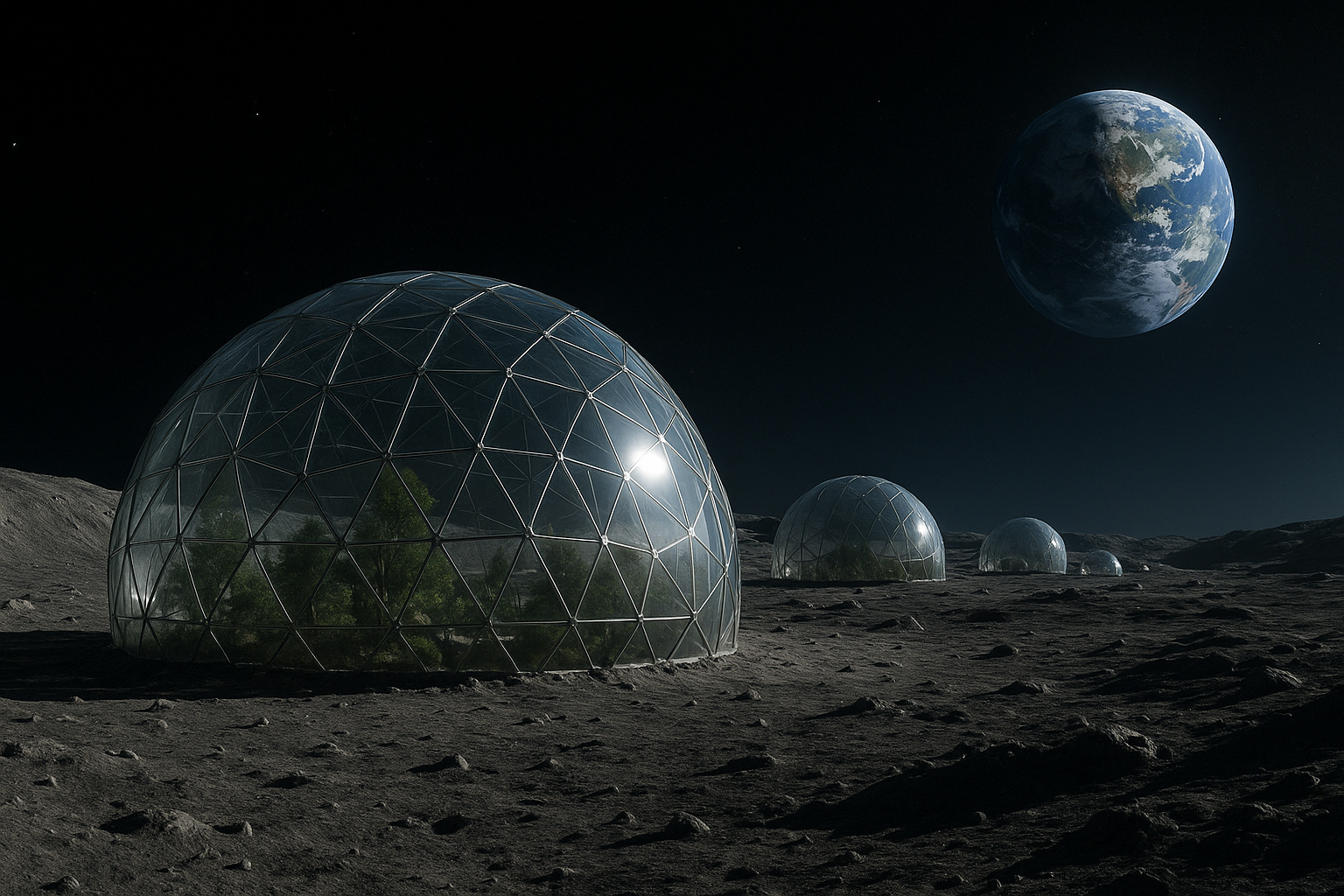
NASA Invests in a Concept That Transforms Lunar Dust into Structural Glass and Inspires Studies on Future Cities on the Moon’s Surface
NASA confirmed in 2025 that it is funding an experimental project that uses lunar regolith as raw material to produce resilient glass structures. This initiative was selected under the NIAC program (NASA Innovative Advanced Concepts), and the goal is to transform lunar dust into liquid glass to form fully developed spherical habitats from local material.
The concept was proposed by architect Martin Bermudez, CEO of the California company Skyeports. According to him, the technique could allow the creation of large pressurized structures to shelter astronauts on prolonged missions on the Moon.
What Is the Technology Created by Skyeports
The proposal consists of melting lunar regolith, which contains up to 60% silicates, according to data presented by Bermudez in 2024. This material, when heated between 1,500 °C and 2,000 °C, becomes liquid glass. In the Moon’s low gravity, this glass forms perfect spheres without the need for complex molds. Bermudez states that the team intends to add titanium, magnesium, and calcium to make the material even more resilient. He explains that this combination can generate structures strong enough to withstand radiation, micrometeorite impacts, and sudden temperature changes.
-
After decades of failed attempts, Brazil is once again looking to space with an orbital rocket measuring 12 meters, weighing 12 tons, costing R$ 189 million, and scheduled for launch in 2026, in a new race to finally achieve autonomous access to orbit.

-
The Earth will plunge into a few minutes of darkness in broad daylight in August 2026, when a total solar eclipse transforms the sky into one of the most impressive astronomical phenomena in recent years.

-
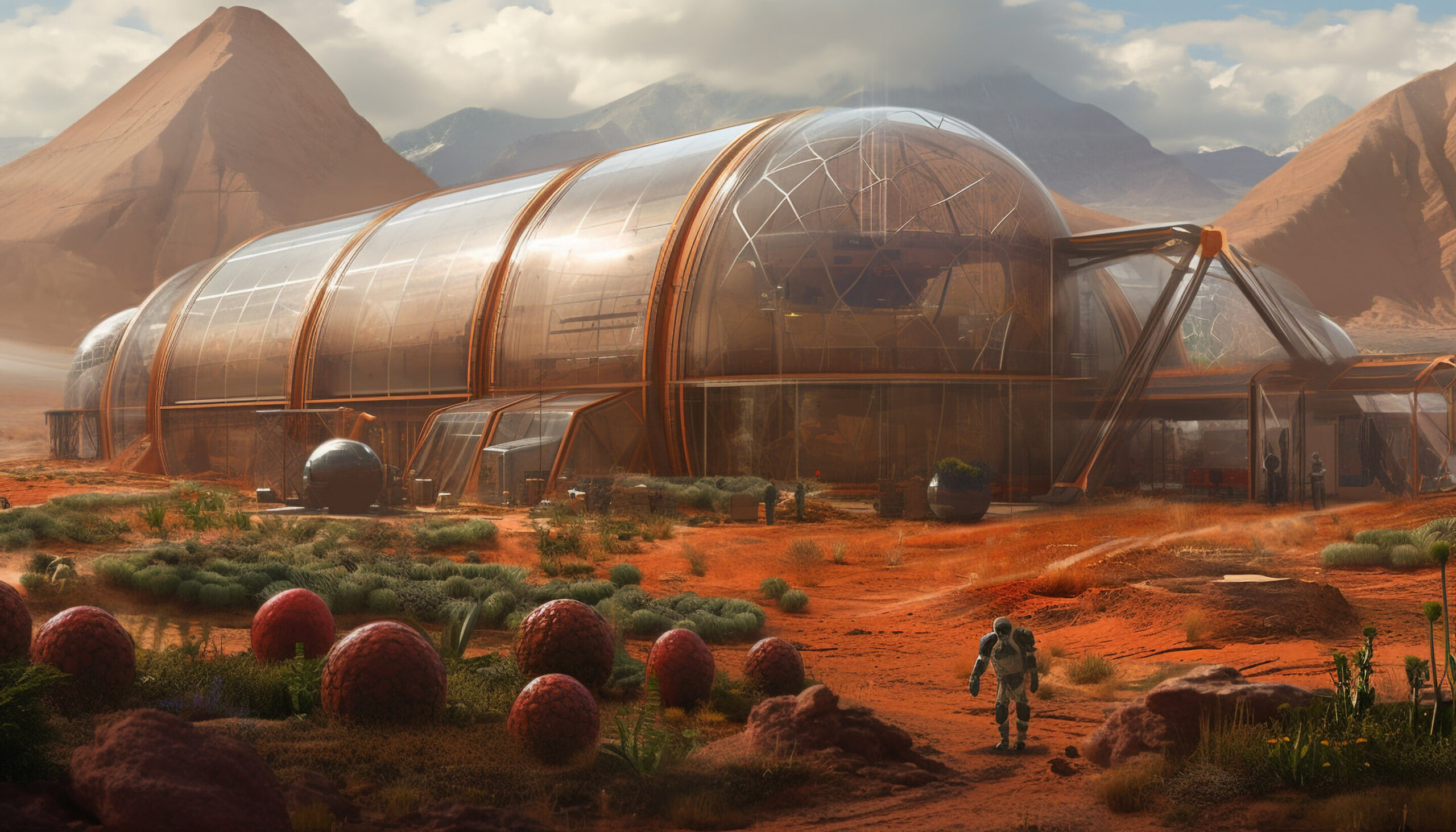
How the terraforming of Mars can transform the planet: artificial aerosols can increase the temperature by up to 35°C in 15 years, creating conditions for liquid water.
-
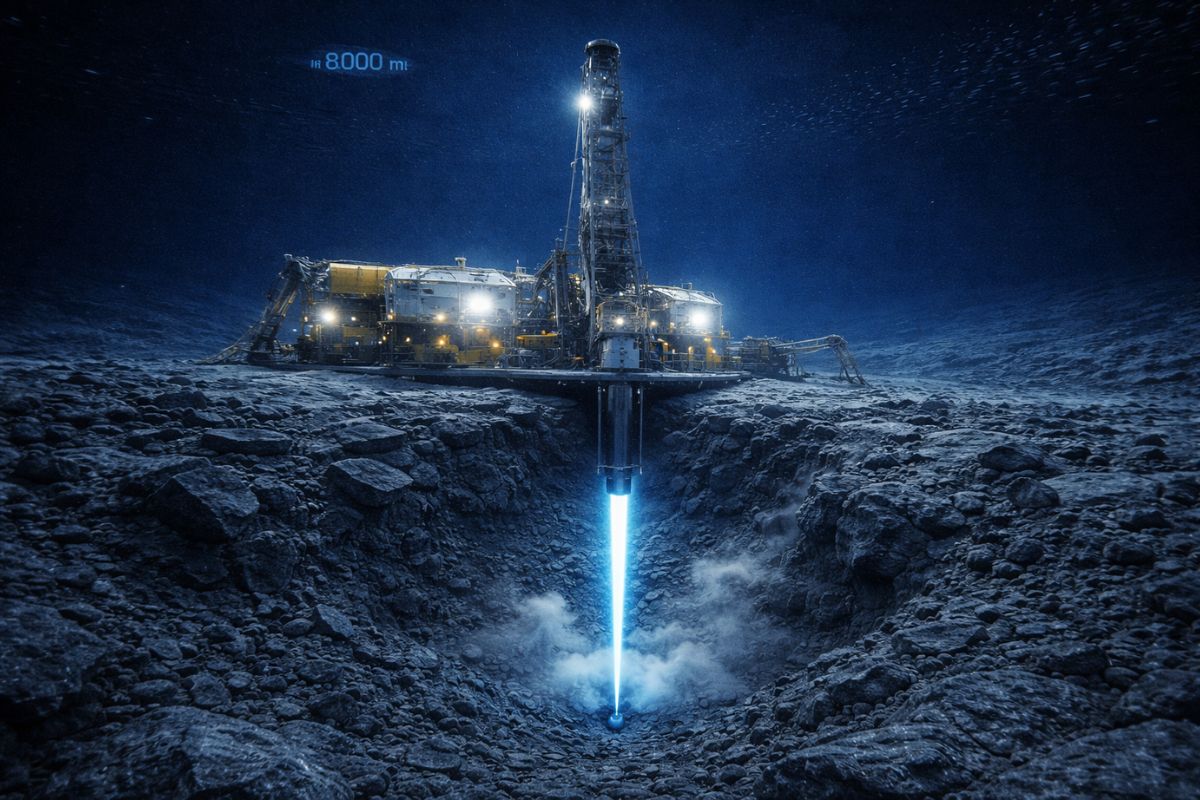
Scientists drilled nearly 8,000 meters into the ocean floor above the fault that caused the 2011 tsunami in Japan and discovered that a layer of clay 130 million years old was responsible for making the wave much worse than any model had predicted.

Moreover, the concept envisions almost total use of lunar resources, which reduces dependence on cargo transported from Earth, as Bermudez explains in statements to Yahoo Tech! in 2024. He states that this approach is part of studies for self-sustaining habitats in the coming decades.
Statements from the Creator and Motivation for the Project
Bermudez emphasizes that he has always sought architectural solutions for extreme environments. In 2023, he began discussions with scientists and found that lunar glass could surpass the strength of many materials used in Earth constructions. According to him, initial simulations showed that it would be possible to produce small spheres as an initial prototype. Subsequently, larger models would be developed to house work areas, dormitories, and life support systems.
He states that he envisions interconnected structures with glass tunnels, featuring areas dedicated to food cultivation, water systems, and community environments. Although the project does not aim to fully replicate Earth conditions, Bermudez believes that the technology can bring the lunar environment closer to something functional and safe for human habitation.
Planned Dimensions and Potential Future Applications
The first spheres will have dimensions of a few centimeters, according to documents submitted to NASA in early 2025. However, the goal is to develop structures with hundreds or thousands of meters in diameter over the coming phases. This advancement will allow astronauts to test, for the first time, glass habitats produced directly in the lunar environment. The concept also includes the possibility of generating water and growing plants inside pressurized spheres, as reported by Bermudez in technical interviews.
He also envisions that, in the future, smaller versions of these spheres could be placed in orbit for structural testing. However, this step depends on preliminary results from the melting of regolith and the stable production of lunar glass.
Funding and Research Timeline
The selection in the NIAC occurred in January 2025, thus initiating the funded development phase. Resources will support analyses on regolith melting, creation of transparent prototypes, and structural studies. Furthermore, the agency considers the initiative relevant to the Artemis program, which envisions continuous human presence on the Moon since 2020.
Perspectives and Impact on Lunar Exploration
Experts consulted by NASA state that the direct use of lunar material represents a decisive step for prolonged missions and therefore influences plans for permanent bases. Additionally, they highlight that the production of lunar glass reduces logistical dependencies and thus strengthens strategies for safe and sustainable exploration.







Seja o primeiro a reagir!