





 Portuguese
  English
  Spanish
  5 min of reading
  0 comments


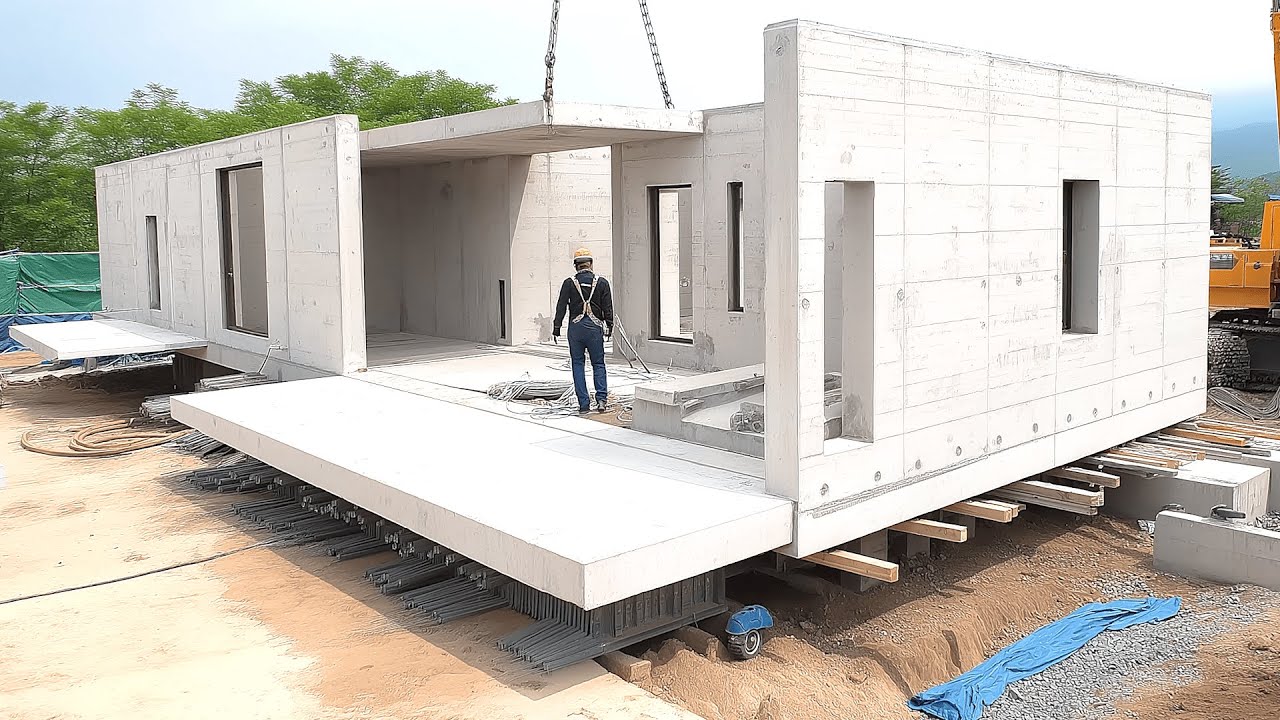
The Netherlands Has Started Replacing Bridges On Highways Using Giant Prefabricated Modules, Built Off-Site And Installed In Short Windows, Avoiding Months Of Closure.
For decades, replacing a bridge on a busy highway meant months — sometimes years — of closures, makeshift detours, and economic losses. In the Netherlands, a country crisscrossed by rivers, canals, and logistics routes essential to Europe, this model has become seen as unviable. The answer came with a little-known combination outside the sector: giant modular bridges, manufactured off-site, assembled like an industrial puzzle, and installed in extremely short time windows.
The concept is neither futuristic nor experimental. It is already in real use and documented in Dutch road projects, especially in auxiliary bridges and quick replacements that keep traffic flowing while the permanent structure is being built or reinforced. The result is a profound change in the logic of bridge engineering in dense urban and road environments.
Why The Netherlands Became A Global Laboratory For Modular Bridges
The Netherlands faces a permanent structural challenge. With an intense road network, strategic ports, and constant freight traffic, closing a route for long periods has an immediate economic impact. At the same time, a large part of the country’s bridges was built in the post-war period and now requires heavy maintenance or complete replacement.
-
The lack of welders, electricians, and operators becomes a structural threat in 2025, with the construction industry and manufacturing already suffering from delays, cost pressures, and labor shortages in Brazil.
-
Brazil and Paraguay are just 46 meters away from a historic union on the bioceanic bridge that promises to revolutionize trade between the Atlantic and the Pacific.

-
With 55 km over the sea, a cost of US$ 20 billion, and enough steel to build 60 Eiffel Towers, China’s largest project has connected Hong Kong, Zhuhai, and Macau in a colossal bridge that defies the logic of engineering.

-
A trick with joint compound transforms a Styrofoam ceiling into a plaster-like ceiling: leveled panels, wires and mesh at the joints, sand, paint, and change the environment while spending little today.


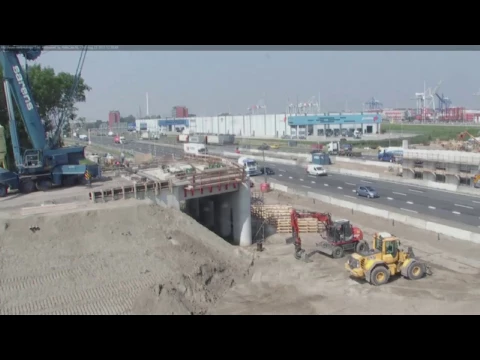

It was in this context that Dutch engineering firms began investing in modular bridge systems, capable of being manufactured in controlled environments, transported as modules, and installed quickly at the final location. Instead of building a bridge “from scratch” over the highway or river, the structure arrives almost ready.
What Are These Giant Modular Bridges
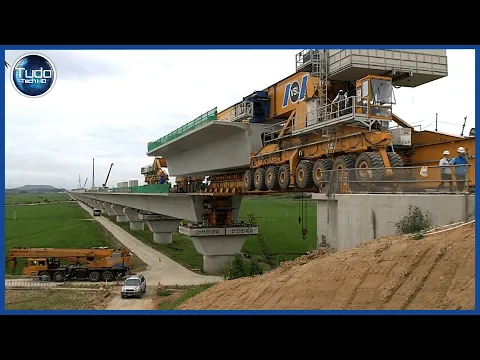
Unlike the lightweight temporary bridges used in emergency situations, the Dutch systems include large metal and concrete decks, capable of supporting heavy traffic for months or even years. In some projects, the entire set exceeds hundreds of meters in length, with a total weight reaching 1,500 tons, depending on the configuration.
These bridges are assembled from standardized modules that allow for multiple combinations of length and width. The secret lies in the engineering of connections: joints, structural pins, and locking systems that ensure rigidity and safety even under intense loads.
How Installation Happens In A Few Days
The process begins far from the final site. The modules are manufactured in specialized factories, where quality control, welding, and pre-assembly take place at an industrial pace. This drastically reduces errors and delays common in traditional construction sites.
On-site preparation focuses on foundations and supports. When everything is ready, SPMTs (self-propelled modular transporters) and large cranes come into play. In a carefully choreographed operation, the modules are positioned with millimeter precision.
In some documented cases, the modular bridge is assembled next to the highway and then shifted laterally to its final position in a matter of hours. In others, installation occurs overnight or over a weekend, reducing traffic impact.
Auxiliary Bridges That Keep Roads Open
A recurring use of this technology in the Netherlands is the creation of temporary auxiliary bridges. While the original bridge undergoes structural reinforcement or complete replacement, traffic is diverted to the modular bridge installed beside or in place of the old structure.

These bridges are not makeshift. They support trucks, buses, and continuous traffic, maintaining almost normal road flow. In many cases, users may not even realize they are crossing a temporary structure.
Real Reduction Of Time And Costs
The gains are not only aesthetic or operational. Studies of Dutch projects show that using modular bridges can reduce overall construction time by up to 60% when compared to traditional methods. Less construction time means lower indirect costs, less environmental impact, and less political wear from prolonged closures.
Moreover, as the modules are reusable, the initial investment is spread over multiple projects. The same modular bridge can be taken apart, transported, and reinstalled at another location, something unthinkable with conventional structures.
Structural Safety And Reliability
A common point of skepticism is the safety of these structures. In practice, the modular systems used in the Netherlands adhere to strict European engineering standards. Each module undergoes load, fatigue, and resistance testing before entering operation.
During use, sensors and periodic inspections monitor deformations, vibrations, and wear. This allows for identifying problems before they become critical, something many old bridges do not offer.
Environmental Impact Less Than It Seems
Although the use of large metal structures suggests a high environmental impact, the final balance tends to be positive. The reduction in construction time decreases emissions associated with congestion and long detours. Industrial manufacturing also generates less material waste than traditional construction sites.
Furthermore, the ability to reuse modules reduces the need to produce new structures from scratch for each project, a point increasingly relevant in sustainability policies.
A Model That Is Starting To Spread Across Europe
The Dutch success has not gone unnoticed. Countries such as Germany, Belgium, and the United Kingdom have already adopted similar concepts, inspired directly by the systems developed in the Netherlands. In many cases, Dutch companies participate as suppliers or consultants, exporting not just modules, but know-how.
What once seemed like a niche solution is now starting to be seen as a new standard for rapid bridge replacement in congested regions.
Invisible Engineering For Those Who Pass Over
Perhaps the most curious aspect of this technology is how unnoticed it often is. Thousands of drivers cross these bridges daily without realizing they are on structures assembled in just a few days, removable and reusable.

While the public debate on infrastructure often focuses on megaprojects and billion-dollar works, the Dutch experience shows that silent innovations, based on efficiency and planning, can radically transform how cities and countries deal with their critical structures.
By turning complex replacements into quick and predictable operations, the Netherlands not only solved an internal problem but also offered the world a concrete example of how modern engineering can save time — literally — without sacrificing safety.










-

-

4 pessoas reagiram a isso.