






 Portuguese
  Spanish
  4 min of reading
  0 comments


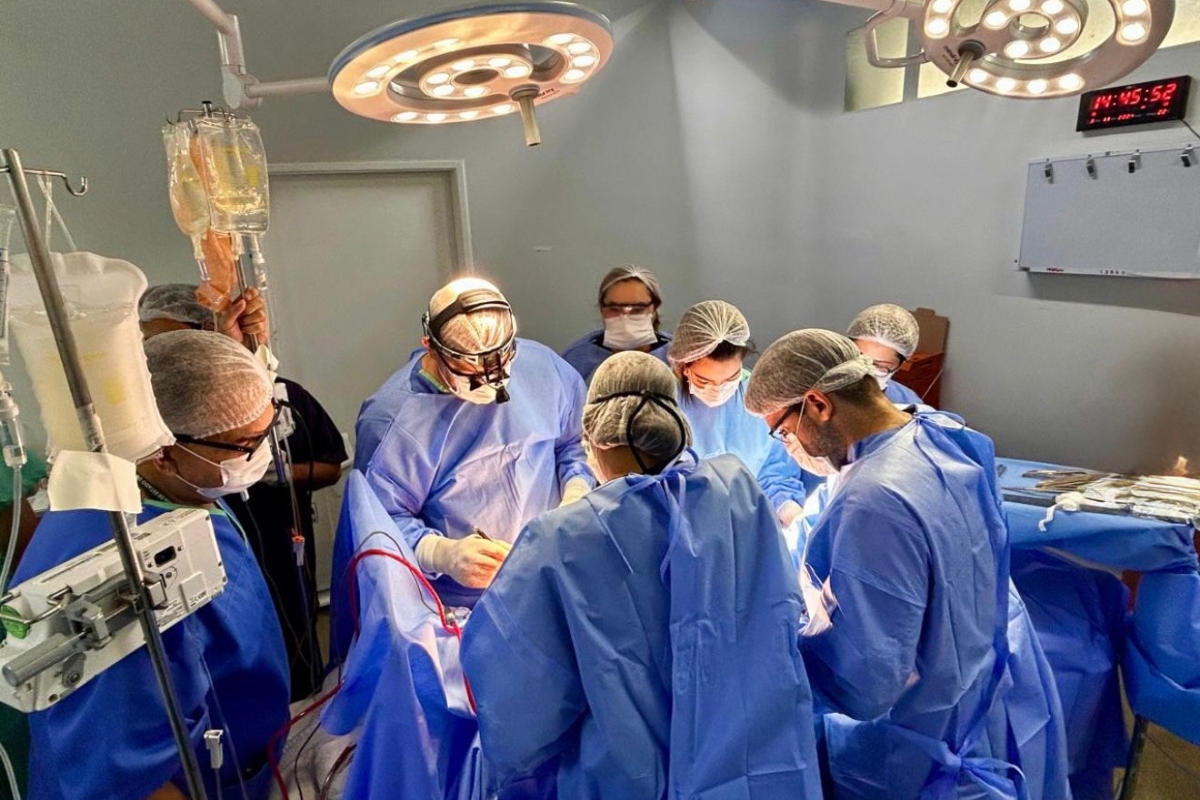
A AORP Brings More Precision to Open Prostatectomy and Delivers Faster Functional Recovery Without Requiring Expensive Equipment
The prostate cancer is the most common tumor among men in Brazil, except for non-melanoma skin cancers. This puts pressure on the healthcare system to seek effective, safe, and accessible surgeries.
The radical prostatectomy completely removes the prostate with a curative intent and has changed significantly over the last few decades. The challenge is to enhance gains in precision and recovery, even in areas where robotics cannot reach.
What Happened and Why It Caught Attention
A team from the Pedro Ernesto University Hospital at Uerj developed the AORP, an acronym for open anterograde anatomical radical prostatectomy. The technique brings principles popularized by robotics into open surgery.
-
Scientist creates mini-universe with 24,000 ultracold atoms and shows that time can emerge from the internal changes of the system, without relying on an external clock.

-
A CIA manual that remained classified as secret for decades describes the five cognitive traps that led to the greatest intelligence failures in history, and anyone can make the same mistakes.
-
While Brazil is still discussing infrastructure for electric vehicles, China operates a giant yard with hundreds of trucks, 216 plugs, 1.44 MW chargers, and 300,000 kWh delivered in a single day, showing how heavy recharging has already become a logistical routine.

-
It looks just like a metallic card, but this titanium gadget hides more than 70 tools for routine, fishing, technology, and emergencies.




The proposal is clear: improve visualization, refine dissection, and preserve important structures, using only conventional instruments. All this without creating additional costs for the procedure.
How Prostate Surgery Has Evolved Over the Last Few Decades
In 1980, urologist Patrick Walsh demonstrated that it was possible to preserve the nerves related to erection during surgery. This change reduced complications and improved quality of life after the procedure.
In the 1990s, laparoscopy introduced smaller incisions and faster recovery. However, the technique requires high skill and a long learning curve, which limited its spread.
In the 2000s, robotics gained ground with the da Vinci system, which enhances precision and offers three-dimensional vision. The advancement faced the extremely high cost of acquisition, maintenance, and disposable instruments.
What Robotics Delivers and Where It Still Falls Short
Robotic surgery facilitates the execution of laparoscopy prostatectomy and usually speeds up recovery. Nevertheless, oncological and functional results appear to be equivalent to those of traditional open surgery, with the main advantage concentrated in the postoperative period.
In middle-income countries, the expansion of robotics is limited by the required investment. This creates a technological disparity and keeps many services dependent on open surgery.
The practical question becomes a priority: how to capture the gains in technique and anatomical preservation without relying on high-cost platforms.
How AORP Works in Open Surgery
The AORP was structured in 2015 after a comprehensive review of open, laparoscopic, and robotic approaches. The technique focuses on the anatomical logic of dissection and reconstruction, with steps designed to increase precision.
Three pillars were treated as determinants for better functional results: anterograde dissection, preservation of the bladder neck and abdominal urethra, and continuous anastomosis using the Van Velthoven technique.
With this, the team aimed to reproduce gains attributed to robotics while using only traditional materials and instruments. The goal is to elevate the standard of open surgery without increasing costs.
What Are the Rules, Deadlines, and Conditions in Clinical Research
The research followed scientific practices with the approval of the Ethics Committee of the Pedro Ernesto University Hospital. There was registration in Clinical Trials, reinforcing the control of stages and the transparency of the protocol.
A pilot study with 10 patients paved the way for a larger evaluation. Subsequently, a randomized clinical trial with 240 patients took place between 2016 and 2019.
This design allowed for a comparison of AORP with the traditional technique under standardized conditions, observing both safety and functional outcomes.
Results Observed in Continence, Complications, and Cancer Control
Patients operated on with AORP had less blood loss and shorter anastomosis time. There was also a reduction in the period of urinary catheter usage and quicker urinary recovery.
In 30 days, 60.9% of the AORP group patients were continent. In the traditional technique group, the rate was 42%.
There was an even lower complication rate and greater nerve preservation, which is important for sexual function. In oncological control, a central objective of cancer surgery, both techniques were equivalent, with no loss of safety for gaining functionality.
What Can Happen From Now On in SUS
The AORP emerges as a strategic alternative for places with limited access to robotics. By using traditional materials and dispensing with expensive equipment, it can broaden access to a more advanced surgical standard.
Additional data is underway: a study with 5 years of follow-up is in the final publication stage and indicates identical oncological control between AORP and the traditional technique. Another work compares AORP and robotic prostatectomy in 252 patients, with 126 in each group, and is in the presentation phase for publication.
In SUS services, the technique presents itself as a possibility for transformation by combining surgical efficiency and practical viability.
Costs Four Times Lower and Impact on Surgeon Training
Recent comparisons between AORP and robotic surgery point to similar hospitalization times and equivalent functional recovery. The difference appears in cost, being nearly four times lower, excluding the acquisition of the robotic platform.
This gain weighs heavily in public hospitals with limited budgets and increasing demand. The technique can also strengthen the training of new surgeons by incorporating principles associated with robotics into open surgery.
The AORP acts as a pedagogical bridge and can prepare professionals to operate in different realities, including in centers that may have robotics in the future.
The AORP demonstrates that it is possible to elevate open surgery for prostate cancer with more precision and functional recovery without relying on robots or inaccessible investments. The technique was designed to maintain oncological safety and reduce impacts in the postoperative period.
For the SUS, this advancement may mean greater access to an advanced surgical standard, with lower costs and the potential to qualify teams. This places Brazilian innovation at the center of a practical solution to technological inequality in healthcare.






-

-

-

-

-

6 people reacted to this.