





 Portuguese
  English
  Spanish
  3 min of reading
  0 comments


System Launched by Brazilian Fintech Is Now Available in American Stores and Converts Values Automatically to Reais
The International Pix officially starts operating in the United States and will allow Brazilians to shop in American stores using reais. The news is the result of a partnership between the Brazilian fintech PagBrasil and the payment company Verifone, with direct integration into merchants’ card machines.
Now, when making a purchase in American territory, the Brazilian tourist will be able to scan a QR Code generated by the card machine and pay using the Brazilian bank’s app — with the amount already converted to reais, including fees such as the IOF, of 3.5%.
How Does the International Pix Work in American Stores?
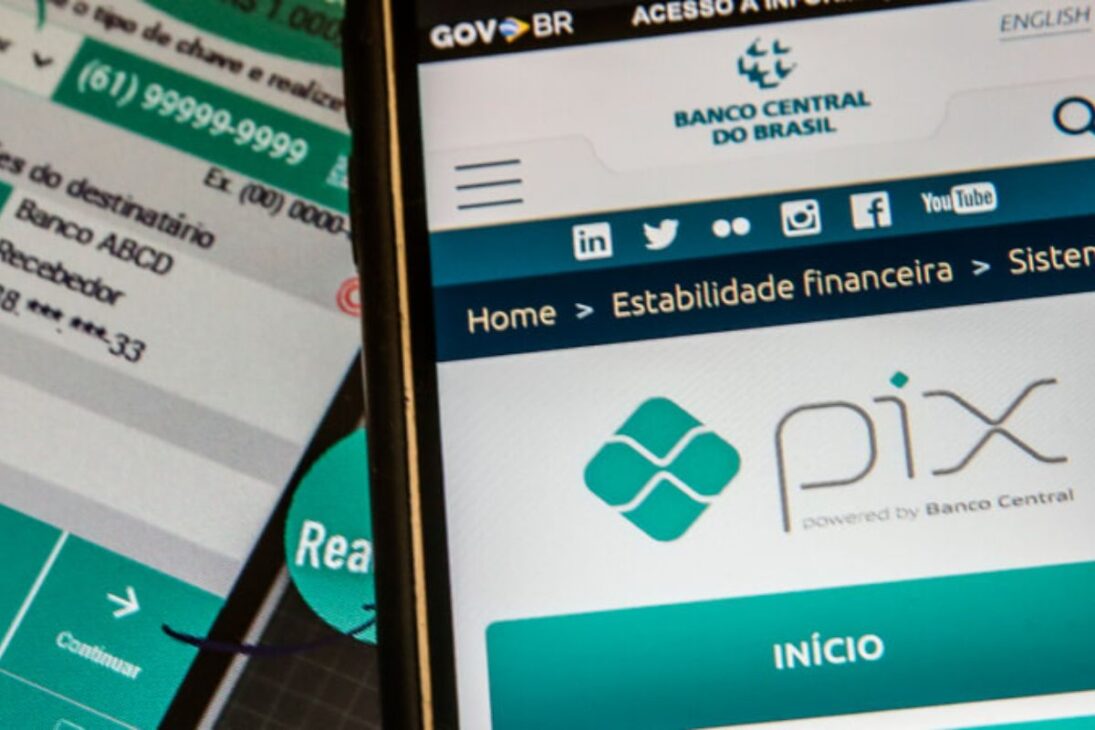
The operation of the International Pix in the United States marks an unprecedented expansion of the payment system created by the Central Bank of Brazil. Previously, it was possible to use Pix in the U.S. only indirectly, at websites or establishments linked to Brazilian companies. With the new model, the American merchant enters the amount in dollars, and the system generates a QR Code with instant conversion to reais.
-
IPTU exemption for seniors in 2026: see how to secure the benefit.

-
The institute that trained the greatest aerospace engineers in Brazil has just opened its first campus outside São Paulo after 75 years: ITA Ceará will have R$ 445 million, new courses in energy and systems, and classes are expected to start in 2027.

-
Luciano Hang, owner of Havan, goes to Juiz de Fora after the tragedy in February, brings R$ 1 million, hands out R$ 2,000 cards, and donates up to R$ 15,000 to victims in the region.

-
The Brazilian passport allows legal residence in dozens of countries without the need for a prior visa, and most Brazilians are unaware that they can apply for residency directly upon arriving in nations in South America, Africa, and even Europe.

The consumer only needs to point the camera through the bank app, authorize the transaction, and done — the payment is completed in seconds, directly from the Brazilian account. The amount in reais already appears on the screen with all charges, which provides more predictability for the traveler and eliminates the need to use an international credit card.
According to PagBrasil, the fees for merchants are around 2%, lower than those charged by card operators, which range from 2% to 3% and also include fixed charges. Furthermore, because it is an instant transfer, the merchant does not suffer from chargeback risks, which reduces the operational costs of the business.
Where Is the International Pix Already Available?
The International Pix is already available at points of sale in the United States, especially in tourist destinations such as New York and Florida. Verifone, which processes more than US$ 8 trillion a year, integrates the technology into its machines without the need for hardware updates. The company is present in 75% of the largest American retailers.
The expectation is that the use of the system will grow rapidly, especially with the approach of events such as the Club World Cup in 2025 and the World Cup in 2026, both hosted in the U.S. According to the U.S. Travel Association, more than 6 million foreign tourists are expected to visit the country during the World Cup.
International Expansion, Praise, and Controversies
The arrival of the International Pix in the U.S. occurs amid political criticism. President Donald Trump and the Office of the United States Trade Representative (USTR) opened an investigation claiming that Pix represents an unfair advantage, as it was developed by a state central bank.
On the other hand, economists like Paul Krugman praised the efficiency and low cost of Pix, classifying the system as an innovation that challenges traditional models of banks and card operators.
According to Ralf Germer, CEO of PagBrasil, the international acceptance of Pix is a response to the global demand for simpler and cheaper payment methods. For him, the agreement with Verifone puts Brazil at the forefront of digital payments and directly benefits both consumers and American retail.
Would you use the International Pix on a trip to the U.S.? Do you think this could replace the credit card? Share your opinion!









Seja o primeiro a reagir!