





 Portuguese
  English
  Spanish
  5 min of reading
  0 comments


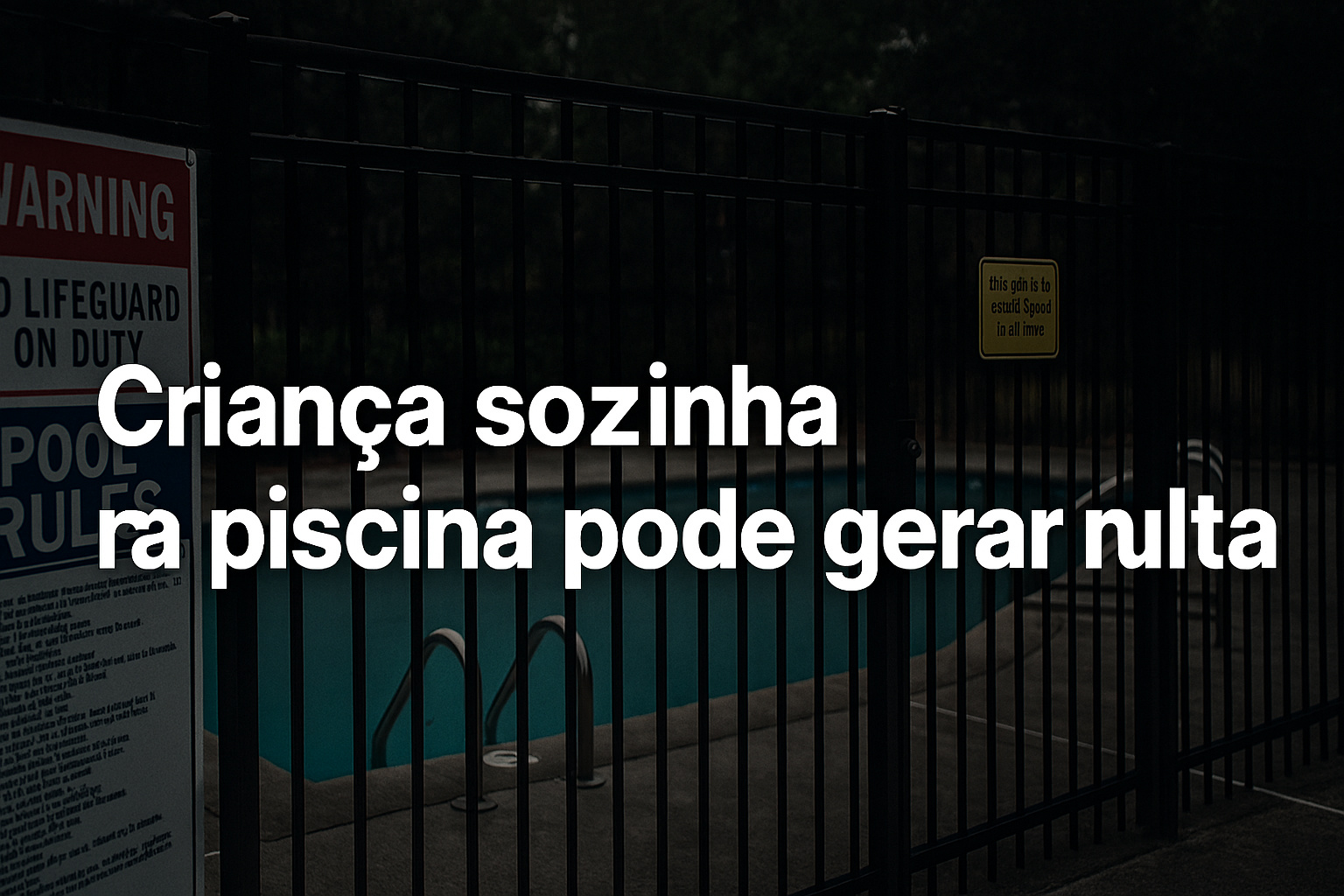
Proposal Advancing in the Chamber Foresees Fines for Parents and Managers for Unattended Children in Condominium Pools and Redefines Child Safety Rules.
In recent months, the discussion about child safety in common areas has gained momentum in Brazil following the advancement, in Brasília, of a legislative proposal that toughens penalties for parents, guardians, and even managers who allow minors to roam unattended within condominiums — particularly in pools, gyms, elevators, and playgrounds. The measure, based on PL 4.309/2020 and related projects, has reignited an old debate: how far does parental responsibility go and where does the legal obligation of the condominium and the Condominium Law begin?
The movement gained national attention after the approval of the text by the Urban Development Commission of the Chamber of Deputies, which classified the presence of unattended children in areas like pools as a serious and preventable risk, justifying the creation of financial and administrative penalties to reduce accidents. The decision is not yet federal law, but it is already influencing legal interpretations and practices adopted by administrators and managers across the country, especially after recent understandings that expanded civil liability in condominium environments.
What the Approved Proposal in Committee States and What May Change in Condominium Routines with the New Interpretation of the Condominium Law
The approved text provides for significant changes in three fronts:
-
The Chamber opens a debate on driver’s licenses at 16 years old as part of a reform that includes around 270 proposals to change the Brazilian Traffic Code and may redesign rules for licensing, enforcement, and circulation in the country.

-
The new Civil Code could revolutionize marriages in Brazil with “express divorce” and changes that could exclude spouses from inheritance.

-
Banco do Brasil sues famous influencer for million-dollar debt and intensifies debate on delinquency, risks of seizure, and direct impact on Gkay’s credibility.

-
The Senate approves a bill that criminalizes misogyny, hatred, or aversion towards women, and includes the crime in the Racism Law with a penalty of up to 5 years.


Fines for Parents and Guardians with the New Interpretation of the Condominium Law
The proposal establishes penalties ranging from 5 to 20 minimum wages when children under 12 years are left unattended in:
- pools;
- playgrounds;
- gyms;
- sports areas;
- elevators and hallways;
- party rooms during events.
The commission’s justification is that the absence of supervision exponentially increases the risk of accidents, drownings, and falls.
Fines for Managers and Administrators
The project also foresees fines ranging from 3 to 10 minimum wages for managers or administrators who:
- fail to display notices about permitted age groups;
- do not create internal rules for monitoring minors;
- ignore occurrences or risk situations;
- do not notify guardians in recurring cases.
This point broadened the debate, as it brings the manager closer to a responsibility similar to that of a public establishment manager, requiring greater vigilance.
Signage and Formal Rule Obligations – New Interpretation of the Condominium Law
The text requires condominiums to clearly establish:
- guidelines on the minimum age for using the areas;
- mandatory supervision requirements;
- rules for pools and gyms.
These rules, previously decided only by internal convention, now have legal backing.
Why the Pool is the Most Sensitive Point of the Proposal
Data from the Ministry of Health and research released by the Brazilian Society of Aquatic Rescue (Sobrasa) indicates that:
- drowning is the second leading cause of accidental death among children;
- a large portion of accidents occurs in residential and condominium pools;
- most incidents happen in less than 5 minutes of distraction from guardians.
According to specialists consulted by the commission, the mere physical presence of the guardian drastically reduces risk, making it reasonable to create penalties for those who fail to fulfill the duty of supervision.
This argument weighed in favor of the text’s approval in the committee and, even still lacking force of law, has begun to be used as a reference by administrators and managers.
How Administrators and Condominiums Are Already Implementing Similar Rules, Even Without Federal Law Approved
Following the repercussions of PL 4.309/2020, several administrators and managers began to strengthen internal safety rules using recent jurisprudence that recognizes shared responsibility between parents and condominiums.
Decisions in state courts have determined that:
- the condominium must adopt preventive measures;
- the manager must intervene when noticing explicit risk;
- parents are directly responsible for unattended minors;
- the omission of any of the parties may generate civil responsibility.
Some condominiums have already created:
- credentialing children for access to sports areas;
- restricted hours for child use of the pool;
- mandatory identification bracelets during events;
- visual warnings near the pool and playground.
Even though there is no federal law, legal understanding evolves rapidly and tends to align with the project’s direction.
Shared Responsibility and the Risk of Judicialization
Lawyers specializing in condominium law explain that, with the approval of the proposal in committee, the likelihood that judges will use the text as a reference for future decisions increases, even without final sanction.
This is because the project expresses a legislative understanding about risk and reinforces the duty of vigilance, which may influence:
- compensation claims for accidents in pools;
- disputes between residents and managers;
- liability for negligence;
- discussions about omissions.
Thus, the debate is not limited to the condominium: it also involves the Civil Code, the Child and Adolescent Statute (ECA) and safety regulations.
What Happens Now with the PL
The approved proposal in committee still needs to:
- go through other committees;
- potentially be voted on in the plenary of the Chamber;
- move on to the Senate;
- and only then go to presidential sanction.
But this does not prevent the text from being used as an interpretative basis — something that is already happening in practice.
The Change That Redefines Coexistence in Condominiums
The advancement of the proposal has brought to light a new reality: leaving a child alone in the pool, even for a few minutes, can lead to legal, financial, and administrative consequences.
More than a legal debate, it is a discussion about the division of responsibilities in collective spaces.
As the project moves through its legislative course, condominiums, managers, and families begin to adjust their routines in light of a stricter understanding of child safety. Pools, once seen merely as recreational areas, have become the center of a transformation that combines legislation, prevention, and shared responsibility.










-

-

-

9 pessoas reagiram a isso.