





 Portuguese
  English
  Spanish
 4 min of reading
  22 comments


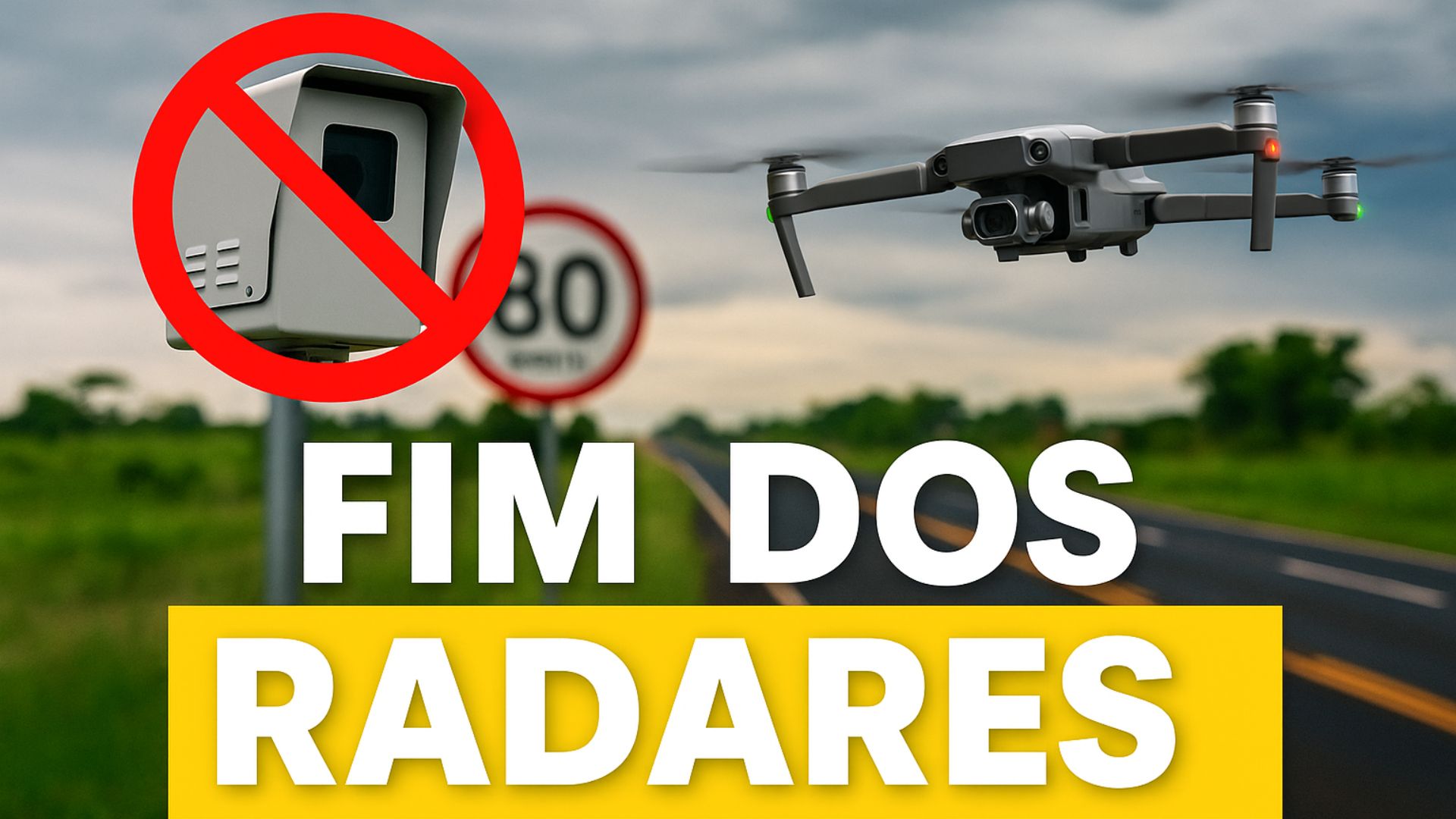


Bill in Santa Catarina Seeks to Restrict the Use of Mobile Radar and Drones on State Highways, Generating Criticism From Authorities and Specialists Who Point Out Risks to Safety and Question the Constitutionality of the Proposal.
A bill currently under consideration in the Legislative Assembly of Santa Catarina (Alesc) proposes significant changes to how the state monitors speed on state highways.
The text aims to prohibit the use of mobile radar and drones to measure speed, restricting control to only fixed equipment that is previously signaled.
The proposal, presented by Representative Sérgio Guimarães (União), has provoked reactions from authorities and traffic specialists, who point out risks to road safety and question the constitutionality of the measure.
-
The Federal Revenue Service now automatically cross-references everything you declare with data from banks, credit cards, brokerage firms, and insurance companies, and any discrepancy between your income and your expenses triggers an alert in seconds.

-
Amid global tensions, Brazil blocks the United States’ proposal at the WTO and paves the way for a trade crisis and possible retaliations.

-
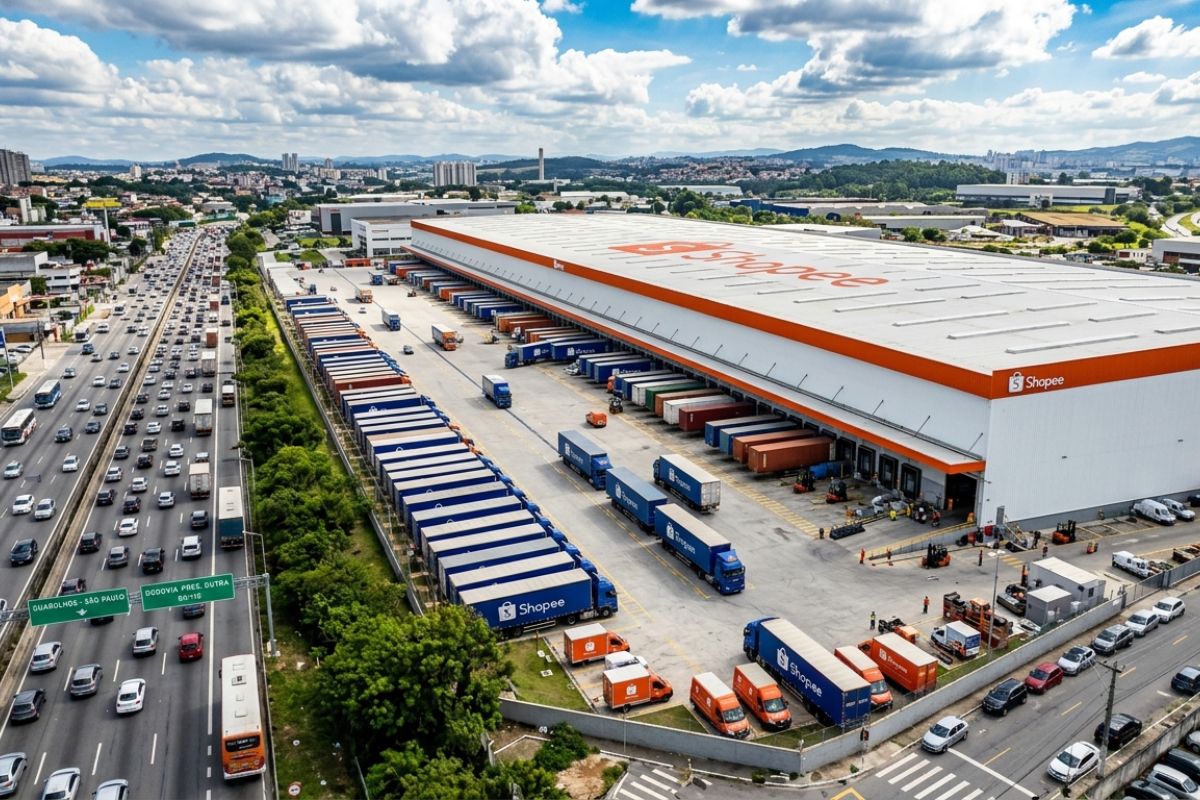
Shopee opens the largest logistics warehouse in Brazil in Guarulhos: 220,000 m² on Dutra, contract signed before construction, pays R$ 45/m² and accelerates deliveries at scale, putting pressure on Mercado Livre and Amazon.
-
After mistakenly transferring R$ 50,000 via Pix, a man will receive the amount back along with R$ 10,000 for moral damages from the recipient.


Proposal and Possible Impacts on Highways
The Bill 475/2024 stipulates that speed monitoring be performed exclusively by fixed radar, installed in visible locations with clear signage.
The text also provides for administrative sanctions for agencies that fail to comply with the rules.
Currently, the state highways of Santa Catarina do not have fixed radar in operation.
The eventual removal of mobile radar would therefore mean the suspension of speed enforcement until new equipment was installed.
Experts in the field state that the installation of fixed radar requires engineering studies, bidding, and public investment, which could take time.
Author’s Arguments and PMRv’s Position
Representative Sérgio Guimarães argues that the proposal aims to “bring more transparency and predictability to enforcement” by concentrating speed measurement at points previously informed to drivers.
According to him, the measure would prevent the use of mobile radar in poorly signaled locations and reduce the perception of arbitrariness in the fines.
The Military Highway Police of Santa Catarina (PMRv), however, has an opposing view.
The commander of the corporation, Marcos Vinícius dos Santos, classified the proposal as a “disservice to road safety”.
According to him, the presence of mobile radar acts as a preventive instrument, deterring speeding in critical stretches and reducing accident severity.
Legal Debate and Use of Drones
Consulted legal experts assess that the proposal could violate the Federal Constitution, since traffic regulations are under the jurisdiction of the Union and must adhere to the Brazilian Traffic Code (CTB).
In this understanding, states could not restrict enforcement instruments provided for in federal regulations.
The text of the project also mentions the use of drones, but legal specialists and PMRv representatives emphasize that these devices are not used to measure speed, but rather to identify other infractions, such as overtaking in continuous lines and irregular maneuvers.
Thus, according to these sources, the section mentioning drones would have little practical impact on current enforcement activities.
Accident Data and Safety Concerns
According to data from the PMRv, 235 people died in 212 fatal accidents recorded on the state highways of Santa Catarina in 2024.
In total, there were 7,205 incidents in the same period, a number higher than the previous year.
Road safety specialists assert that constant and unpredictable enforcement is one of the main factors in reducing violations and fatalities on the roads.
According to them, limiting control to fixed radar may decrease the perception of risk among drivers and compromise prevention.
Additionally, according to field experts, mobile radar allows for a quick response to changes in vehicle flow, emergency works, and weather events.
Fixed radar requires planning and permanent installation, which may leave some stretches without enforcement coverage during the transition process.
Proceedings and Next Steps
The PL 475/2024 was approved by the Constitution and Justice Committee (CCJ) of Alesc in November 2024 and has moved on for analysis in the committees of Finance and Taxation, Public Security, and Transportation, Urban Development, and Infrastructure.
So far, there has been no final deliberation in the plenary, nor sanction or veto from the state government.
The progress of the project continues to be monitored by traffic agencies and security entities, which argue that any changes should be accompanied by transition plans and clear goals for the implementation of fixed radar, reinforcement of signage, and traffic education actions.
Possible Effects for Drivers
If approved without changes, the project is set to transfer the responsibility for speed control to fixed radar, to be installed in specific locations.
While the new structure is not implemented, the state may face a period of limited enforcement, according to specialists and traffic authorities.
For technicians and representatives of entities in the field, the measure may alter driver behavior and increase the need for other enforcement strategies, such as combating irregular overtaking and the use of alcohol while driving.
The debate surrounding the PL reignites the discussion on which enforcement model is more effective to balance safety and transparency on state highways.
The proposal continues to divide opinions among lawmakers, authorities, and drivers.
Do you believe that the removal of mobile radar could compromise safety on state roads or would it bring more clarity and predictability for drivers?









Sou a favor de zero radares e lombadas eletrônicas.
Esses instrumentos só aumentam os acidentes. Fica todo mundo em fila lenta e depois todos vão querer acelerar, e tbm aumenta o tempo de exposição (tempo de viagem).
Acidentes sempre vai ter, mas tirem todos os obstáculos e façam a medição.
Claro pode haver fiscalização eventual, sempre tem os loucos!
Em rodovias de pista,simples asfikteapassagebs em locais proibidos, geram acidentes com mortes, os usuários principalmente nos Estados de São. CSTARINA EVOUTROS DO DUL, USAMNO ACOSTAMENTO VOMO FAIXA DECTEAFEGO, ABSURDO, O ESTADO QUE MAIS AVIDENTES TEMMPIR DESRESPEITO ACSINALIZACAO EXISTENTE VEM PROPOR ESSE ABSURDO.
E MAIS IMPLANTAR RADARES FICOS NAO E TAO COMPLEXO, UMAXEQUIPE NOA FAZ O SERVICO ECAVIMPLANTACDONPIDE SERVFEUTAXEM PARXERIA VOMMO PRIVADO QYE IMPLANTA EVOPERA.
Acho que deveriam aumentar a velocidade das estradas para sair de São Paulo indo para o sul as velocidades variam de 60km a 80.km e só em santa catarina que passa para 100km para viajar 770km demora 14h é uma viagem cansativa que quem dirige mais breca que acelera e para o governo o excesso de multas é péssimo porque quem está com a carta suspensa ou com muitos pontos para de sair não paga mais pedágio não gasta combustível para de fazer manutenção no carro como óleo pneu não sai com a família então para o governo a arrecadação acaba