





 Portuguese
  English
  Spanish
  4 min of reading
  67 comments


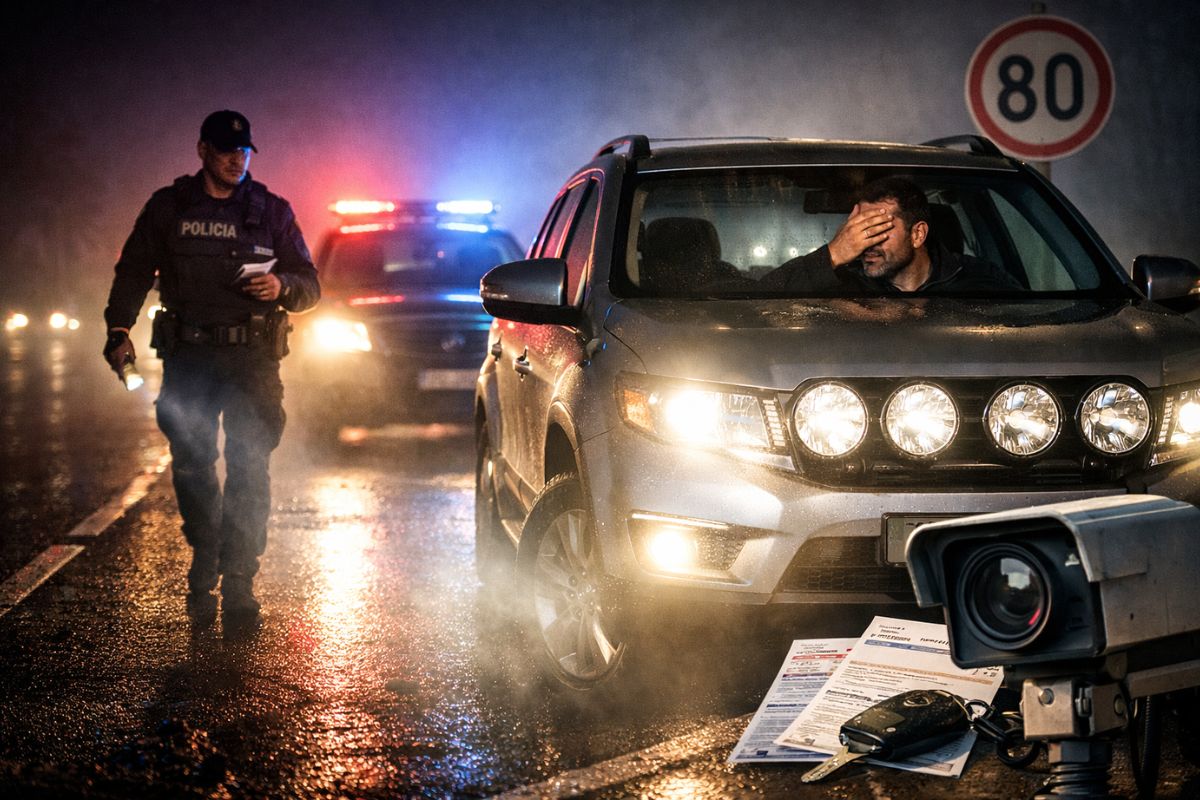


Understand How The New Law On High Beam And Fog Lights Changes The Day-To-Day Life Of Drivers, When High Beams And Fog Lights Can Be Turned On, What Traffic Fines Apply, And What The Brazilian Traffic Code Says Across Brazil Today
Drivers across the country have begun to pay more attention to the new law on high beam and fog lights, which outlines when these features can be used without incurring fines or causing confusion on the streets and highways.
The text, backed by the Brazilian traffic code, prohibits high beams on illuminated urban roads, restricts fog lights to fog, heavy rain, dust, or smoke, and clarifies traffic fines and points on the driver’s license for those who insist on driving with them on.
What Changed With The New Law On High Beam And Fog Lights
The new law on high beam and fog lights comes precisely to reduce confusion about vehicle lighting and to decrease avoidable infractions.
-
The noise law will no longer be in effect at 10 PM starting in June with a new rule valid during the 2026 World Cup.
-
The Chamber opens a debate on driver’s licenses at 16 years old as part of a reform that includes around 270 proposals to change the Brazilian Traffic Code and may redesign rules for licensing, enforcement, and circulation in the country.

-
The new Civil Code could revolutionize marriages in Brazil with “express divorce” and changes that could exclude spouses from inheritance.

-
Banco do Brasil sues famous influencer for million-dollar debt and intensifies debate on delinquency, risks of seizure, and direct impact on Gkay’s credibility.


Many drivers still have difficulty understanding which lights to use in each situation, especially after the recent changes in the Brazilian traffic code.
With the current regulations, the focus is simple: ensure safety without dazzling anyone.
The legislation makes it clear that low beams remain the standard light for nighttime use and in various highway situations, while high beams and fog lights become restricted use features, activated only when they genuinely improve visibility.
Technical Difference Between High Beams And Fog Lights
By technical definition, fog lights are designed to illuminate the ground and the sides of the road at a short distance, with a wider and lower beam of light.
The purpose is to “pierce” the visual barrier of fog, heavy rain, mist, or smoke without creating reflections in suspended water particles or blinding oncoming drivers.
On the other hand, high beams function as a true long-range light cannon. They concentrate the focus on a distant point, acting as a complement to high beams.
Due to their high intensity, the improper use of high beams can temporarily blind drivers coming from the opposite direction and increase the risk of accidents during overtaking and turns.
When Fog Lights Can Be Used Without Risk Of Fines
The Brazilian traffic code is clear in stating that auxiliary fog lights should only be turned on in adverse weather conditions that significantly reduce visibility.
This includes dense fog, storms, clouds of dust, or smoke over the road, when regular low beams cannot provide a safe reading of the asphalt.
On clear nights in the city, using only the front fog lights for aesthetic reasons does not inherently lead to a specific traffic fine for those lights.
Still, it is an unnecessary excess and confuses those who believe that any extra brightness indicates braking or maneuvering.
The rear fog light is another scenario.
When turned on unnecessarily, this intense light bothers and misleads those behind it, potentially being mistaken for a brake light.
In these cases, improper use can indeed result in a fine because the aim of the new law on high beams and fog lights is to organize the visual aspect of the roadway, not to turn it into a light show.
High Beams In The City: Prohibited And With A Chance Of Points On The Driver’s License
For high beams, the rule is stricter.
The new law on high beams and fog lights makes it clear that this light should not be used on urban roads with public lighting.
In these situations, driving with high beams on is interpreted as improper use of high beams and opens the door for traffic fines.
High beams only make sense on rural roads or completely dark highways, without any kind of public lighting and, preferably, without vehicles ahead or in the opposite direction.
If there are other cars nearby, high beams must remain off, precisely to avoid dazzling those sharing the road.
When a driver insists on keeping the high beams on in a prohibited environment, the behavior is classified as a medium infraction, with a financial penalty and points on the driver’s license.
Thus, those who ignore the new law on high beams and fog lights risk their finances and their driver’s license with unnecessary traffic fines.
Auxiliary Lights Do Not Replace Low Beams On Highways
A common mistake is to believe that simply turning on fog lights or just the position lights, the so-called “running lights,” suffices to meet the requirement to drive with lights on on highways.
However, the Brazilian traffic code still requires the use of low beams or daytime running lights on single-lane highways, even during the day, and provides traffic fines for those who ignore the rule.
This means that the driver is not exempt from responsibility just because they have high beams or fog lights installed in their car.
Replacing the mandatory low beams with auxiliary lights does not prevent fines and also jeopardizes safety, as the vehicle’s lighting system was designed to work in conjunction, not in an improvised manner.
In practice, the new law on high beams and fog lights reinforces a simple message for drivers: always choose the right light at the right time, according to the road scenario.
Understanding the function of each light is the best way to avoid unnecessary traffic fines and ensure safer journeys.
And you, have you checked how you are using the high beams and fog lights in your car after this new law?










Infelizmente vocês só Google, repetem assuntos sem lógica, nova lei não existe, essa lei é mais velha que minha Avó
Muita frescura desses órgãos de trânsito, precisam trabalhar no que realmente é importante.
Só o que fazem é gerar confusão.
Brasil, unico pais no mundo com lei para veículos, aqui nada nunca é nosso, mesma coisa farol de led, por eu ter um carro mais velho não posso usar pois ofusca a visão do motorista que vem contra, a não ser que eu seja rico, ai posso comprar um audi, land rover, que tem farois extremamente potentes, ai posso ofuscar os outros, leis **** num pais de ****. Parabéns aos envolvidos, me admiro a policia seguir a risca o que o legislativo impõe, podiam filtrar leis **** e não segui-las, mas…
Não estou aqui, fazendo essa resp, para defender a lei, tá? Sou do pensamento que deveríamos sim poder equipar nossos carros e motos. Mas, o que que acontece, cara? A questão aqui é bom senso e muitos de nós, brasileiros, já provamos que não temos. É por causa de uns, todos pagam. Se liberar, vai ter fulaninho exagerado que vai colocar led ou xenon extremamente forte, de marca ****, sem os devidos cuidados com os outros e é por isso que eles simplesmente vão la e proíbem. O que pra mim é um erro! Deveriam sim liberar com mãos pesadas em cima dessas pessoas sem noção que exageram. Sou a favor de fiscalização rigorosa sim, mas para quem faz **** e não pra quem equipa fazendo tudo certinho. Mas é isso, eles preferem o mais fácil: proibir todo mundo logo, do que adquirir equipamentos e fiscalizar caso a caso. Brasil, amigo, Brasil. País em que os comuns fazem caca e os legisladores nem fazem pesquisa e buscam conhecer a fundo o assunto pelo qual estão propondo leis. Nem eles dominam o assunto e fazem confusão o tempo inteiro. Realmente difícil! Entendo sua dor, que com certeza é a dor de muitos.
Não é só no Brasil que tem essas leis.
Além de que as lentes e os “cromados dos faróis”, são projetados para as lâmpadas corretas. As lâmpadas LED, em qualquer carro sem LED original, perde o foco e ofusca os demais carros, existem lâmpadas melhores mas sem serem LEDs.
Aí você já está errado, já existem LED que fazem a mesma linha de corte de lâmpada halógena, sem ofusca e clareando até 5x mais