





 Portuguese
  English
  Spanish
 5 min of reading
  0 comments


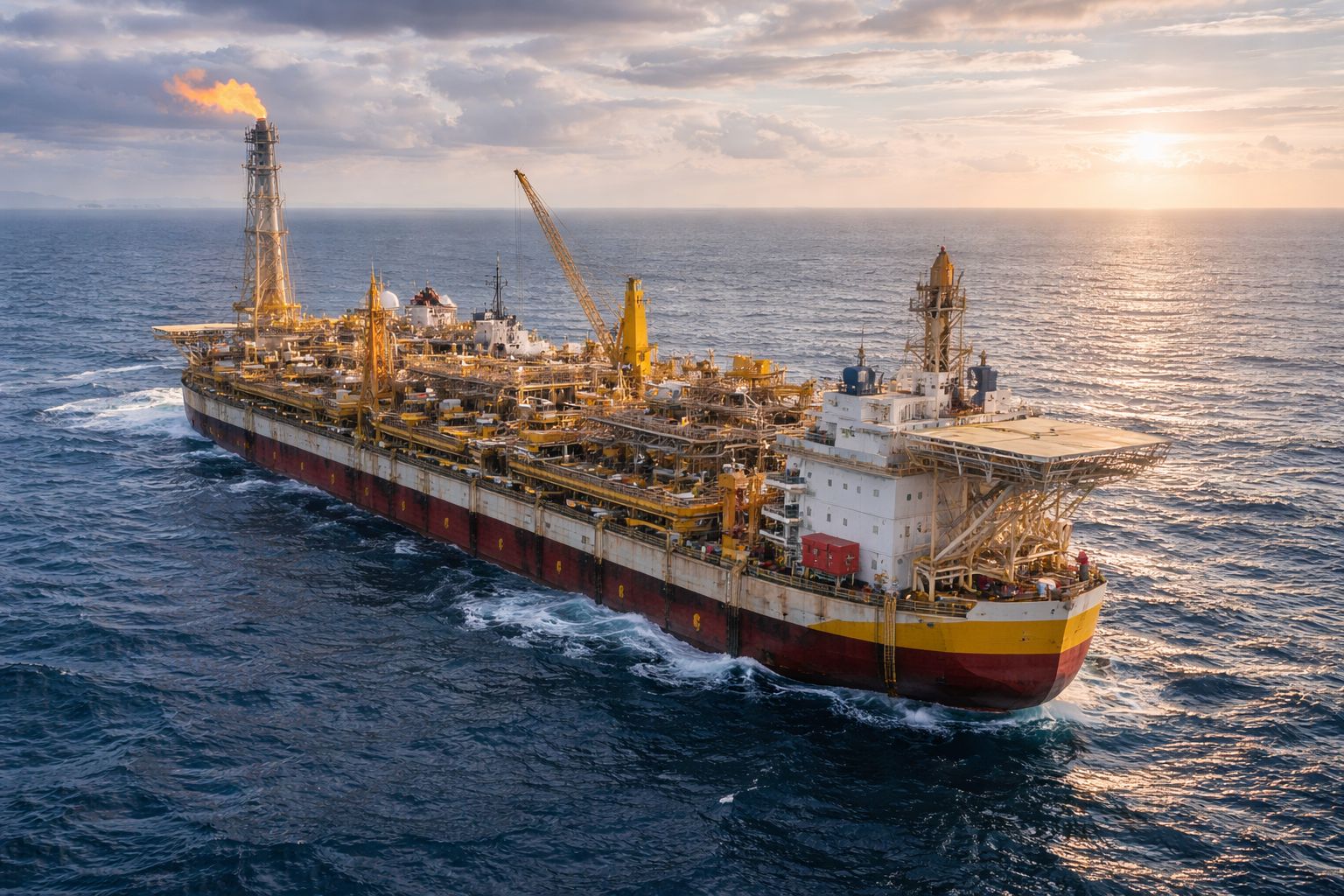
The Authorization of the Seventh Platform in Búzios Confirms the Centrality of Brazilian Oil in the National Energy Matrix and Highlights the Historical and Strategic Relevance of the World’s Largest Deepwater Field.
The oil sector in Brazil gained a new milestone this week. The National Agency of Petroleum, Natural Gas and Biofuels authorized the start of operations for the seventh production platform in the Búzios field, located in the Santos Basin. The decision reinforces the field’s role as the main asset of national oil production.
The authorization was granted on Saturday, the 20th. With this, the field increases its operational capacity and consolidates its position as the country’s largest oil producer. At the same time, the move reinforces the importance of the pre-salt for Brazil’s energy strategy.
Even in a global energy transition scenario, oil remains central to the national economy. Therefore, decisions involving major producing fields continue to attract the attention of investors, governments, and industry analysts.
-
A study confirms that the natural gas sector will reduce greenhouse gas emissions in Brazil by 0.5% and accelerate the energy transition by 2026.

-
Petrobras implements a severe adjustment and confirms a 55% increase in the price of aviation kerosene with a proposal for installment payments for the companies.

-
The rise in oil prices could ensure an extra revenue of R$ 100 billion for the Federal Government, indicates a recent economic study.

-
Naturgy begins an investment of R$ 1.6 million to expand the gas network in Niterói and benefit thousands of new residences and businesses.

Oil and the Trajectory of the Búzios Field
To understand the significance of the authorization, it is necessary to look at the history of the Búzios field. The field was discovered in 2010 during the expansion phase of research in the pre-salt area. Since then, it has become a symbol of Brazil’s oil potential.
Located about 180 kilometers off the coast, in the deep waters of the Santos Basin, Búzios exhibits unique geological characteristics. According to technical data released by the federal government, the thickness of the reservoir is equivalent to the height of Sugar Loaf Mountain in Rio de Janeiro.
Over the years, the field has undergone a rapid development curve. In April 2024, it reached a cumulative total of one billion barrels of oil produced. Shortly thereafter, in October 2025, it achieved a new historical record, with a daily oil production of one million barrels.
The Seventh Platform and the Expansion of Oil Production


The authorization of the seventh platform represents another step in this expansion process. Each new unit increases the capacity for extraction, processing, and transportation of the oil produced in the field.
According to the National Agency of Petroleum, Natural Gas and Biofuels, the approval occurs after meeting technical and regulatory requirements. The agency evaluates operational aspects, safety, and compliance with environmental standards before authorizing the start of operations.
With this decision, the Búzios field begins to operate with one of the largest offshore structures in the world. This level of complexity reinforces the technological advancement of the Brazilian oil industry, particularly in the deepwater segment.
Oil, Technology, and Deep Waters
The exploration of oil in deep waters has always required advanced technological solutions. In the case of Búzios, this reality intensifies. Great depths, high pressure, and challenging maritime conditions demand constant innovation.
Since the onset of the pre-salt, Brazil has invested in technology to make oil production feasible. According to federal government data, partnerships between companies, universities, and research centers have resulted in significant efficiency gains.
As a result, pre-salt oil has been produced at competitive costs in the international market. This factor contributes to the economic attractiveness of fields like Búzios, even in cycles of lower prices.
Oil and Petrobras’ Role
Although the authorization of the platform is granted by the ANP, the development of the Búzios field is directly tied to Petrobras’ operations. The state-owned company plays a central role in the operation and technological advancement of the pre-salt.
Since the creation of Petrobras in 1953, oil has occupied a strategic position in Brazil’s energy policy. The company has led discoveries, developed national technology, and structured the offshore industry in the country.
In the pre-salt, this trajectory has intensified. According to data released by Petrobras in recent reports, Búzios ranks among the most productive and efficient fields in the company’s portfolio.
Oil and Economic Impacts
The expansion of the Búzios field generates significant economic impacts. Oil production directly influences revenue, exports, and the trade balance. Royalties and special participations also benefit states and municipalities.
According to the federal government, pre-salt fields account for a significant share of national oil production. Thus, they contribute to the stability of the energy sector and the financing of public policies.
Moreover, the oil chain creates direct and indirect jobs. Support services, logistics, maintenance, and technology benefit from the expansion of offshore operations.
Oil and the Environment in the Pre-Salt
Despite the economic gains, oil exploration involves environmental challenges. Therefore, licensing and oversight play a central role. The ANP works together with the Brazilian Institute of Environmental and Renewable Natural Resources, ensuring compliance with environmental regulations.
According to Ibama, pre-salt operations follow strict safety and monitoring protocols. Contingency plans, audits, and inspections are part of the regulatory process.
In recent years, the sector has advanced in risk mitigation practices. This effort aims to reconcile oil production with increasingly demanding environmental standards.
Oil and Brazil’s Energy Strategy
Even with the advancement of renewable energies, oil remains essential for Brazil. According to the International Energy Agency, producing countries face the challenge of balancing energy transition and supply security.
In this context, fields like Búzios assume a strategic role. Robust oil production ensures internal supply and international competitiveness. Additionally, it generates resources that can finance the energy transition itself.
Documents from the Ministry of Mines and Energy, published between 2023 and 2025, indicate that oil will remain relevant in the coming decades. The Brazilian strategy focuses on efficient production with lower carbon intensity.
A Continuous Milestone in the History of Brazilian Oil Production
The authorization of the seventh platform in Búzios does not represent a final point. On the contrary, it symbolizes the continuity of a long-term project. The field continues to be a global reference in deepwater oil production.
Looking at the trajectory from the discovery in 2010 to recent records, it is evident the speed of development. Few fields in the world have reached such scale in such a short time.
Thus, the ANP’s decision reinforces the historical role of oil in Brazil. It shows that, even in transformation, the sector remains central to the economy, energy security, and the country’s international projection.









-

4 pessoas reagiram a isso.