





 Portuguese
  English
  Spanish
  4 min of reading
  55 comments


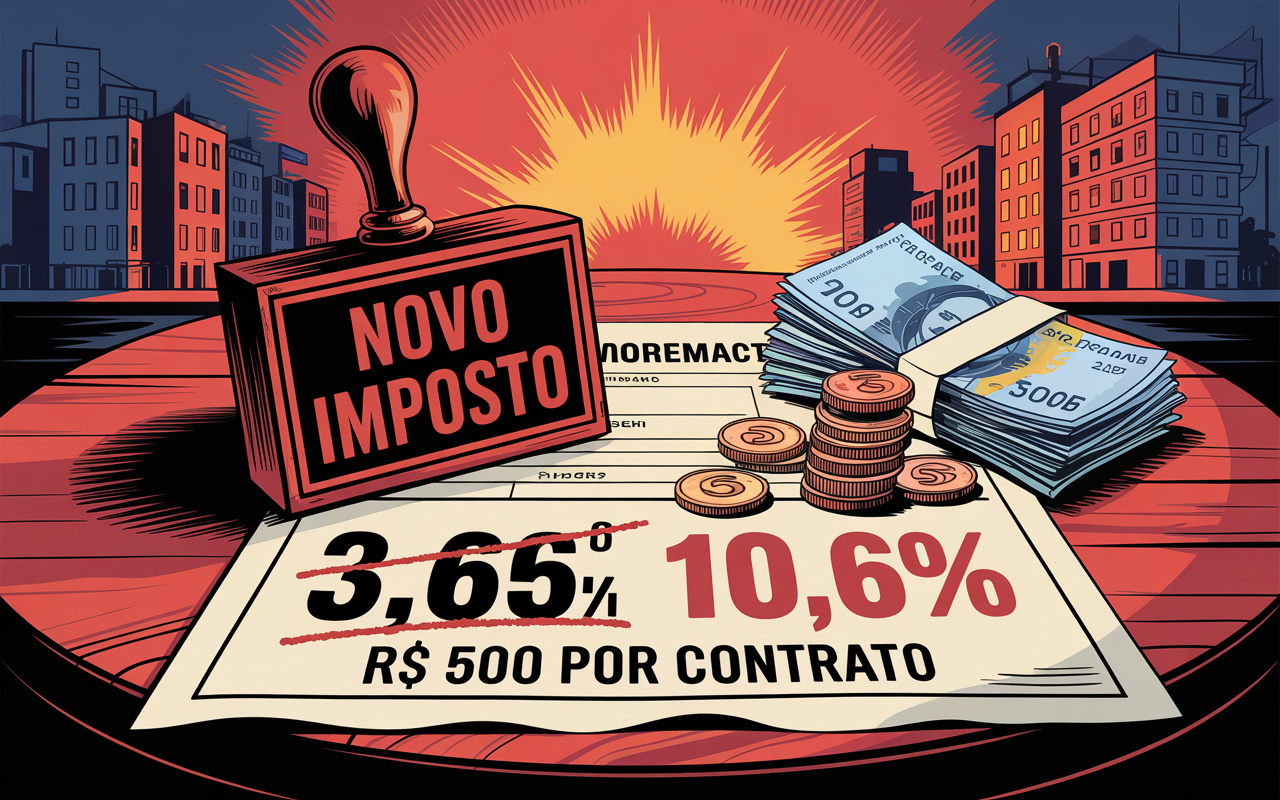


Tax Reform Increases Rental Tax from 3.65% to up to 10.6%, Introduces Extra Charges per Contract, and Promises to Raise Property Prices Throughout Brazil.
The Tax Reform of 2025 brought one of the most controversial changes for those living on rent — whether landlord or tenant. The current tax rate applied to contracts, at 3.65% of PIS/Cofins, could reach 10.6% with the introduction of the new dual VAT (IBS + CBS).
This represents nearly a triple increase in the tax burden, which should make both residential and commercial properties more expensive. In addition to the higher rate, the new rule also provides for a charge of up to R$ 500 per contract, an additional burden for landlords and tenants.
The Direct Impact on the Wallets of Renters
In practice, the costs rise quickly. In a rent of R$ 2,000 per month, the tax would increase from about R$ 73 to R$ 169.60. This is an increase of nearly R$ 100 per month, just in taxes.
-
IPTU exemption for seniors in 2026: see how to secure the benefit.

-
The institute that trained the greatest aerospace engineers in Brazil has just opened its first campus outside São Paulo after 75 years: ITA Ceará will have R$ 445 million, new courses in energy and systems, and classes are expected to start in 2027.

-
Luciano Hang, owner of Havan, goes to Juiz de Fora after the tragedy in February, brings R$ 1 million, hands out R$ 2,000 cards, and donates up to R$ 15,000 to victims in the region.

-
The Brazilian passport allows legal residence in dozens of countries without the need for a prior visa, and most Brazilians are unaware that they can apply for residency directly upon arriving in nations in South America, Africa, and even Europe.


If multiplied over 12 months, the increase represents more than R$ 1,100 per year. For families that already commit a large part of their income to housing, the new calculation directly impacts the household budget.
Who Will Be Most Affected by the New Taxation


The increase does not affect all contracts immediately. The new rule applies to landlords who meet two criteria simultaneously:
- Owning more than three rental properties;
- Having an annual income greater than R$ 240,000 from rentals.
In other words, the main targets are investors and landlords who use rentals as a source of recurring income. However, in practice, the impact extends to tenants, as costs tend to be passed on.
Attempts to Alleviate the Burden
The law includes some measures to reduce the weight of the new tax. Among them:
- Reduction of up to 70% in the tax rate for rentals;
- Fixed deductions of R$ 400 to R$ 600 for residential properties;
- Tax credits for companies operating in the real estate sector.
Despite these measures, experts warn that the final tax burden will still be higher than the current rate, reducing the profitability of real estate investments and putting pressure on the rental market.
Effects on the Real Estate Market
The real estate sector is already feeling the effects of the change. Investors estimate that the net rental yield will drop, which may discourage new investments in the market.
At the same time, tenants will have to face higher rents, as landlords are unlikely to absorb the tax increase alone. Consequently, access to housing may become even more difficult in large urban centers.
Transition Periods and Ongoing Contracts
The text of the reform provides for a transition period. Contracts signed until December 31, 2025 may remain under the current model, with a rate of 3.65%, until 2027.
Starting in 2026, intermediate rates will take effect, and by 2033 the current system will be completely replaced by the dual VAT, composed of IBS and CBS.
This transition provides some breathing room for owners and companies to plan their adjustment, but does not change the final outlook of an increased tax burden.
More Revenue for the Government, Higher Costs for the Population
The official justification for the change is to simplify the tax system, replace old taxes with new ones, and ensure greater predictability for the State.
However, for experts, the practical result will be clear: the government collects more, and the population pays more. The burden will inevitably fall on both landlords and tenants, directly impacting the cost of housing.
Tax Reform Will Raise Rental Costs of Properties
The rent, which already takes up a large part of Brazilian families’ income, will become even more expensive. The Tax Reform could triple the tax burden on contracts, create extra fees, and reduce the attractiveness of the real estate market as an investment.
For tenants, this means higher final prices. For landlords, a drop in net rental income.
In the end, the new rule promises to forever change the calculations of housing in Brazil — and reinforces an old dilemma: how much can the population bear the burden of the national tax burden?










Dúvida, mais imposto de renda
Esse povo tem q se.f….
Fica colocando PT no poder dá nisso