





 Portuguese
  English
  Spanish
  5 min of reading
  3 comments


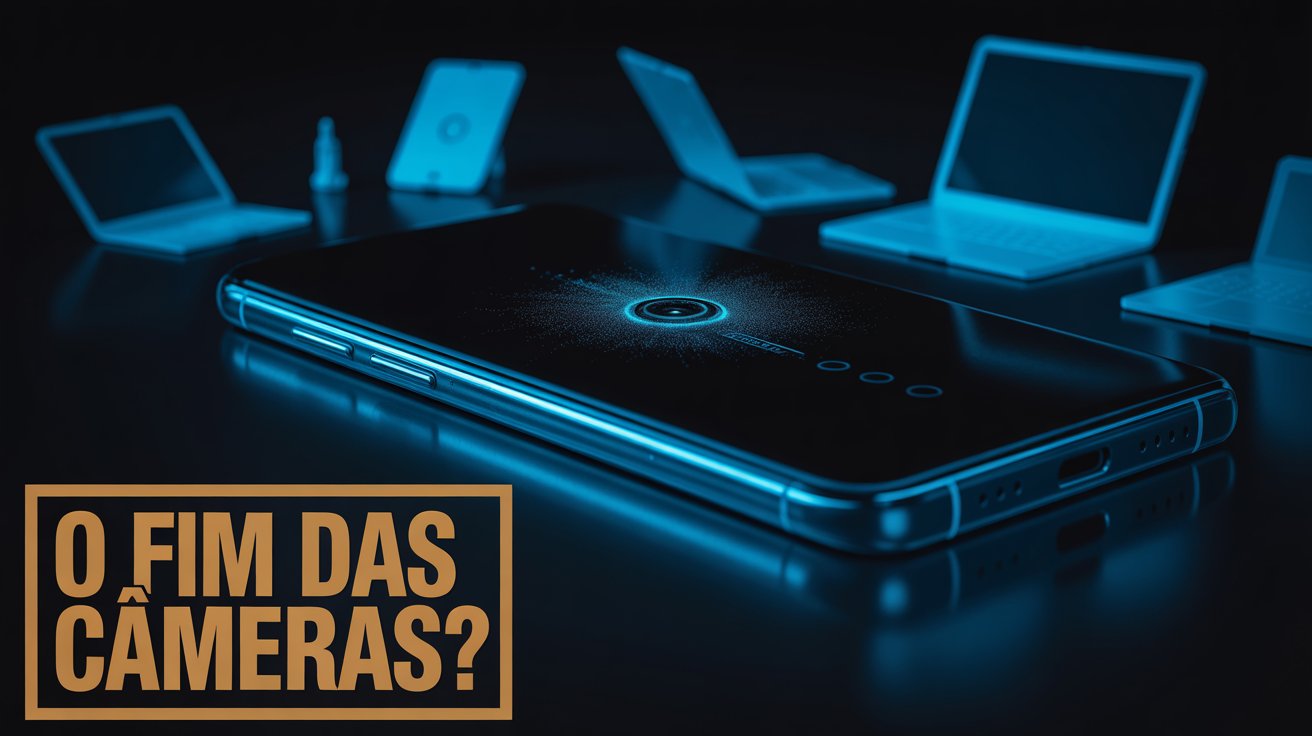


A Silent Innovation Is About to Completely Transform the Design of Smartphones and Other Smart Devices, With the Potential to Change the Photography and Video Experience in Electronic Devices.
The pursuit of innovation has always driven the evolution of smartphones, with a highlight on the enhancement of integrated cameras.
In recent years, major manufacturers have heavily invested in high-resolution sensors, multiple lenses, and artificial intelligence, solidifying the camera as one of the main differentiators in the buying decision.
However, a new technology stands out as the potential protagonist of the next innovation cycle: the development of invisible cameras, a feature that can radically modify the experience of capturing photos and videos on mobile phones.
-
How the terraforming of Mars can transform the planet: artificial aerosols can increase the temperature by up to 35°C in 15 years, creating conditions for liquid water.

-
Scientists drilled nearly 8,000 meters into the ocean floor above the fault that caused the 2011 tsunami in Japan and discovered that a layer of clay 130 million years old was responsible for making the wave much worse than any model had predicted.

-
Thousands of years after causing the largest eruption of the Holocene, one of the world’s largest supervolcanoes is rebuilding itself beneath the sea south of Japan, receiving new magma and alarming scientists with its transformation.

-
China has activated a magnet 700,000 times more powerful than the Earth’s magnetic field that operates for over 200 consecutive hours while consuming little energy, and now the world wants to know what Beijing plans to do with this technology in 2026.


Engineers and industry specialists are focusing efforts on creating optical systems that completely eliminate the visible presence of cameras on devices.
The proposal involves the total integration of the sensors into the smartphone’s structure, allowing for a cleaner and more uniform design without sacrificing image quality performance.
With this approach, the industry’s expectation is that, in the near future, phones with exposed cameras will no longer be the standard.

How Invisible Cameras Work in Mobile Phones
Invisible cameras, also known as under-display cameras, use sensors positioned beneath the device’s screen.
Unlike conventional systems, where the lenses remain visible on the back or front of the device, the new method allows light to be captured through the display itself, employing translucent materials and ultra-thin electronic components.
Digital processing, using artificial intelligence, corrects distortions, eliminates noise, and enhances image sharpness, even with the limitations imposed by the sensor’s positioning.
The development of these cameras directly depends on advances in OLED panels (short for organic light-emitting diode), which can transmit part of the light to the sensor without compromising the visibility of the displayed images.
Additionally, specific algorithms adjust the color balance, brightness, and reduce potential losses caused by the passage of light through the display.


Benefits and Challenges of Invisible Cameras
The adoption of invisible cameras promises benefits that extend beyond visual aspects.
By eliminating protruding modules, devices gain a more elegant design, with smooth and uniform surfaces.
This characteristic not only appeals aesthetically but also contributes to the devices’ resistance to water and dust, as it reduces infiltration points in the smartphone’s body.
Another relevant point is the possibility of optimizing the internal space of mobile phones.
Without the need for protruding structures for the lenses, manufacturers can invest in higher-capacity batteries, improved audio components, or more robust internal systems to process data and images.
The user experience is likely to be smoother, especially for those who value discreet devices or surfaces without visual interruptions.
However, the under-display camera technology faces significant technical challenges.
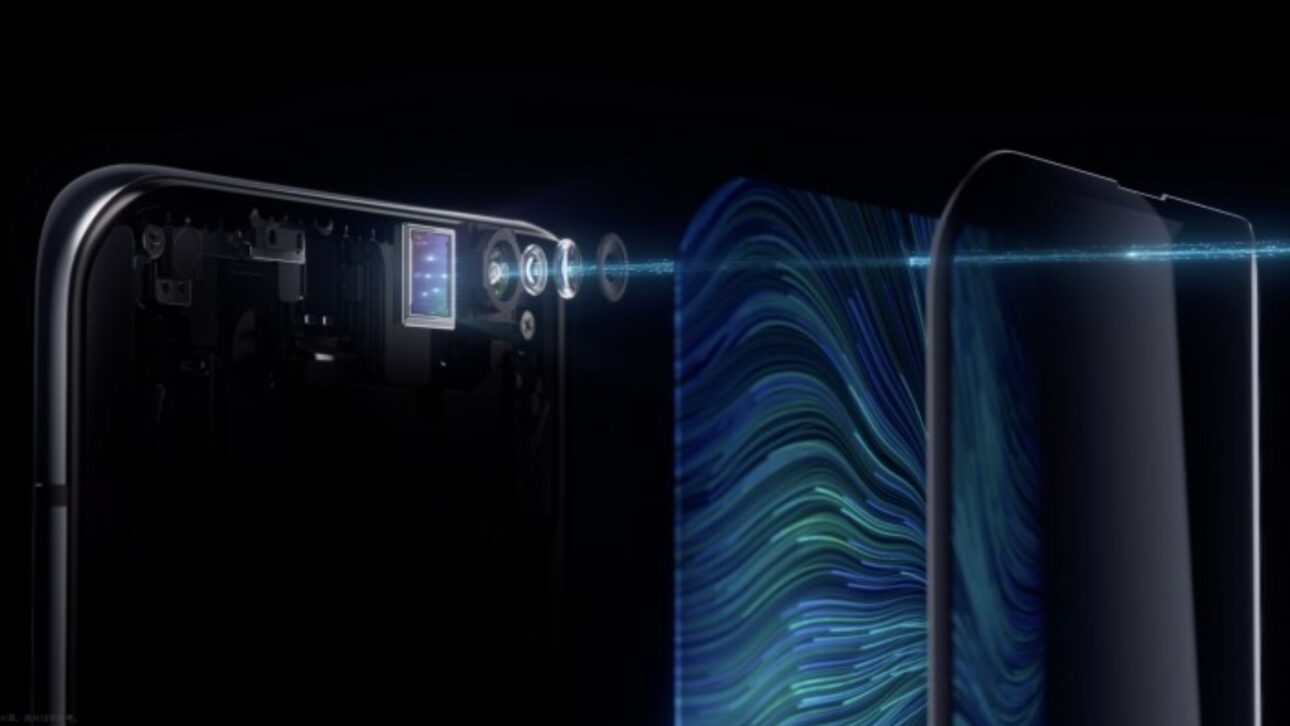
As light capture occurs through multiple layers of material, there are risks of reduced sharpness, loss of detail in low light environments, and limitations in color reproduction.
Companies like Samsung, Xiaomi, and Oppo lead research to develop more sensitive sensors and algorithms that optimize image processing, aiming to overcome these obstacles without harming the photographic experience.
When Will Invisible Cameras Be Available on the Market
The smartphone industry projects the first commercial launches of phones equipped with invisible cameras for the year of 2025.
Experimental models have already been shown at major international technology fairs since 2022, but large-scale adoption depends on the maturity of the components and public acceptance.
The Asian market, traditionally faster at incorporating new solutions, is expected to lead the implementation, while the arrival in Brazil and other regions of Latin America is conditioned by the speed of global production and consumer response.
According to information released in June 2025, advances in optical sensors and the development of translucent displays are accelerating the entry of innovative devices into the market.
Manufacturers are betting on marketing campaigns aimed at visual differentiation and the promise of photographic experiences equivalent to or superior to traditional systems.
What Devices May Feature Invisible Cameras in the Future
The trend of invisible cameras extends beyond smartphones.
Tablets, laptops, and smart TVs are already appearing in experts’ projections as potential beneficiaries of the technology, especially in segments that prioritize minimalist design and integration of multiple functions on a single surface.
In the corporate market, devices aimed at security and video conferencing are likely to adopt the solution to ensure privacy and discretion.
Equipment designed for augmented reality (AR) and virtual reality (VR) also presents itself as natural candidates for the use of under-display cameras, mainly due to the need for capturing real-time environments without visual interference from visible lenses.
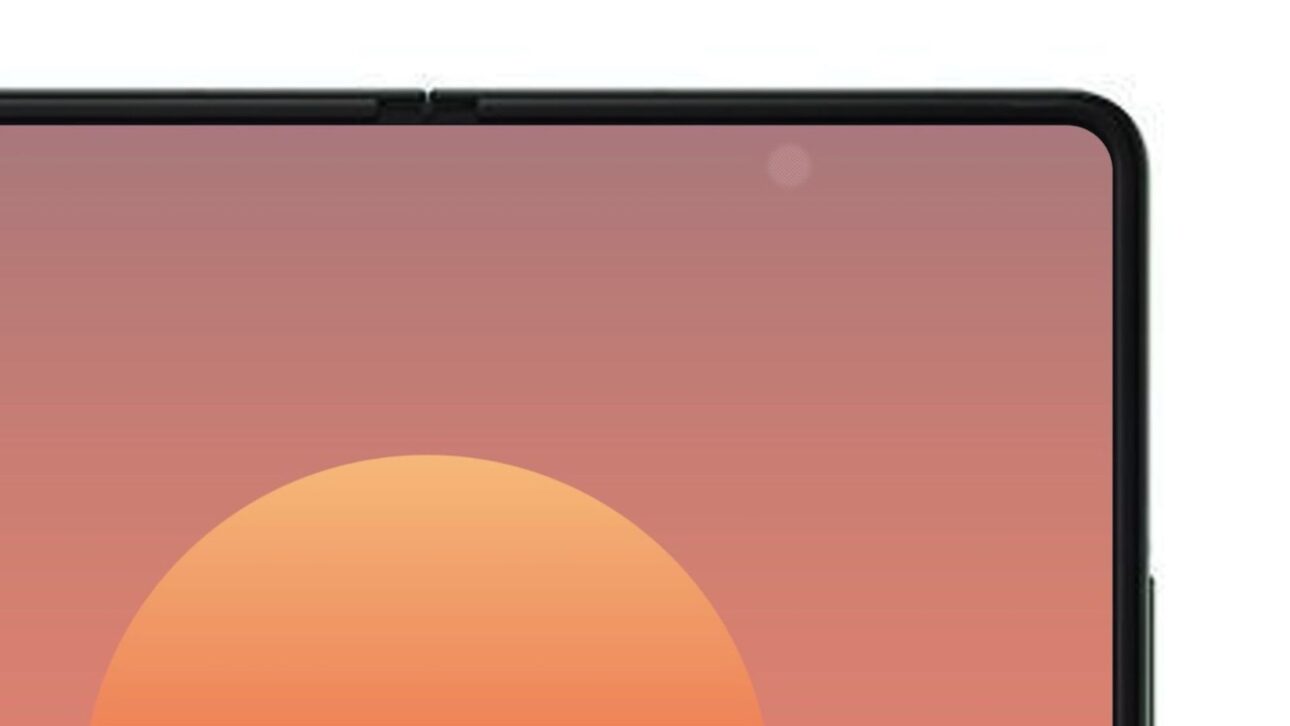
Foldable phones and flexible screen devices are likely to be the first to incorporate the new feature, as the format favors structural innovations.
Next Steps for the Smartphone Industry
The development and popularization of invisible cameras reaffirm the electronics sector’s commitment to convergence between design and technology.
The search for increasingly integrated, discreet, and functional devices establishes a new standard of demand among consumers and drives manufacturers to continuously invest in research and development.
The impact of this transformation could be felt throughout the production chain, from the manufacturing of components to the conception of new services and applications for images and videos.
With accelerated advancements and the projected launch of phones with invisible cameras as early as 2025, the market is preparing for a new phase of competition for innovation and differentiation.
In a scenario where aesthetics, functionality, and user experience converge, the main question that arises is: would you trade your current phone for a model with an invisible camera, even if the technology is still in its early stage?









Red Magic 10 pro
Sim, trocarei assim que houver disponibilidade.
Red Magic 10 já tem esse sistema