





 Portuguese
  English
  Spanish
  5 min of reading
  0 comments


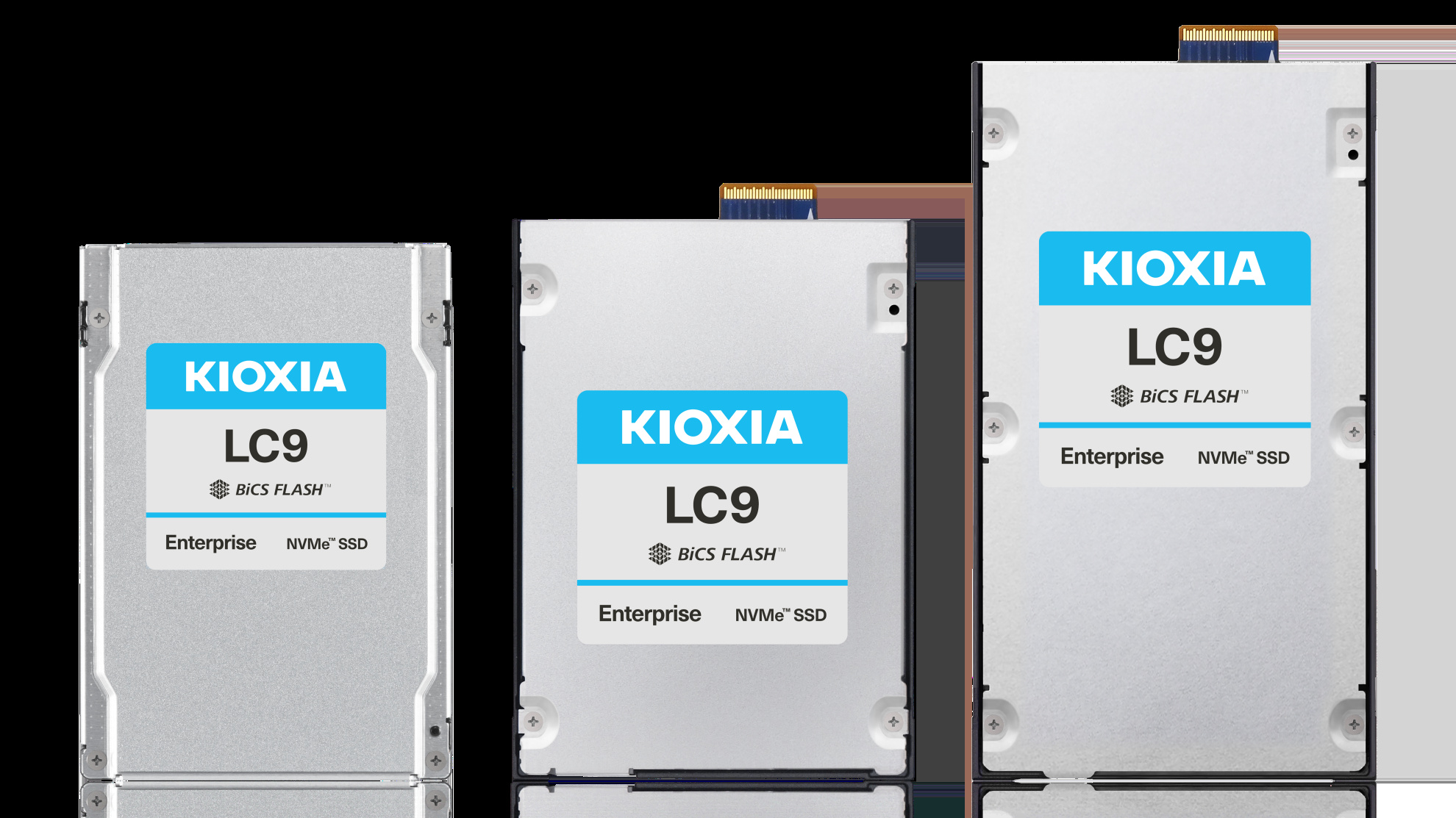
Kioxia Launches the 245 TB SSD in Japan, the Largest in the World, Focused on Data Centers and AI. With PCIe 5.0, NVMe 2.0 and Advanced Security, the LC9 Redefines the Limits of Modern Storage.
The storage market has just witnessed a historic leap. Japanese Kioxia announced the release of the world’s highest-capacity SSD: an impressive 245 terabyte device named LC9. This innovation, aimed at data centers, corporate clouds, and artificial intelligence applications, marks a new level for flash technology. More than just numbers, the LC9 redefines what is possible in terms of efficiency, density, and security for large-scale data storage.
The news arrives at a time of strong growth in demand for digital infrastructure. With the explosion of artificial intelligence, machine learning, and big data usage, data centers face the challenge of storing and accessing colossal volumes of information quickly and reliably. In this context, a 245 TB SSD becomes not only a technical feat but a concrete response to the needs of companies and governments that rely on cloud computing and massive data analysis.
245 TB SSD Breaks Records with Cutting-Edge Japanese Technology
The LC9 is a direct result of Kioxia’s expertise, formerly Toshiba Memory, which has established its name as a reference in storage innovation. To achieve this extraordinary capacity, the company utilized BiCS FLASH 3D technology, which vertically stacks memory cells.
-
After decades of failed attempts, Brazil is once again looking to space with an orbital rocket measuring 12 meters, weighing 12 tons, costing R$ 189 million, and scheduled for launch in 2026, in a new race to finally achieve autonomous access to orbit.
-
The Earth will plunge into a few minutes of darkness in broad daylight in August 2026, when a total solar eclipse transforms the sky into one of the most impressive astronomical phenomena in recent years.

-
How the terraforming of Mars can transform the planet: artificial aerosols can increase the temperature by up to 35°C in 15 years, creating conditions for liquid water.

-
Scientists drilled nearly 8,000 meters into the ocean floor above the fault that caused the 2011 tsunami in Japan and discovered that a layer of clay 130 million years old was responsible for making the wave much worse than any model had predicted.

Thirty-two NAND memory chips were encapsulated in a single package, a technique that requires extremely advanced thermal and integrity control. With this, the SSD breaks the density record per physical unit.
In addition, the model adopts the most modern industry standards: PCIe 5.0 interface and NVMe 2.0 protocol, ensuring sequential read speeds of up to 12 GB/s and write speeds of up to 3 GB/s. In random access tasks, which simulate real usage in servers, the LC9 delivers 1.3 million IOPS in read and 50,000 IOPS in write.
Although it is not the absolute champion in raw performance, the focus is on massive capacity with reduced latency and energy efficiency.
New Storage Technology Promises Efficiency and Security in Data Centers
Beyond capacity and speed, the 245 terabyte SSD was designed with an emphasis on security and reliability—essential factors for corporate use. Kioxia integrated technologies such as chip-level error correction, parity management, and protection against sudden power loss. This ensures that even in unexpected failures, the data remains intact.
Another highlight is the advanced security features: the LC9 supports firmware signing in compliance with CNSA 2.0 (Commercial National Security Algorithm Suite) standards, in addition to AES-256 encryption.
The company also highlights that the product already considers the challenges of post-quantum security, with algorithms ready to withstand attacks carried out by quantum computers.
Record-Breaking SSD Is Set to Revolutionize High Data Density Environments
Kioxia makes it clear that this 245 TB SSD is not aimed at the average consumer. It was designed to meet large-scale data centers, cloud computing companies, and sectors that work with AI, such as biotechnology, financial services, and image analysis. In these scenarios, the ability to store petabytes of data in fewer racks brings substantial gains in energy efficiency, physical space, and reduction of operational costs.
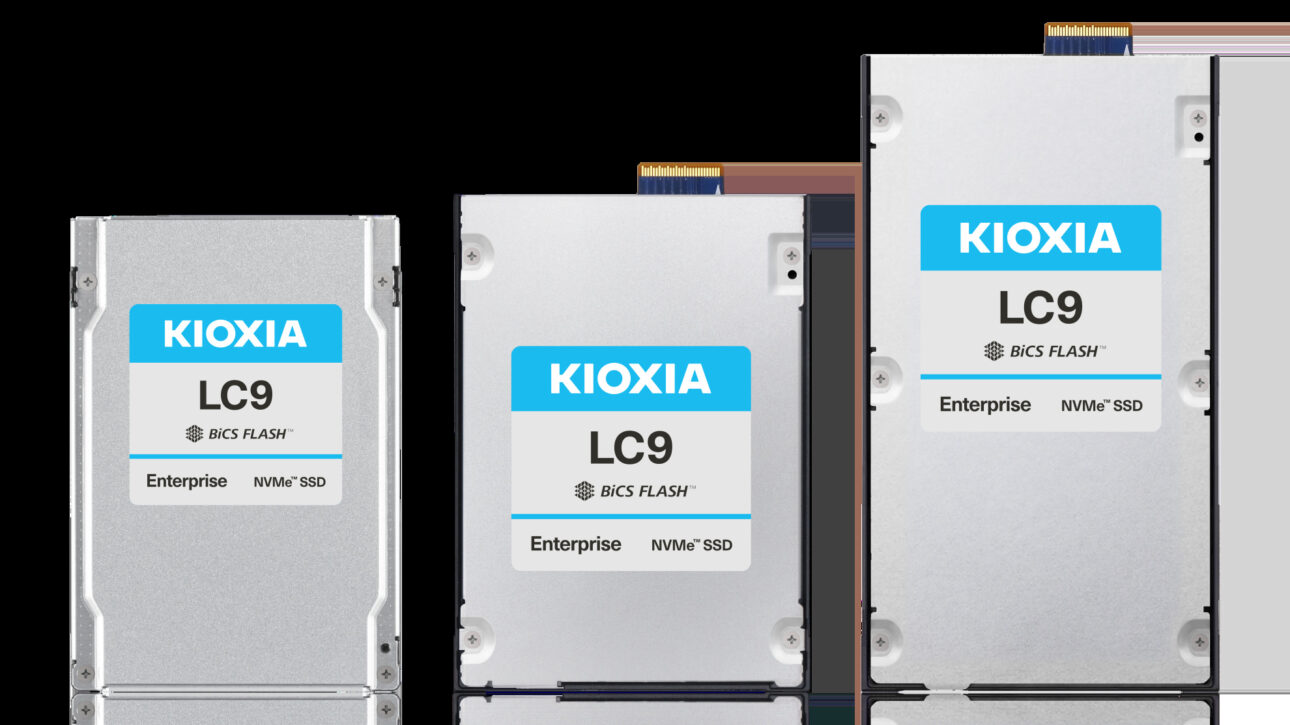
The LC9 will be available in three industrial formats: U.2 2.5 inches (with a maximum capacity of 122.88 TB), E3.S (also up to 122.88 TB), and E3.L (which reaches 245.76 TB). These standards are compatible with modern servers and reflect the advancement of the OCP (Open Compute Project) architecture, adopted by major companies like Meta, Microsoft, and Amazon.
Japan Leads Technological Advancement and Pressures Rivals Like Samsung and Micron
The launch of the LC9 positions Japan once again at the forefront of storage technology. Kioxia, as a direct descendant of Toshiba, which invented NAND flash memory in 1987, reinforces its legacy by creating an SSD that surpasses the limits previously established by giants like Samsung, Western Digital, and Micron.
These competitors, in turn, are also ramping up investments in high-layer NAND technologies (with more than 200 layers per cell), new interfaces like CXL (Compute Express Link), and computational storage solutions. However, so far, none have announced a product with density similar to the LC9.
Practical Applications: From AI to Cloud Sustainability
The importance of an SSD with these characteristics goes beyond numbers. The ability to concentrate 245 TB in a single drive reduces the need for multiple smaller devices, which implies lower energy consumption, less heat generation, and fewer physical components—essential factors for the sustainability of data centers. This
aspect is especially relevant for companies adopting ESG (environmental, social, and governance) goals and seeking to reduce their carbon footprint.
In terms of AI, the LC9 perfectly meets the workflows of training language models, image recognition, and processing large databases.
Environments with intensive workloads, such as those used by surveillance companies, medical imaging diagnostics, and scientific simulations, can directly benefit from this new technology.
Availability and Next Steps in the Global Market
Kioxia has not yet disclosed the price of the LC9 models, which is common for products intended for integration into large-scale corporate solutions.
However, it is known that the first units are already being tested by selected partners and that the line will be officially presented during the Future of Memory and Storage conference, scheduled for August 2025.
Industry analysts believe that the LC9 may usher in a new phase in storage architecture, where density and energy efficiency become as relevant as raw speed. Additionally, the presence of algorithms prepared for the era of quantum computing anticipates future trends, indicating that Kioxia is aiming for a market that demands constant innovation and long-term resilience.







-

-

-

-

12 pessoas reagiram a isso.