





 Portuguese
  English
  Spanish
  4 min of reading
  0 comments


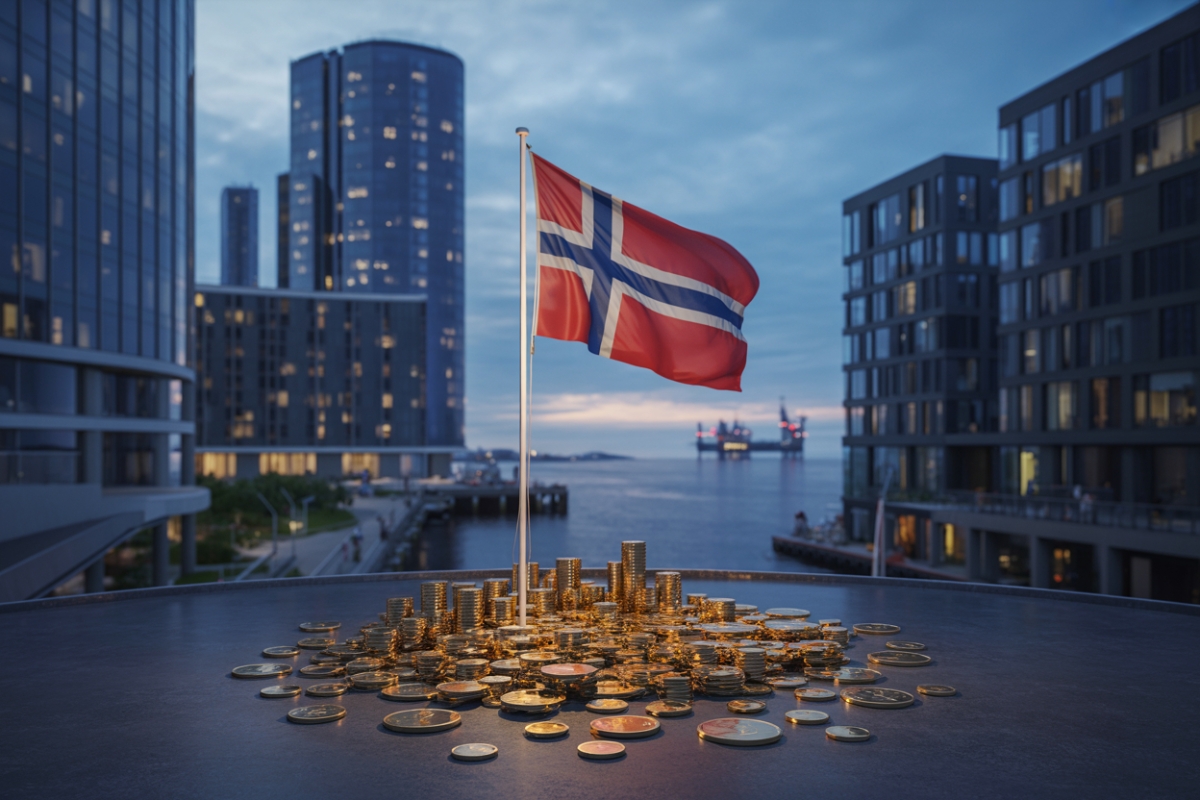
Norway’s Sovereign Wealth Fund, Fueled by Oil and Gas Profits, Invests in Over 9,000 Companies Across 70 Countries and Finances Health Care, Education, and Pensions, Ensuring Prosperity Even After Oil Runs Out
Norway has become a global example of how a country can transform finite natural resources into lasting prosperity. Since the beginning of oil and gas exploration in the North Sea, the government has adopted a unique economic strategy: to invest every surplus cent into a sovereign wealth fund aimed at future generations.
Today, the Government Pension Fund Global (GPFG), also known as Norway’s Sovereign Wealth Fund, is the largest in the world, with assets exceeding US$ 2 trillion.
Established in 1990, the fund emerged in response to the need to ensure economic stability and protect the country from fluctuations in the oil price. The central idea was simple yet visionary: to save the profits from the energy industry so that, when the reserves ran out, the Norwegian economy could continue to grow sustainably.
-
The Federal Revenue Service now automatically cross-references everything you declare with data from banks, credit cards, brokerage firms, and insurance companies, and any discrepancy between your income and your expenses triggers an alert in seconds.

-
Amid global tensions, Brazil blocks the United States’ proposal at the WTO and paves the way for a trade crisis and possible retaliations.

-
Shopee opens the largest logistics warehouse in Brazil in Guarulhos: 220,000 m² on Dutra, contract signed before construction, pays R$ 45/m² and accelerates deliveries at scale, putting pressure on Mercado Livre and Amazon.

-
After mistakenly transferring R$ 50,000 via Pix, a man will receive the amount back along with R$ 10,000 for moral damages from the recipient.


The first actual deposit was made in 1996, and since then, the model has become synonymous with long-term economic planning.
The Fund That Belongs to All Norwegians
Managed by Norges Bank Investment Management (NBIM), the fund is financed by profits from the oil sector, taxes on gas production, and dividends from state-owned companies like Equinor. The money is invested in over 9,000 companies across more than 70 countries, ranging from technology and renewable energy to real estate.
Instead of concentrating its investments domestically, Norway chose to apply most of its capital outside its borders, reducing the risk of overheating the local economy.
The scale of this wealth is so impressive that, in practice, each Norwegian citizen “owns” about US$ 340,000 of the fund, according to official data from September 2025. This collective wealth directly reflects the quality of life of the population.
Part of the earnings is used to fund essential public services, such as health care, education, and pensions, strengthening the welfare model that has made the country one of the most developed and stable in the world.
Norway also follows a strict budget rule: the government can only spend up to 3% of the total fund’s value annually. This policy prevents resources from being drained by short-term political pressures, ensuring fiscal balance and the continuity of the model.
Transparency and Ethics in Investments
One of the most admired pillars of the Norwegian fund is its transparency. All investments are public, with reports regularly disclosed, and there are strict ethical criteria that determine where the money can or cannot be invested.
Companies involved with nuclear weapons, tobacco, or human rights violations are automatically excluded from the portfolio. This stance has solidified Norway’s image as a global reference in corporate social responsibility and sustainable finance.
Despite the success, the fund faces internal debates about the balance between ethics and profitability. In November 2025, the Norwegian parliament approved a temporary revision of ethical divestment policies, sparking discussions about the extent to which the country should interfere in investment decisions based on moral values.
Still, the Norwegian model continues to be considered the most responsible and transparent in the world.
A Model for the Future for Energy-Producing Countries
The success of the Norwegian fund is not just financial, but also symbolic. It represents a rare vision in a world accustomed to quickly consuming its natural resources.
By prioritizing the future over immediate profit, Norway has avoided what economists call the “Dutch disease”, a phenomenon that occurs when an abundance of natural resources causes economic imbalances and fiscal dependency.
The model shows that it is possible to reconcile oil production with financial sustainability, creating a virtuous cycle where the wealth of the subsoil transforms into social security and macroeconomic stability.
This experience inspires debates worldwide, including in Brazil, where experts discuss creating a similar fund to ensure that the profits from pre-salt benefit future generations as well.
While many countries face fiscal crises and dependency on commodities, Norway remains steadfast on its planned path to prosperity.
The Government Pension Fund Global is not just a financial reserve: it is a country project based on responsibility, ethics, and long-term vision. A testament that with solid governance and collective commitment, it is possible to turn black gold into a sustainable future.









-

Uma pessoa reagiu a isso.