





 Portuguese
  English
  Spanish
  7 min of reading
  4 comments


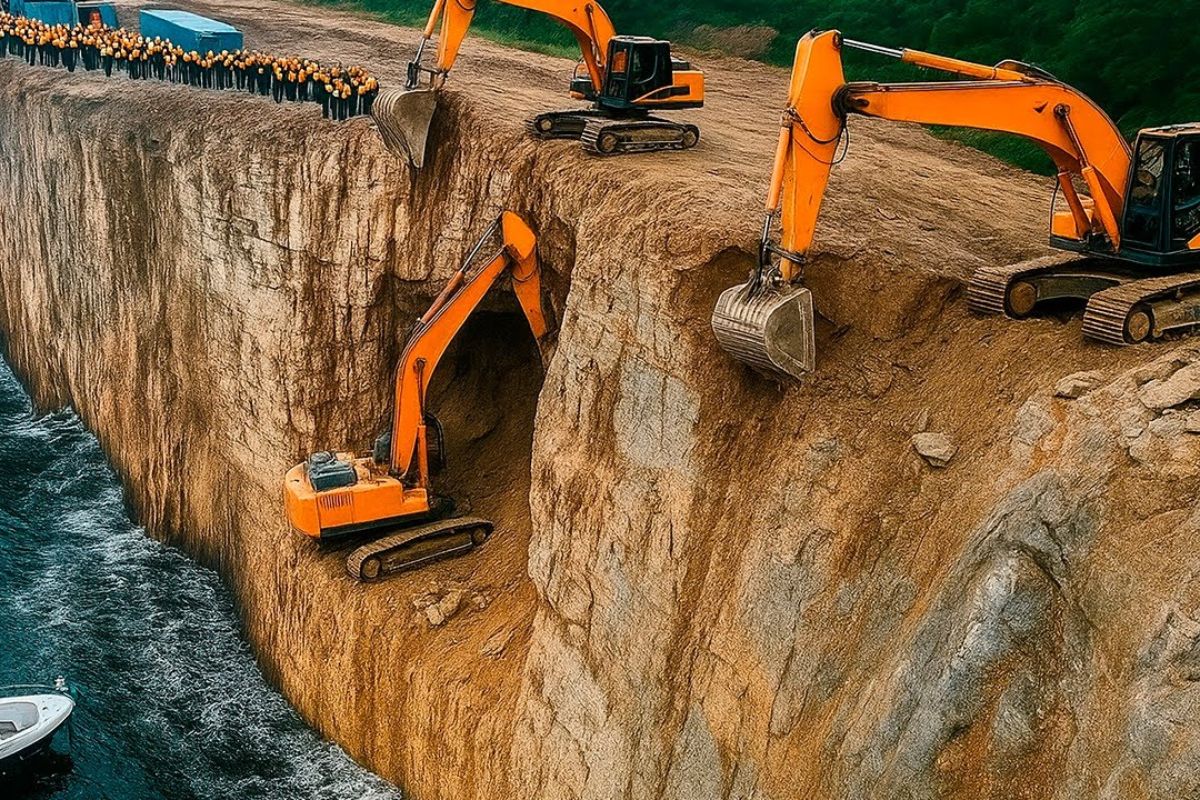


Norway Decided It Will No Longer Obey Geography. Faced with a Stretch of Ocean That Crushes Ships Like Toys, the Country Decided to Split a Mountain in Half, Spend Almost 1 Billion Euros, and Open the First Ship Tunnel in the World to Hide the Sea Inside the Rock.
The target is the Stad Peninsula, an apparently innocuous piece on the map, but in practice, it is the point where the North Sea and the Sea of Norway collide and create cross waves of up to 30 meters. More than 30 people have died, and dozens of serious accidents have already been recorded in this maritime bottleneck, through which ferries, fishing trawlers, and ships that support one of the most important fleets in Europe pass.
Where the Sea Goes Crazy and Turns the Coast into Russian Roulette
On paper, Stad is just a curve in Norway’s rugged coastline. For those navigating, it is almost a permanent risk sentence. Here, the weather forecast is often useless, and survival becomes a matter of luck.
It is the exact point where two giant seas meet head-on. The shallow underwater topography amplifies wave energy and creates an extreme scenario: swells as high as a ten-story building coming from various directions at the same time, crashing into the bow and sides of the hull.
-
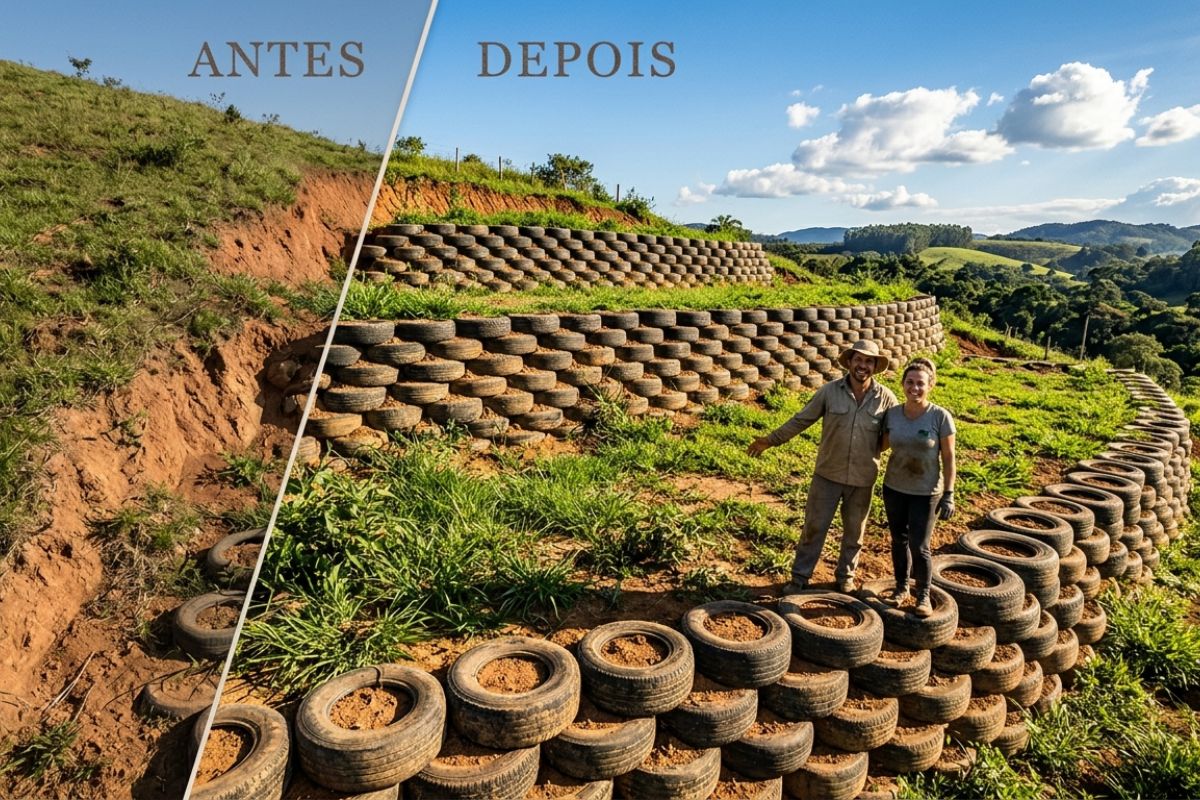
Couple shows how they built a retaining wall on their property using 400 old tires: sloped land turned into plateaus, tires are aligned, filled, and compacted with layers of soil, with grass helping in support and at almost zero cost.
-
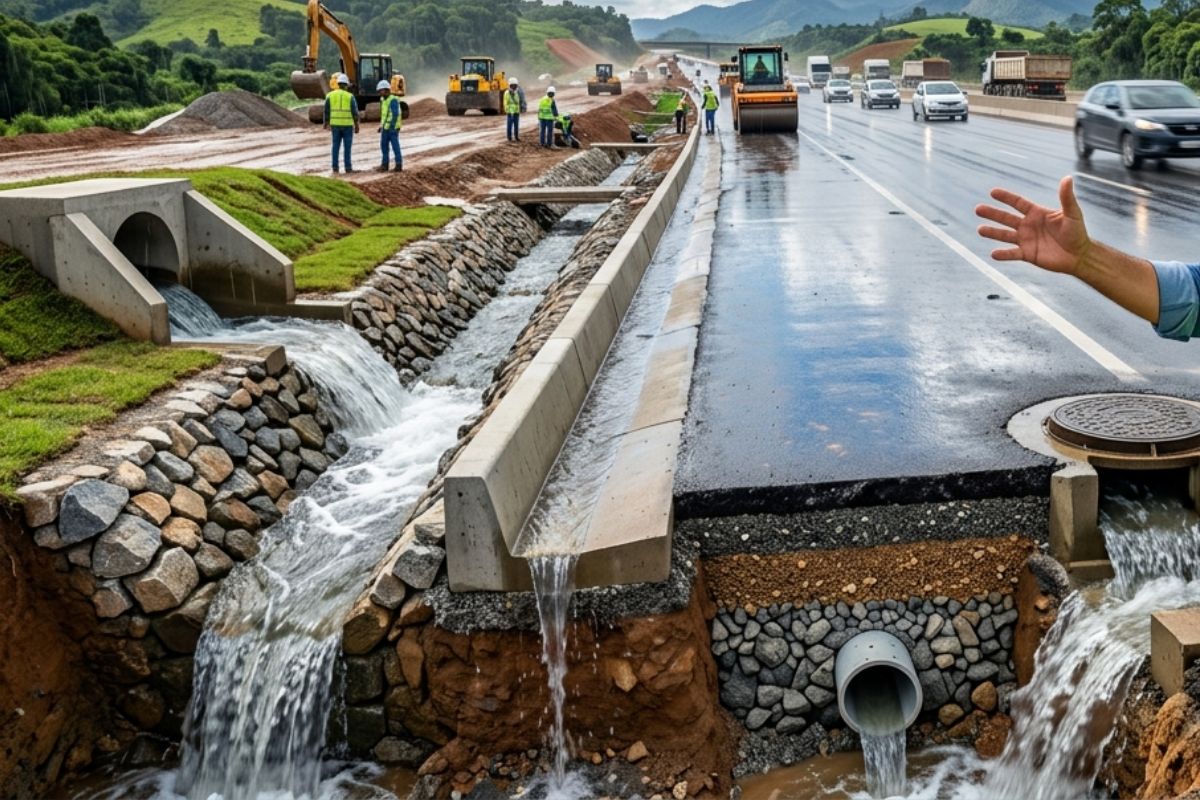
Engineer explains drainage during the rainy season: the difference between surface water and deep water, ditches, gutters, and water outlets on the road, as well as drains and drainage mattresses, to prevent erosion, aquaplaning, and flooding at the construction site today.
-
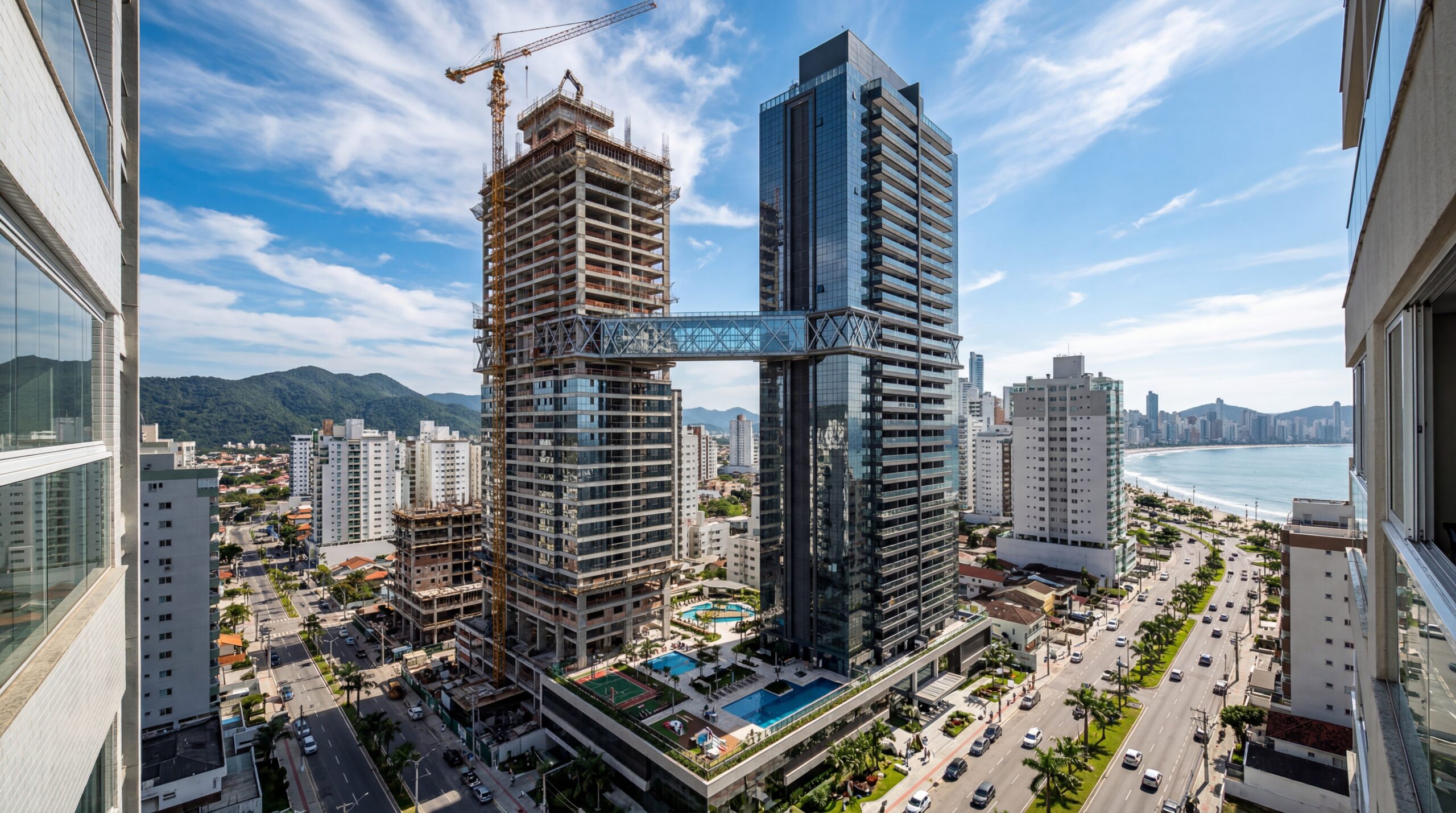
With 55 floors, 177 meters in height, a 15-meter walkway between the twin towers, ventilated facade, and 6,300 m² of leisure space, Ápice Towers already has one tower completed and another nearly at the top.
-
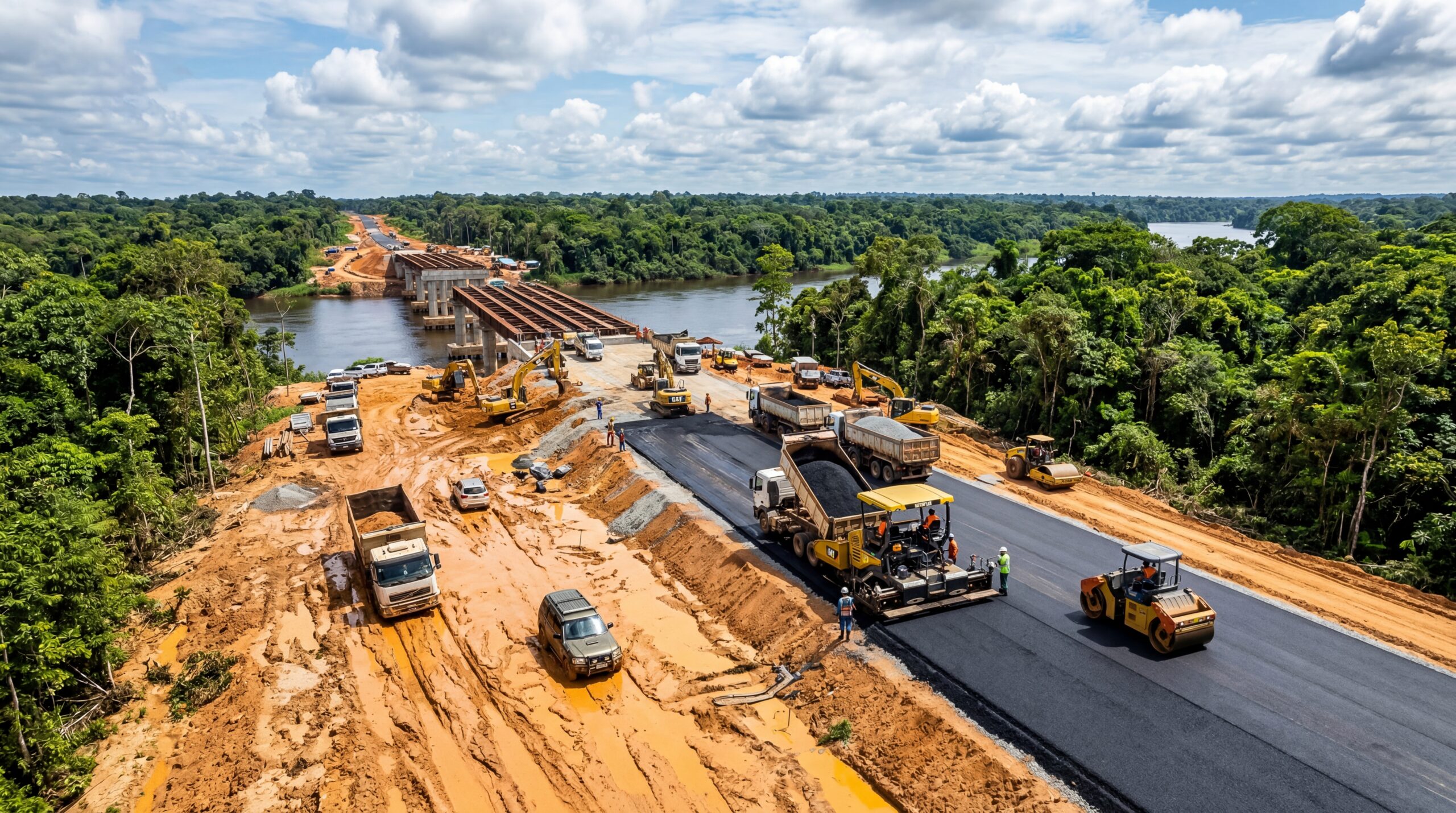
After nearly 50 years of neglect, BR-319 receives R$ 678 million to pave 340 km, gain a 320-meter bridge, and try to lift Amazonas out of the mud, the quagmire, and road isolation.

Storms do not “pass,” they just take short breaks. For more than 100 days a year, the region operates like a war zone.
Norway cannot simply divert. The country exports millions of tons of fish each year, and this area is a vital maritime highway.
Today, many ships wait for windows of just a few hours to attempt the crossing, which can open and close in 30 minutes. Each departure is almost a lottery where the ticket may cost the life of an entire crew.
How the First Ship Tunnel in the World is Opened Inside a Mountain
In the face of this geographical trap, the decision was radical: if you cannot conquer the waves, you have to go through the Earth. The Stad tunnel project is born, designed as a straight line between two fjords, cutting through the base of the peninsula and creating the first ship tunnel in the world.
This is not just a small hole for cars. The corridor will be about 37 meters high and 26 meters wide, enough space for a cruise ship to navigate comfortably, antennas and superstructure included.
To achieve this result, engineers need to remove about 3 million cubic meters of rock, equivalent to hundreds of thousands of truck loads. It’s literally dismantling a mountain, piece by piece.
Blowing everything up at once would be geological suicide. That’s why excavation is done in layers, from top to bottom. First, the ceiling is removed and the vault is stabilized.
Then, work descends level by level until reaching about 12 meters below sea level, slicing through a “cake” of granite with dynamite and giant hydraulic excavators.
Brute Force, Diamond Wire, and Water Under Control
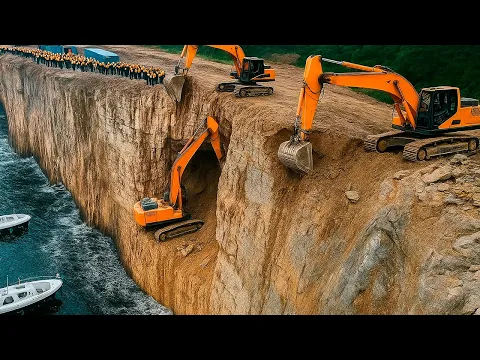

Explosion handles volume, but leaves scars. Detonated walls become irregular, filled with points and fissures. In a road tunnel, concrete solves it.
In a water-filled tunnel, roughness means turbulence, whirlpools, and loss of control for heavy ships.
To avoid this scenario, Norwegians will combine dynamite with jewelry precision. Steel cables coated with industrial diamonds spin at high speed, cutting through granite and leaving the walls smooth, reducing water resistance and ensuring a more stable flow.
It’s the brute force of mining combined with the delicacy of a surgical cut on a monumental scale.
Building the hole, however, is only half the challenge. The other half is inviting the ocean in without destroying everything. The tunnel will be kept dry during construction, isolated by temporary steel barriers at both ends.
Inside this “cocoon,” crews will install lighting, monitoring systems, and all the safety infrastructure that will allow the first ship tunnel in the world to function as a predictable route amid the chaos of the open sea.
Flooding the Mountain Without Making It Collapse
When the structure is ready, the most delicate hydraulic operation of the entire project begins. It is not possible to simply open the floodgates and let the Atlantic flood the mountain.
Special valves will allow water to enter gradually, balancing the pressure ton by ton until the internal level is exactly equal to the sea level outside.
Only then will the barriers be removed, and the mountain will officially house a branch of the ocean.
The lighting has been designed as part of navigation. No bright spotlights blinding the captain. Continuous LED strips will run the entire length, like a futuristic runway.
In a closed environment, where GPS may fail, these colored light lines indicate the safe trajectory and serve as a visual guide for each vessel.
Ship Traffic Like an Airport Inside the Rock

Controlling ships weighing thousands of tons in a stone tube requires traffic discipline.
The plan is to operate the flow in an alternating one-way system: for one hour, ships head north. In the next hour, the direction reverses and ships head south.
Everything will be coordinated by a control center functioning like an airport tower. Radar, thermal sensors, and infrared cameras will monitor every meter of the tunnel. If a ship stops or unexpectedly slows down, the system detects it immediately.
The tunnel entrance itself is a piece of defensive engineering. Instead of a straight cut in the mountain, the mouth will be sculpted into terraced stone steps.
These steps dissipate wave energy before entering, serving as natural buffers and protecting the interior of the first ship tunnel in the world from direct impacts of the raging sea.
Almost 1 Billion Euros, Political Crisis, and Strategic Decision
The price of this daring endeavor helps explain why the project has entered into political dispute. When the tunnel was approved, the estimate was a few hundred million euros.
With global inflation, geological complexity, and rising material costs, the budget soared to almost 1 billion euros, practically double the forecast.
The government even froze the project and questioned whether it made sense to spend so much money to “gain a few minutes of travel.”
However, the parliament saw the bigger picture. It’s not about time, but lives, national security, and logistical stability on Norway’s west coast.
Negotiations with contractors were reopened, seeking cost cuts without sacrificing safety, and a new political release began to be treated as a priority.
The tunnel is gigantic, but not infinite. Super-container ships that are too wide will remain on the outer route, facing storms. The real target is coastal vessels, ferries, and freighters that keep the Norwegian economy running.
It is estimated that most of the current traffic in the region will be able to use the tunnel, reducing risk, delays, and fuel consumption.
For smaller vessels, the savings in effort and time can be significant, with fewer hours battling against giant waves.
A Country Obsessed with Tunnels Pushes the Limit Once Again
If in many places such a project would be treated as isolated madness, in Norway it seems merely the next logical step.
The country already has dozens of road tunnels cutting through mountains, including many that pass under the sea. For many Norwegians, entering the darkness of the rock is as routine as going to the market.
The Lærdal Tunnel, for example, is the longest road tunnel in the world, measuring 24.5 kilometers, and uses caverns illuminated with blue light to keep drivers attentive and calm.
The Rogfast project descends hundreds of meters below sea level and even incorporates underwater roundabouts, as if a small concrete city had been built beneath the ocean.
Within this context, the first ship tunnel in the world at Stad is not an isolated whim but another chapter in an engineering culture that treats granite as if it were butter and considers the mountain an infrastructure rather than a barrier.
When the Sea Enters the Mountain and Becomes an Attraction
The rock removed from the peninsula will not be discarded. The millions of cubic meters will serve as raw material for erecting an entire new district in a nearby city, with houses, hotels, and commerce built literally over the entrails of the mountain that once blocked the route.
Moreover, the project is expected to become a global tourist attraction. An observation platform will allow visitors to see the moment when a large cruise ship stops facing giant waves and calmly enters the Earth’s interior, guided by soft lights, in silence, while the storm continues to roar outside. It is the perfect image of human stubbornness against the most deadly sea in Europe.
In the end, the Stad tunnel is more than a safe passage. It is a monument to the insistence on not accepting that a piece of sea could decide the fate of an entire coast on its own.
The mountain remains in place, the waves continue outside, but Norway is about to have a concrete, illuminated, and navigable answer to this chaos.
And you, would you risk crossing the first ship tunnel in the world right in the middle of a 30-meter storm just to feel what it’s like to pass with the sea inside the mountain instead of facing the waves outside?







Just look at Norwegian west coast map..it is jagged like a sawtooth..then how many more of this will be built ?
How will It cope with high tides?
Wow what a great idea !