





 Portuguese
  English
  Spanish
  8 min of reading
  0 comments


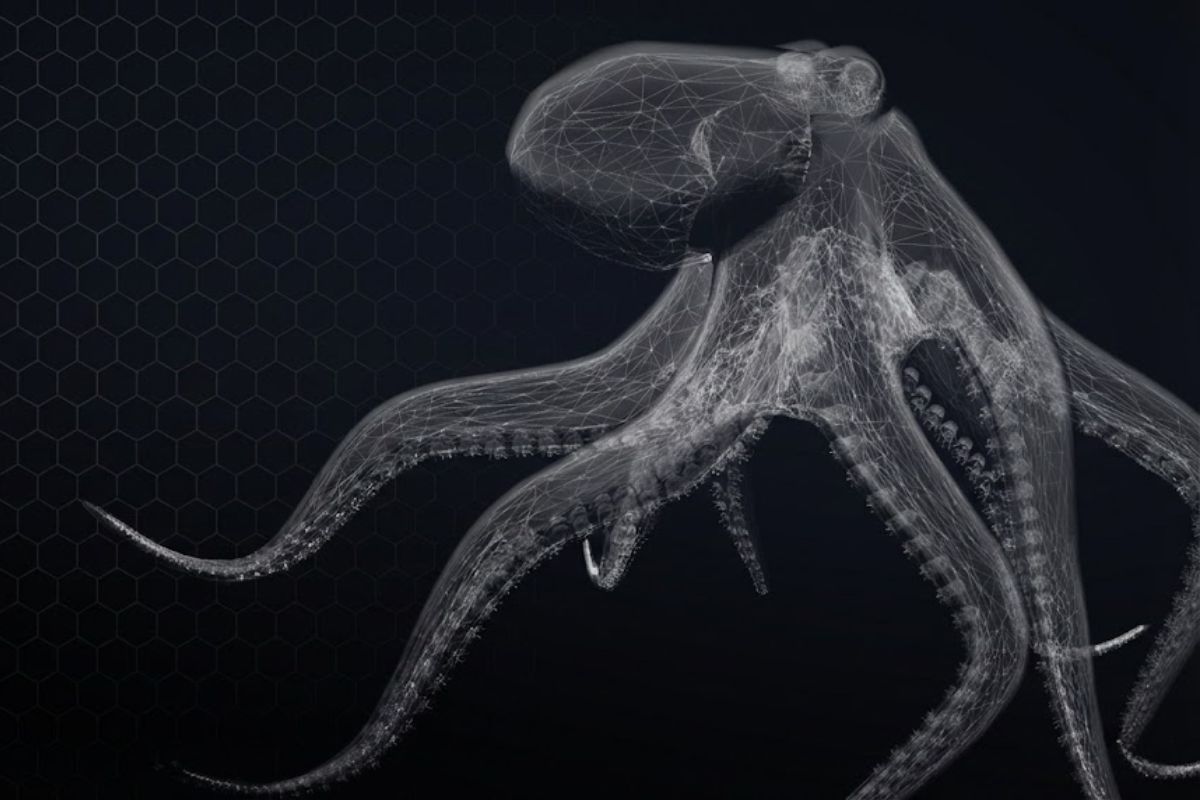
In The Oceans Of The World, Octopuses Live From Reefs To Dark Trenches And, After Losing Their Shell 140 Million Years Ago, Became Vulnerable. The Response Was A Flexible Body, Camouflage That Changes 177 Times Per Hour, Light-Responsive Skin And A Nervous System With Neurons Spread Throughout Their Arms In Total Silence
In the oceans of the world, octopuses are among the strangest and most sophisticated forms of life ever observed: a mobile invertebrate, diverse and capable of exhibiting behaviors comparable to those of many large-brained vertebrates. They can be found in kelp forests, coral reefs, tidal rocks, and also in the depths, ranging from tiny to enormous, with some species being venomous and others simply unusual.
The biological signature that makes octopuses appear “alien” comes from numbers and architecture: around 500 million neurons in their bodies, with only one third in the brain and most distributed throughout the eight arms, which can smell, taste, and respond to their environment quickly. Add to that camouflage that can change 177 times in one hour, reaction times around 200 milliseconds, and skin capable of sensing light, and a rare cognitive package in any lineage emerges.
Where Octopuses Live And Why They Seem So Out Of The Ordinary

Octopuses live in virtually all the oceans of the planet, from rocky coastlines to deep environments, including coral reefs and kelp forests. This range helps explain why they are described as being as diverse as the habitats they occupy, being spiky or smooth at different times, as well as altering texture and appearance as needed.
-
With a cost per shot close to zero, the DragonFire laser could change naval warfare in 2027 and provide British ships with nearly unlimited defense against drones.

-
A British startup creates tires that generate electricity in electric vehicles when passing over potholes, speed bumps, and cracks.

-
Scientists have created robots made with living cells that have their own nervous system, swim on their own, explore the environment, and self-organize without any genetic engineering, and now they want to do the same with human cells.

-
Students create a solar-powered ambulance that operates without a plug, without fuel, and still keeps medical equipment running in remote areas.


Even among cephalopods, octopuses stand out as highly mobile invertebrates, exhibiting a repertoire of quick responses to their environment, with color and texture changes that can happen in fractions of a second. This ability is not just aesthetic: it is a survival tool in the ocean, where the pressure to hunt and flee is constant.
Fossil records indicate that cephalopods have existed for a long time, with lineages dating back around 500 million years, long before fish, reptiles, or mammals dominated the Earth. The ancestor of the octopus was small and had a shell, typical of the phylum Mollusca, a group generally associated with slow and simple creatures, soft-bodied and with rigid protection.
The decisive transformation came when the lineage that led to octopuses lost its shell about 140 million years ago, becoming more agile and flexible but also much more vulnerable. From then on, the soft body needed to compensate for the lack of armor in a sea full of hungry predators. This prolonged vulnerability scenario helps understand why octopuses developed extreme solutions, with sophisticated disguise, escape skills, and a nervous system outside the norm for invertebrates.
Physical Escape: The Octopus Body As A Key To Escape

With few hard parts besides the beak, octopuses can squeeze through any opening larger than their eyeball, allowing them to access very small crevices and hide in places inaccessible to larger predators, such as sharks and dolphins. However, this advantage is just the first level.
The real leap is in controlling what the predator sees. For octopuses, it’s not enough to fit into a hole. At many moments, the best escape is to disappear in plain sight, breaking shapes and edges that predators often use to detect prey on the ocean floor.
The camouflage of octopuses depends on an extremely sophisticated tissue system, organized in layers that manipulate pigment, reflection, and texture.
Chromatophores are organs distributed throughout the skin like freckles, with tiny sacs filled with pigment, comparable to small balloons, that can be black, red, or yellow. These sacs are surrounded by radial muscles capable of stretching the pigment to reveal color, creating patterns like bands, stripes, and spots, sufficient to make an octopus turn into “rock,” “coral,” or “kelp” in an instant.
When they need to produce effects beyond this basic setup, octopuses resort to reflective structures called iridophores, layers of thin cells beneath the chromatophores, containing a protein called reflectin, which reflects certain wavelengths and can generate metallic shades of blue and green that seem to glow.
Below that are leukophores, another reflective layer that returns ambient light, usually in white shades. Octopuses combine the reflection of iridophores and leukophores with chromatophore patterns to produce a convincing replica of their surroundings.
There is an additional level that changes the game: papillae, structures that alter the three-dimensional texture of the skin, raising ridges and bumps. This breaks contours and disrupts the predator’s “visual reading,” which often hunts by looking for edges and breaks in the substrate.
Decision Rhythm: 177 Changes Per Hour And Reaction In 200 Milliseconds

What makes the camouflage even more striking is the speed of control. An octopus has been observed changing its camouflage 177 times in 1 hour, a sign of rapid decision-making as it moves across the ocean floor. Reaction times can reach 200 milliseconds, a level comparable to blinking.
This performance is not just “color change.” It involves assessing the environment, choosing patterns, adjusting texture, and modulating contrast, all while the animal hunts, avoids threats, and navigates a complex space. For octopuses, camouflage is a continuous action, not an occasional event.
There’s a paradox that stands out: octopuses, like almost all cephalopods, are described as surprisingly colorblind. Yet, they manage to match colors and patterns to diverse environments extremely accurately.
The crucial clue surfaced in 2015, when it was observed that the skin of the octopus is sensitive to light due to the activity of photoreceptor genes present in it. Even when separated from the body, the skin could react to light and change chromatophores. This supports the idea that octopuses “see” not only with their eyes but also with their skin, extending the concept of perception beyond the classic visual organ.
Neural And Not Hormonal Control: Why The Change Is Almost Instantaneous
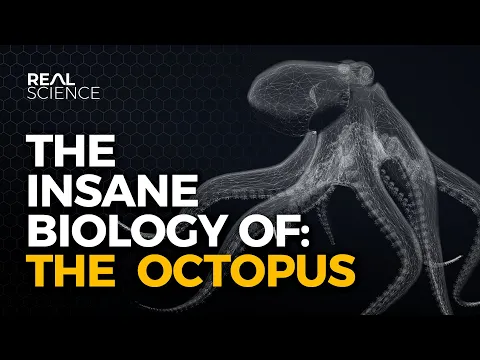

The rapid response of octopuses is also linked to the control mechanism. They control chromatophores neuronally, with direct commands from the nervous system. In other animals that change color, like chameleons, the change is controlled by hormones, which take time to circulate and distribute throughout the body. In this hormonal model, a change can take about 20 seconds.
In octopuses, the change can be so integrated into body functioning that some researchers compare the process to actions like breathing or blinking: something that can be chosen and, at the same time, occur in a partially involuntary way.
The architecture of the nervous system of octopuses is one of the most puzzling facts. The common octopus has about half a billion neurons. For comparison, humans have about 100 billion, while snails have around 20 thousand. Still, within the realm of invertebrates, octopuses occupy a level well above the norm.
The most important detail is the distribution: of their 500 million neurons, only one third is in the brain. Most is in the eight arms. This allows the octopus to “think with its arms,” with local autonomy for processing and response.
Arm Autonomy: Response For One Hour And Decisions Outside The Central Brain
It has long been known that a severed arm of octopuses can respond to stimuli for one hour after being separated from the central brain. A recent study advanced the understanding of this autonomy by observing octopuses exploring objects in a tank and searching for food with video modeling.
The program quantified movements, tracking when the arms worked in sync, suggesting direction from the brain, and when they acted asynchronously, suggesting independent decision-making in each appendage. In this flow of information from the environment to the animal, part of the processing may not even pass through the central brain. Suckers and arms capture signals, analyze, and respond with corresponding speed, reinforcing the idea that octopuses operate with a distributed intelligence throughout their bodies.
The intelligence of octopuses is inferred from behavior. They are capable of performing learning tasks, demonstrating short- and long-term spatial memory and object perception. They also solve problems, such as removing lids from jars and opening opaque boxes to reach hidden prey.
A striking example involves an octopus that carries coconut halves: when it moves to a spot without shelter, it takes the shells with it, and when it wants to rest, it assembles a kind of protection around its body. This behavior is cited as a possible rare use of a compound tool and as evidence of planning, since it involves present cost to meet a future need.
Another reported trait is their ability to differentiate people even when wearing the same clothes, suggesting a finer recognition than simple coarse visual cues.
Play Without Social Life: 14 And 21 Repetitions Like A Bouncing Ball
There is also the aspect of play. In an experiment, octopuses were placed in an aquarium with a hiding spot and, on the surface, a pill bottle with enough water to float. A current created by a pump pushed the bottle, and some octopuses began to squirt water at it, causing the bottle to return and repeat the cycle.
If this occurred once or twice, it could be chance. But there were repetitions that caught attention: one octopus repeated the behavior 14 times, and another 21 times, compared to the marine equivalent of bouncing a ball. Play is often associated with social ends in many species, but octopuses are solitary, with no social bonds and no social hierarchy, which forces an alternative reading on why this type of behavior arises.
Many classic explanations for complex intelligence rely on group living, the need to maintain bonds, cooperate, deceive, socially learn, and navigate hierarchies. This logic applies well to humans, primates, dogs, and dolphins.
But octopuses challenge this route. Being solitary, they support a different hypothesis: ecological intelligence, where complex cognition emerges from the pressure to find food, escape predators, and compete in harsh environments. When octopuses lost their shell 140 million years ago, the predation pressure may have been so high that deceiving attackers became a condition for survival. In this scenario, intelligence does not arise from society, but from the daily urgency of hunting and not becoming prey.
What Octopuses Suggest About The Evolution Of Intelligence On Earth
Octopuses exhibit a form of intelligence that seems to have arisen independently, built with a different relationship between brain and body, and with perception that may involve skin as a sensory component. They also suggest that life can produce cognition through distinct paths, with anatomical and behavioral solutions that do not resemble vertebrates but achieve comparable levels of performance in tasks.
In the oceans of the world, this set of distributed neurons, layered camouflage, reaction in 200 milliseconds, and flexible behavior forms a portrait that is difficult to fit into simple categories. Octopuses do not seem “strange” merely because of their appearance, but because they rewrite expectations of an invertebrate in terms of perception, body control, and decision-making.
For those who want to understand why octopuses seem like real aliens, the central point is not an isolated trick, but rather the sum of evolutionary pressures and biological solutions: losing the shell, surviving vulnerable, mastering layered camouflage, reacting in 200 milliseconds, distributing neurons throughout their arms, and developing intelligence without social life. The result is an animal that hunts and escapes in the ocean with sensory and cognitive tools that challenge the norm for invertebrates.
In your opinion, is the autonomy of the arms in octopuses the most impressive detail, or does the light-sensing skin completely change your understanding of perception?








Seja o primeiro a reagir!