





 Portuguese
  English
  Spanish
  5 min of reading
  0 comments


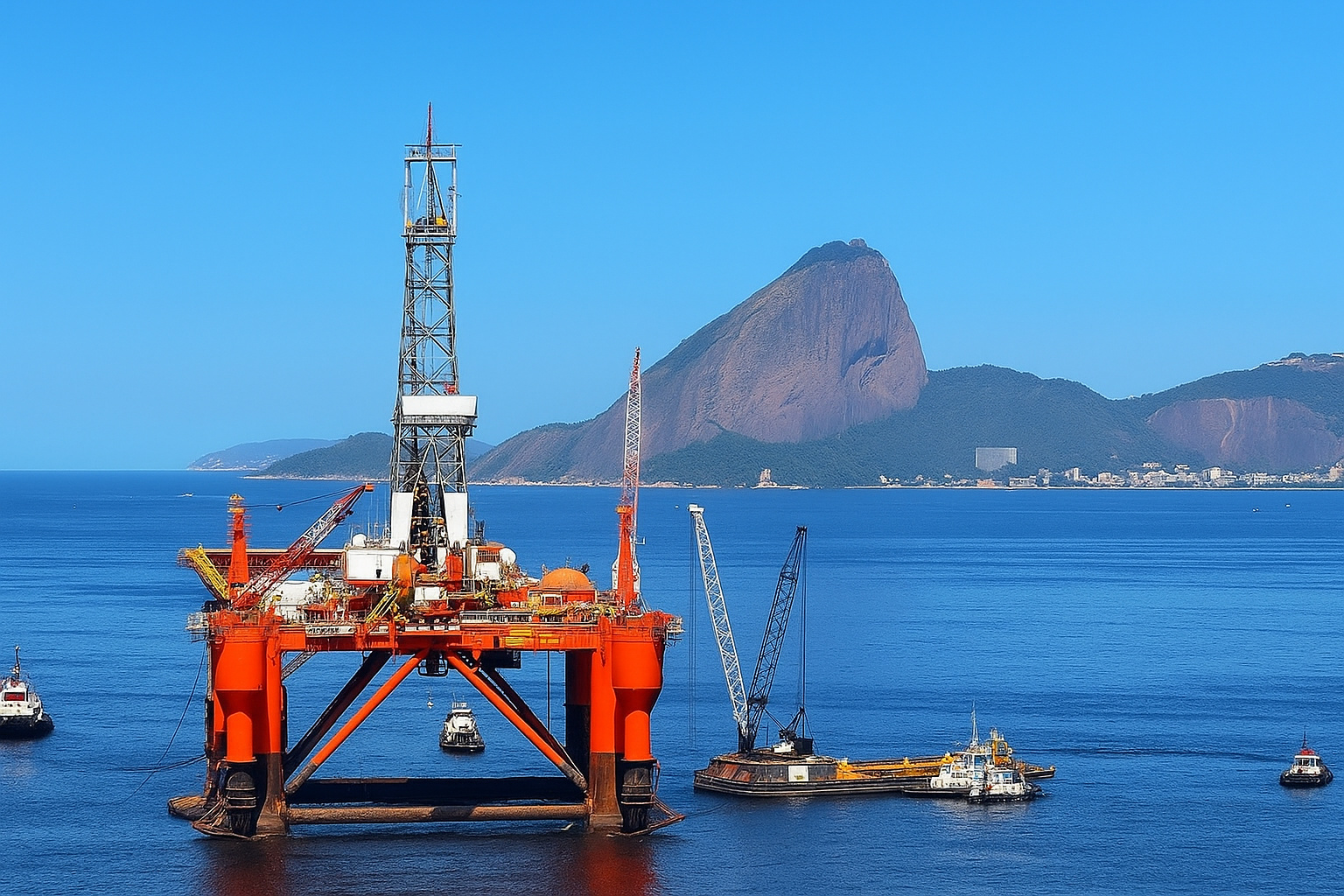
Historic Record Reinforces the Importance of Oil and Gas in the Pre-Salt for the Energy and Economic Development of Brazil
The oil and gas in the pre-salt continue to establish themselves as fundamental pillars of the Brazilian energy matrix. In September 2025, Brazil reached a new production record, totaling 4.143 million barrels of oil equivalent per day (boe/d), according to data released by the National Agency of Petroleum (ANP).
Thus, the result confirms the strategic role of the pre-salt reserves in consolidating the country as one of the main global energy producers.
In addition, the total national production of oil and gas, which sums the volumes from the pre-salt, post-salt, and land fields, reached 5.114 million boe/d. Although the overall record from July, with 5.160 million, has still not been surpassed, the constant growth indicates the solidness of the sector.
-
Lula reveals a masterstroke by Petrobras to undo a deal made by Bolsonaro, which involves the return of an important refinery that currently produces less than half of what was expected and makes Brazil dependent on international diesel.
-
A study confirms that the natural gas sector will reduce greenhouse gas emissions in Brazil by 0.5% and accelerate the energy transition by 2026.

-
Petrobras implements a severe adjustment and confirms a 55% increase in the price of aviation kerosene with a proposal for installment payments for the companies.

-
The rise in oil prices could ensure an extra revenue of R$ 100 billion for the Federal Government, indicates a recent economic study.


In this way, the highlight of September was the continuous increase of the pre-salt, responsible for more than 80% of the entire national production.
The Prominence of the Pre-Salt in the Brazilian Energy Matrix
Since its discovery in 2006, the pre-salt has transformed the history of the oil industry in Brazil. Located beneath a thick layer of salt and at great depths, the set of maritime reserves extends over more than 800 kilometers along the southeastern coast.
Initially, exploration seemed to be a technical and financial challenge. However, with the advancement of technologies and the consolidation of national expertise, the country has taken a prominent position among the largest oil producers in the world.
In September, the production of oil and gas in the pre-salt grew 2.7% compared to August and 12.5% compared to the same month in 2024. These numbers demonstrate the maturity of public policies and the efficiency of operations on the platforms.
Additionally, the pre-salt, explored by 169 active wells, produced 3.209 million barrels of oil per day and 148.37 million cubic meters of natural gas.
Therefore, the performance reinforces the role of the pre-salt as a motor for economic and technological growth. The advancement in production boosts investments in infrastructure, research, and innovation, generating jobs and stimulating various industrial sectors.
The Importance of Utilizing Natural Gas
Another essential aspect is the utilization of natural gas, which reached 97.9% in September. This number shows that almost all production was allocated to the domestic market, while flaring decreased by 16.1% compared to the previous month.
This improvement, therefore, is a result of efficient strategies aimed at reducing losses and emissions.
In addition to reducing environmental impact, natural gas represents a transitional energy source as it emits less carbon than oil or coal.
For this reason, its increasing use reinforces Brazil’s commitment to sustainability and decarbonization.
Additionally, investments in transportation and compression infrastructure have enabled more efficient gas flow from the platforms to the consumer centers.
Economically, natural gas is equally relevant. It supplies thermal power plants, boosts industries, and serves as a raw material for fertilizers and chemicals.
Thus, its appreciation contributes to increasing national competitiveness and strengthening the country’s energy security.
Fields and Platforms Driving Production
Among the fields that stood out the most in September is the Tupi field, located in the Santos Basin, which produced 818.08 thousand barrels of oil per day and 40.48 million cubic meters of natural gas.
Moreover, the FPSO Almirante Tamandaré, operating in the fields of Búzios and Tambuatá, recorded the highest oil production, with 222.16 thousand barrels daily.
On the other hand, the FPSO Guanabara, which operates in the shared deposit of Mero, achieved the highest natural gas production, reaching 12.13 million cubic meters per day.
These numbers confirm the success of the floating production, storage and offloading (FPSO) model, whose operational flexibility ensures high efficiency and stability.
Currently, about 97.6% of Brazilian oil and 85.7% of natural gas are produced in offshore fields.
Additionally, Petrobras and its consortia account for more than 91% of total production, which highlights its technological and operational leadership in complex and deep environments.
The Role of Technology and Sustainability in the Future of the Pre-Salt
The success of oil and gas in the pre-salt goes far beyond the abundance of reserves. It relies on robust investments in technology and innovation.
Through advanced deep-water drilling techniques, use of artificial intelligence for well monitoring, and automated safety systems, Brazil has increased productivity and reduced operational costs.
At the same time, technology has contributed to mitigate the environmental impact of activities.
The use of gas reinjection systems, for instance, prevents emissions and maintains reservoir pressure, increasing extraction efficiency.
Moreover, the integration with renewable energies, such as offshore wind and biofuels, has been gaining traction as a path towards a more sustainable sector.
Another relevant aspect is the investment in research and training qualified professionals.
National universities and research centers have collaborated with companies in the sector to create more efficient and environmentally responsible solutions.
Thus, the combination of science, industry, and public policies ensures that Brazil progresses with a balance between production and preservation.
Perspectives and Challenges for the Coming Years
Although the September record highlights the vigor of the sector, the pre-salt still faces structural challenges.
Among them are the need to expand the offloading infrastructure, improve port logistics, and diversify the allocation of resources raised from production.
Additionally, it is essential to maintain incentive policies that promote innovation and sustainability.
In the coming years, Brazil should further increase its production, especially with the commissioning of new platforms and the development of underexplored areas.
In this way, the country has the potential to consolidate itself as a global reference in efficiency and environmental responsibility.
However, the growth must be accompanied by responsible resource management and the strengthening of energy transition policies.
In this context, the pre-salt plays a strategic role in balancing the expansion of fossil fuel production with international climate commitments.
Finally, the pre-salt, symbol of one of the greatest oil discoveries of the 21st century, continues to write an essential chapter in the energy history of Brazil.
With constant innovation, environmental responsibility, and long-term vision, the country is able to remain among the leading producers in the world.
Thus, it is possible to reconcile development and sustainability in a balanced and lasting manner.








Seja o primeiro a reagir!