





 Portuguese
  English
  Spanish
  5 min of reading
  0 comments


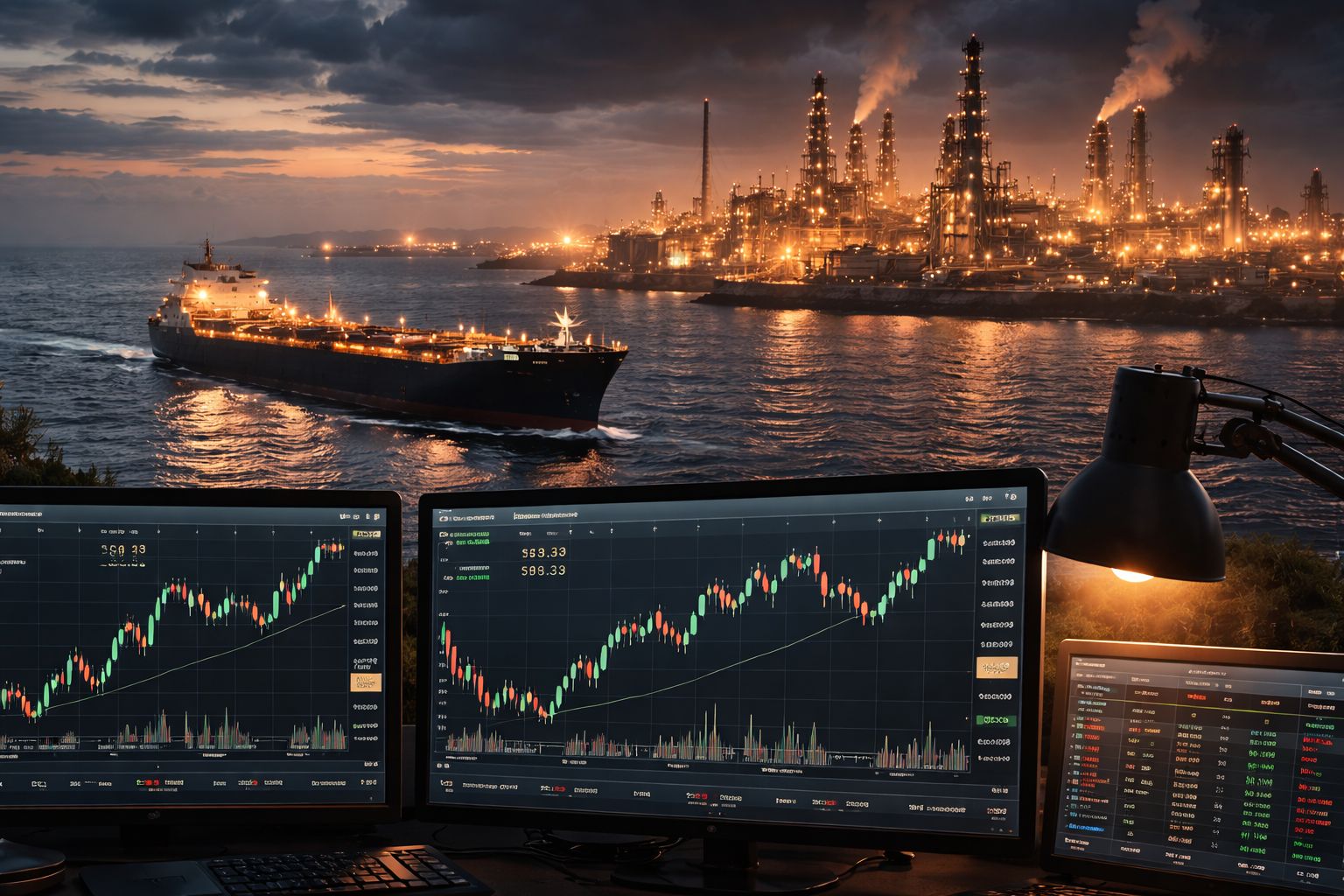
Oil Prices Closed Higher Again Despite Lower Liquidity in Markets, Reflecting Ongoing Geopolitical Tensions, Historical Volatility, and the Sector’s Sensitivity to Any Signs of Risk in Global Supply.
The international oil market saw an increase again, registering instability even in a more contained trading environment. In the most recent session, WTI oil for February rose by 0.64%, closing at US$ 58.38 per barrel, according to data released by the U.S. stock exchange. This movement occurred despite reduced liquidity, a common scenario during periods of lower participation from institutional investors.
Still, this increase reinforces a recurring pattern. Whenever the geopolitical landscape shows new points of tension, rising oil prices tend to react quickly. Even moderate price fluctuations carry strong symbolism, as they reflect expectations regarding supply, demand, and global stability.
This behavior is not new. Over the past few decades, oil has established itself as one of the most sensitive assets to political events, regional conflicts, and strategic decisions made by major producers. Hence, even sessions with low trading volume often register significant fluctuations.
-
Lula reveals a masterstroke by Petrobras to undo a deal made by Bolsonaro, which involves the return of an important refinery that currently produces less than half of what was expected and makes Brazil dependent on international diesel.
-
A study confirms that the natural gas sector will reduce greenhouse gas emissions in Brazil by 0.5% and accelerate the energy transition by 2026.

-
Petrobras implements a severe adjustment and confirms a 55% increase in the price of aviation kerosene with a proposal for installment payments for the companies.

-
The rise in oil prices could ensure an extra revenue of R$ 100 billion for the Federal Government, indicates a recent economic study.


Oil and the Context of International Tensions
To understand the recent movement, it is essential to observe the international backdrop. Conflicts in Eastern Europe, instability in the Middle East, and trade disputes among major powers continue to influence the oil market. Even when there are no concrete interruptions in production, the perceived risk is enough to put upward pressure on prices.
According to analyses released by Reuters, investors remain alert to any signs of geopolitical escalation that could affect maritime routes, economic sanctions, or supply agreements. Thus, rising oil prices incorporate a risk premium, albeit temporary.
Moreover, political decisions involving sanctions and embargoes heighten uncertainty. When producing countries face trade restrictions, the market reacts by anticipating possible imbalances in supply. This mechanism explains why oil maintains an upward bias even on days of lower liquidity.
Reduced Liquidity and Oil Volatility
The reduced liquidity observed in the recent session also deserves attention. During periods of international holidays or partial recess from major funds, the trading volume diminishes. Under these conditions, price movements tend to be more sensitive, as there are fewer orders capable of absorbing fluctuations.
According to operators interviewed by Reuters, the combination of low volume with geopolitical news often amplifies fluctuations. Thus, even seemingly modest increases, such as the 0.64%, gain relevance in the rising oil market.
Historically, this behavior has repeated itself. Since the 1980s, when oil futures markets gained greater liquidity, analysts have observed that sessions with reduced participation often display disproportionate movements.
Oil and the Historical Cycle of Ups and Downs
Oil has always operated in cycles. Throughout the 20th century and the early 21st century, periods of increase alternated with phases of sharp decline. These cycles reflect technological changes, political decisions, and transformations in the global economy.
In the 1970s, supply shocks linked to the Organization of the Petroleum Exporting Countries redefined the market. Decades later, the expansion of shale oil in the United States altered production dynamics. More recently, the pandemic and geopolitical conflicts have reignited volatility.
According to the International Energy Agency, published in reports between 2022 and 2024, oil remains essential for the global economy, despite the advancement of renewable energy sources. This structural role explains why the asset continues to react strongly to any signs of instability.
WTI Oil and the Role of Futures Markets
The WTI oil closing at US$ 58.38 occurred on the New York Mercantile Exchange, the main reference for the U.S. market. Futures contracts serve as a thermometer for investors’ expectations.
When the market anticipates risks, prices rise. When it sees an oversupply or economic slowdown, prices fall. In this sense, oil acts as both an economic and geopolitical indicator.
Even with lower liquidity, futures contracts continue to reflect medium- and long-term expectations. Therefore, analysts observe not only the daily close but also the behavior of price curves.

Oil, Global Supply, and Strategic Decisions
Another relevant factor involves the decisions made by major producers. OPEC and its allies continue to monitor the market closely. Adjustments in production, even when only signaled, directly influence prices.
According to statements released by OPEC throughout 2024, the group seeks to balance supply and demand in a scenario of uneven economic growth. This effort reinforces the perception that the oil market remains tightly managed.
Additionally, countries outside the cartel, such as the United States, also exert significant influence. U.S. production acts as a compensatory factor, but it does not entirely eliminate volatility.
Oil and Global Economic Expectations
At the moment, the market operates in a delicate balance. According to analyses by Reuters published in 2025, investors are assessing both geopolitical risks and signs of economic moderation globally. This combination helps explain gradual movements, such as those recorded in the recent session.
Still, the upward bias shows that oil remains sensitive to any factor threatening supply or the stability of trade routes.
Oil as a Permanent Strategic Asset
When observing recent behavior, it becomes clear that oil maintains its strategic role, even in a world discussing energy transition. Despite the advancement of renewable sources, oil remains fundamental for transportation, industry, and energy generation in various regions.
According to the International Energy Agency, global demand will still remain significant in the coming decades. Therefore, price movements continue to reflect not only the present but also future expectations.
Thus, the closing of oil prices, even with reduced liquidity, reinforces a historical pattern. Whenever global tensions persist, the market incorporates risk into the price of the barrel.
This behavior shows that oil remains in the spotlight. It reacts quickly to political, economic, and strategic signs. And even in calmer sessions, it continues to reflect the complexity of a market that remains essential for the functioning of the global economy.







Seja o primeiro a reagir!