





 Portuguese
  English
  Spanish
  5 min of reading


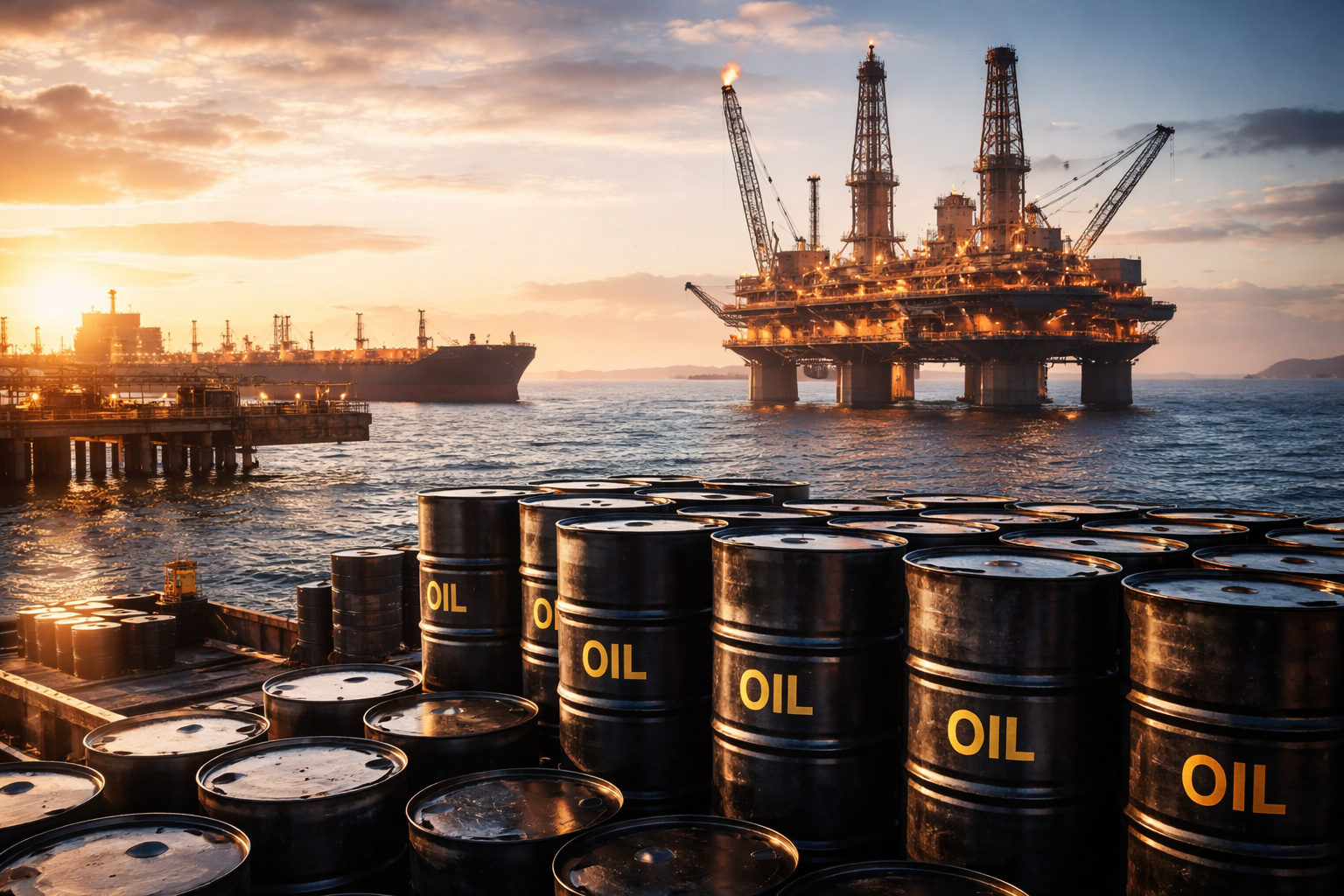
The oil has returned to the center of the global economic debate after the United States’ intervention in Venezuela, a move that altered expectations, pressured prices, and reignited historical discussions about energy, power, and geopolitics.
The international market saw a drop in prices immediately after the news of Nicolás Maduro‘s capture. The Brent North Sea barrel, a global benchmark, began trading at $60.07, while the West Texas Intermediate, the U.S. standard, fell to $56.62. This movement reflected an immediate reading from investors, who began to price in a potential increase in Venezuelan oil supply in the medium term.
Since then, analysts, governments, and companies in the energy sector have been analyzing the impacts. Additionally, the episode reinforces how oil remains a sensitive asset to political decisions. At the same time, it remains essential for the global economy.
-
Lula reveals a masterstroke by Petrobras to undo a deal made by Bolsonaro, which involves the return of an important refinery that currently produces less than half of what was expected and makes Brazil dependent on international diesel.
-
A study confirms that the natural gas sector will reduce greenhouse gas emissions in Brazil by 0.5% and accelerate the energy transition by 2026.

-
Petrobras implements a severe adjustment and confirms a 55% increase in the price of aviation kerosene with a proposal for installment payments for the companies.

-
The rise in oil prices could ensure an extra revenue of R$ 100 billion for the Federal Government, indicates a recent economic study.


The Historical Weight of Oil in Venezuela
To understand the market reaction, one must look to the past. Venezuela built much of its economy around oil throughout the 20th century. According to PDVSA, the state-owned company established in 1976, the country was among the largest global producers for decades.
Moreover, Venezuela holds some of the largest proven oil reserves in the world, according to historical data published by the OPEC. However, management issues, economic sanctions, and political instability have drastically reduced production since the 2010s.
For this reason, any sign of political change generates immediate expectations. The market understands that a rapprochement with the United States could facilitate investments, technology, and the flow of production. Thus, the perception of a potential increase in global oil supply grows.
The U.S. Intervention and Market Reading
The capture of Nicolás Maduro marked a significant turning point. Shortly afterward, interim president Delcy Rodríguez expressed willingness to engage in dialogue with Donald Trump‘s government. According to official statements released on Sunday, she advocated for a balanced and respectful relationship with the United States.
This discourse had a direct impact on prices. After all, investors interpreted the statement as a sign of economic openness. Additionally, Washington indicated interest in exploring Venezuelan oil resources, reinforcing the perception of increased future supply.
Consequently, futures contracts reacted with a decline. Oil, as a global commodity, responds quickly to expectations. Even without immediate production changes, the mere political repositioning already alters market sentiment.
Brent and WTI as Global Thermometers
The behavior of Brent and WTI helps explain the extent of the impact. Brent reflects the European and international markets, while WTI represents the internal and external dynamics of the United States.
When both decline similarly, the market sends a clear signal. There is a global expectation of greater oil availability. Furthermore, investors adjust their positions to reduce risks.
According to data released by international commodity exchanges, a drop of over 1% in both contracts indicates a coordinated reaction. Thus, it is not an isolated movement but a macroeconomic reading.
The Role of Geopolitics in Oil Prices
Historically, the price of oil has always been linked to geopolitics. Crises in the Middle East, economic sanctions, wars, and diplomatic agreements have shaped the market over the decades.
During the 1970s, for example, the oil shock demonstrated how political decisions can trigger scarcity and global inflation. In the 2000s, regional conflicts again pressured prices.
Now, the focus shifts to Latin America. Venezuela, despite its reduced production, maintains strategic relevance. Therefore, any change in its international alignment influences global expectations.
Moreover, the United States emerges as a central player. The country not only consumes and produces oil but also influences financial and trade flows. Thus, signals from Washington weigh as heavily as production data.
Supply, Demand, and Future Expectations
The oil market does not only react to the present. It anticipates scenarios. In this context, the possibility of a gradual resurgence of Venezuelan production alters medium- and long-term projections.
According to the International Energy Agency, reported in recent documents, the balance between supply and demand increasingly depends on political decisions. Moreover, the energy transition adds complexity to the scenario.
Still, oil remains essential for transportation, industry, and energy generation. Therefore, any new significant source of supply tends to pressure prices, especially during times of moderate demand growth.
Impacts on Importing and Exporting Countries
The drop in oil prices generates distinct effects. For importing countries, like much of Europe, lower prices ease energy costs. This can reduce inflation and stimulate the economy.
On the other hand, exporting countries feel pressure on revenues. Oil-dependent states need to adjust their budgets. This effect has occurred in various historical cycles.
In Venezuela’s case, the challenge is twofold. The country needs to rebuild its oil industry while facing a more competitive and price-sensitive market.
A Scenario That Reinforces Oil Volatility
The episode involving the United States and Venezuela reinforces a known reality. Oil remains a volatile asset. It responds quickly to speeches, agreements, and conflicts.
Additionally, the current market operates with a strong presence of financial investors. This amplifies short-term movements. Thus, political news carries even more weight.
According to analyses published by international energy and financial market agencies, the trend is to maintain this volatility. Oil continues to be influenced by economic and strategic factors.
Sources and Chronological Context
According to official statements from Venezuela’s interim government released on Sunday, the willingness to dialogue marked the first public signal of rapprochement with the United States. The price data for Brent and WTI were also released by international exchanges on the same day.
According to OPEC, in historical reports, Venezuela has maintained significant strategic reserves since the 20th century. Furthermore, the International Energy Agency, in recent documents, highlights the growing influence of geopolitics on the oil market.
Thus, throughout history, oil has proven to be more than a commodity. It acts as an economic, political, and strategic instrument, capable of shaping global decisions and impacting the daily lives of countries and consumers.
In this context, the recent drop in prices does not merely represent a number. It reflects expectations, interests, and movements that continue to define the future of oil in the world.







Seja o primeiro a reagir!