





 Portuguese
  English
  Spanish
  5 min of reading


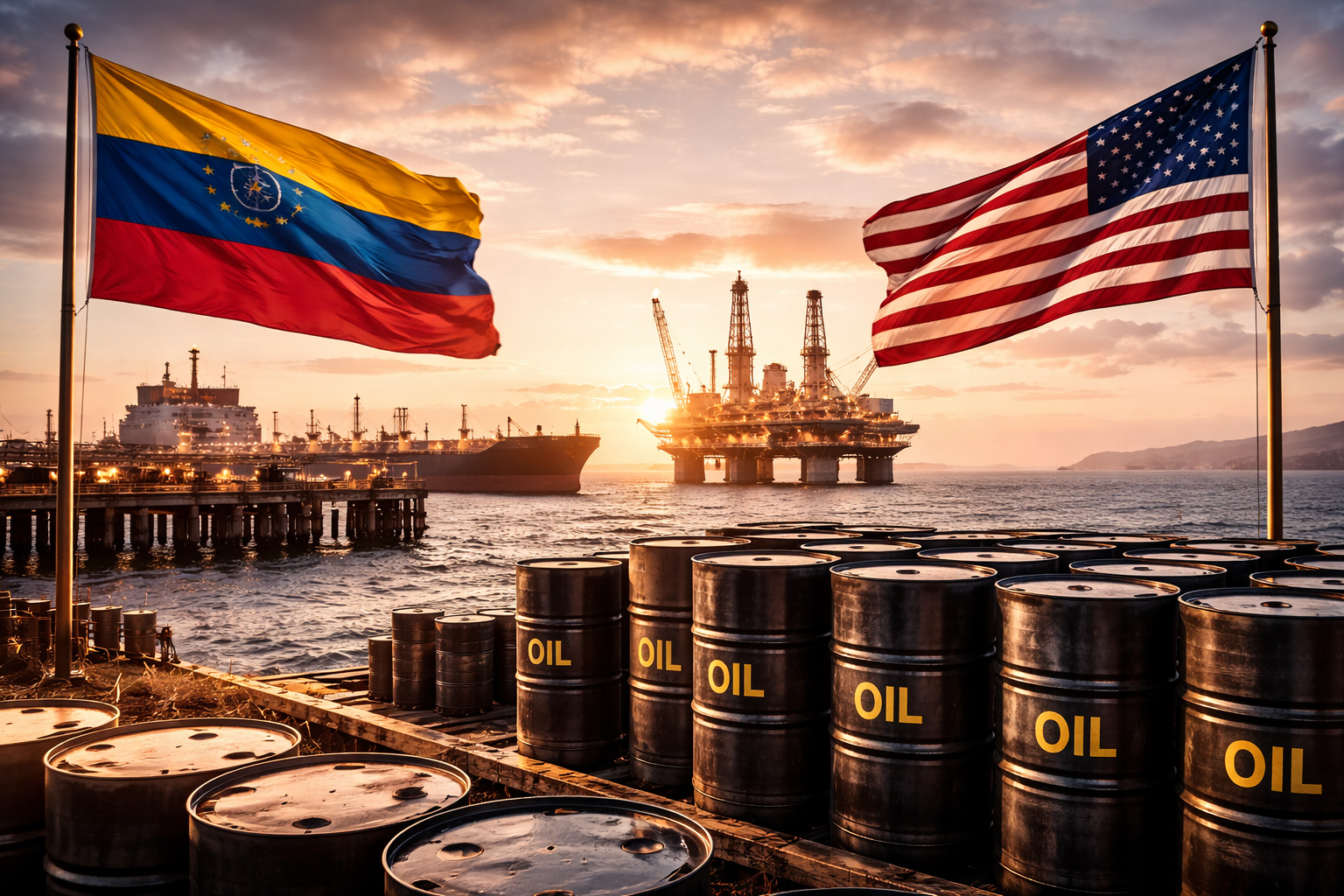
The oil has once again taken center stage in the international debate following statements made by the President of the United States, Donald Trump, regarding the U.S. presence in Venezuela. During a press conference held on January 3, at Mar-a-Lago, Trump stated that the U.S. involvement in the South American country is directly linked to oil and the intent to repair damage caused to the American people, while also claiming it would bring benefits to Venezuelans.
Since then, the market, political analysts, and energy experts have begun to assess the impacts of these statements. After all, throughout history, oil has always been a decisive element in the relationship between major powers and countries holding vast energy reserves.
At the same time, Trump’s rhetoric reinforces a recurring pattern. The United States has historically associated strategic, economic, and geopolitical interests with energy security. Thus, any direct mention of oil tends to generate immediate reactions in the international arena.
-
Lula reveals a masterstroke by Petrobras to undo a deal made by Bolsonaro, which involves the return of an important refinery that currently produces less than half of what was expected and makes Brazil dependent on international diesel.
-
A study confirms that the natural gas sector will reduce greenhouse gas emissions in Brazil by 0.5% and accelerate the energy transition by 2026.

-
Petrobras implements a severe adjustment and confirms a 55% increase in the price of aviation kerosene with a proposal for installment payments for the companies.

-
The rise in oil prices could ensure an extra revenue of R$ 100 billion for the Federal Government, indicates a recent economic study.


Oil as a Historical Pillar of Venezuela
To understand the weight of these statements, it is essential to look to the past. Venezuela built its economy, especially in the 20th century, on oil. According to historical data released by OPEC, the country has one of the largest proven oil reserves in the world.
For decades, oil exports sustained public policies, social programs, and Venezuela’s very international integration. However, over the last few years, economic sanctions, political crises, and management difficulties have drastically reduced production.
Still, Venezuelan oil has retained strategic value. Even with reduced production, reserves continue to attract global interest. Therefore, any signal of rapprochement with the United States alters economic and political expectations.
Trump’s Statements and the Rhetoric on Compensation
During the press conference at Mar-a-Lago, Trump was direct. He stated that the U.S. presence in Venezuela is related to oil and the need for reimbursement for damages suffered by Americans. According to the president, the exploitation of energy resources could generate financial returns for the United States.
Furthermore, Trump argued that this strategy would also benefit the Venezuelan people. In his speech, he suggested that investments, exploration, and reorganization of the energy sector could help rebuild the local economy.
According to information released by the White House, in previous statements, U.S. energy policy has always prioritized supply security and economic returns. Thus, the current rhetoric follows a historical line already known.
The Relationship Between Oil and U.S. Foreign Policy
Historically, oil plays a central role in U.S. foreign policy. Since the post-World War II period, Washington has sought to secure access to stable energy sources.
In the Middle East, for example, this logic has guided alliances and interventions for decades. Now, the focus is once again on Latin America. Venezuela emerges as a strategic piece on this chessboard.
According to analyses published by international energy studies centers, oil continues to be viewed as a power asset, not just as a commodity. It influences agreements, sanctions, and diplomatic decisions.
Therefore, when Trump asserts that the U.S. presence “has everything to do with oil,” he reinforces a tradition of international politics. Energy and geopolitics go hand in hand.
Market Reactions and Economic Expectations
The statements also reverberated in the financial market. Investors began to consider the possibility of changes in the flow of Venezuelan oil. Even without immediate production announcements, the rhetoric alters expectations.
According to data released by international commodity exchanges, whenever there is a signal of future supply expansion, prices tend to adjust. Oil reacts more to expectations than to immediate facts.
Additionally, companies in the energy sector are evaluating medium- and long-term scenarios. The eventual entry of American capital and technology could, in the future, increase Venezuelan production. This factor weighs on global projections.
The Impact on Venezuela and the Local Population
From a Venezuelan perspective, the rhetoric generates internal debates. Part of the population views any direct association between sovereignty and the exploitation of natural resources by foreign powers with caution.
On the other hand, some defend that external investments could help recover the oil infrastructure. According to historical data from PDVSA, the Venezuelan state-owned company has faced a significant drop in production over the last decade.
Thus, the promise of rebuilding the energy sector emerges as a relevant argument. Oil, in this context, appears as a possible engine for economic recovery.
However, experts warn that benefits to the population depend on management, transparency, and effective public policies. Simply increasing exploitation does not guarantee automatic social improvement.
Oil, Damages, and Political Narrative
When Trump speaks of “reimbursing damages,” he utilizes a well-known political narrative. Throughout history, leaders justify external actions based on economic compensations and the protection of national interests.
According to analyses published by American universities and think tanks, this type of rhetoric aims to strengthen internal support. It connects foreign policy to the citizen’s wallet.
Furthermore, by mentioning benefits to Venezuelans, Trump builds a narrative of cooperation. This combination of economic interests and humanitarian rhetoric is recurrent in international politics.
A Scenario That Reinforces the Centrality of Oil
Trump’s statements reinforce a historical conclusion. Oil remains a central element of international relations. Even in a context of energy transition, it maintains economic and strategic weight.
According to the International Energy Agency, in recent reports, oil still accounts for a significant portion of the global energy matrix. Thus, disputes and negotiations continue to revolve around this resource.
Moreover, the case of Venezuela illustrates how energy reserves influence a country’s political fate. Oil shapes alliances, discourses, and global decisions.
Official Sources and Chronological Context
According to public statements made on January 3, during a press conference at Mar-a-Lago, Trump stated that the U.S. presence in Venezuela is linked to oil. According to previous communications from the White House, U.S. energy policy prioritizes economic returns and national security.
Furthermore, according to historical data from OPEC, Venezuela has ranked among the countries with the largest oil reserves in the world since the 20th century. Additionally, as per reports from the International Energy Agency, geopolitics continues to directly influence the global oil market.
Thus, the episode reinforces a persistent reality. Oil remains at the center of global decisions, connecting economy, politics, and power in a profound and lasting way.






Seja o primeiro a reagir!