





 Portuguese
  English
  Spanish
  3 min of reading
  1 comment


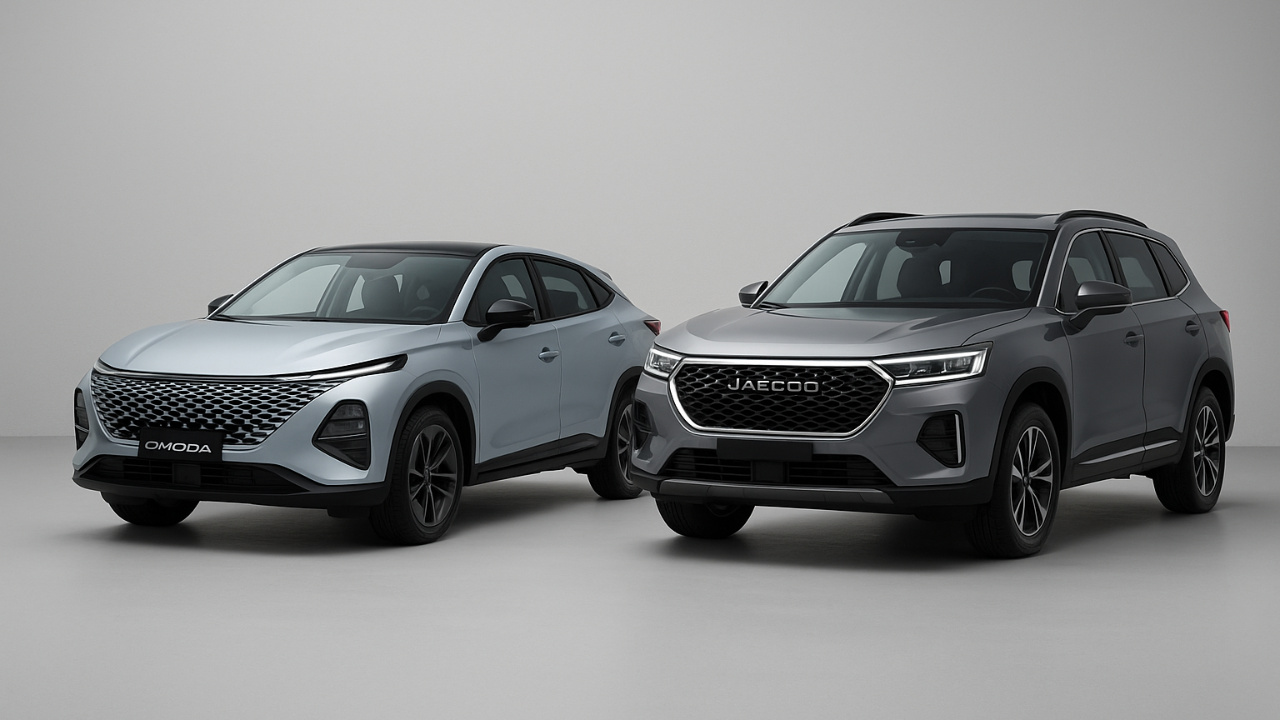

Omoda and Jaecoo Will Disembark Over 3,000 Vehicles in Brazil in December and Accelerate Their Commercial Strategy Focused on the Omoda 5 Hybrid.
Omoda and Jaecoo will disembark over 3,000 vehicles in Brazil in December, reinforcing the presence of Chinese brands in the country.
The shipment, which arrives next week at the port of Espírito Santo, will consist primarily of the Omoda 5 hybrid, a model that has gained recent prominence due to its strong national demand.
This substantial volume reflects the progress of the two automakers since April, driven by a commercial strategy designed to directly meet the local consumer profile.
-
The Toyota Hilux is R$ 75.5 thousand cheaper and bets on the 2.8 turbodiesel engine with up to 204 hp and 50.9 kgfm to catch up with the VW Saveiro, which leads with 4,472 sales.
-
The new Renault Koleos has a screen exclusively for the passenger that is invisible to the driver, heated rear seats, and 29 assistance systems, but its Chinese competitors cost R$ 40,000 less and deliver more power.
-
The car stored for 38 years: when opening the barn door, what appears is breathtaking and looks like a scene from a movie!

-
Fiat works miracles in the Brazilian market, lowers the price of its 0 km hatch to R$ 69,990, reestablishes the model as the cheapest car in the country, and reignites the battle against Kwid and C3.

According to the manufacturer, “The performance achieved here, right in the first seven months of national operation, evidences the success of the commercial strategy with a tailored offer, conceived and designed by Brazilians,” reinforcing the competitive positioning in the SUV segment.
Thus, the new batch arrives at a time of ascendance, consolidating the companies’ plan to increase sales and geographic presence.
Focus on the Omoda 5 Hybrid, Responsible for Over 70% of the Shipment
Within the shipment batch, over 70% corresponds to the Omoda 5 hybrid, the brand’s main bet for the Brazilian market.
The model registered over 500 units sold just in November, demonstrating a rapid adoption rate among consumers seeking new technologies and energy efficiency.
This prominence is not coincidental.
On the other hand, the brand has been observing positive public reception since the first months, which encouraged the allocation of a large part of the new shipment to the hybrid SUV.
Therefore, the arrival reinforces the expectation of continuous growth in the premium-hybrid segment.
Dealer Network Grows Rapidly Across the Country
The expansion of the network is another point that supports the strategy for 2025 and 2026. Since April, Omoda and Jaecoo have accelerated the establishment of sales and service points.
Currently, there are 50 dealerships in operation, distributed across 17 Brazilian states.
In addition, another 43 units are under construction, with an expected opening by the first quarter of 2026.
The brands’ plan also includes entering seven more states, strengthening their reach and facilitating customer access to maintenance services, after-sales, and test drives.
This structure also provides support to absorb the impact of the arrival of over 3,000 vehicles in Brazil in December, ensuring that the volume of sales and deliveries occurs in an organized manner.
High Registrations Reinforce Confidence in the Brazilian Market
Since the start of operations in the country, Jaecoo has accumulated almost 4,000 registrations. Omoda, by last month, had recorded 1,350 units sold.
Meanwhile, the portfolio of both brands continues to consolidate, including the Jaecoo 7 and the Omoda 5.
This performance shows that the arrival of new batches is not accidental, but rather to meet real demand, driven by increasing sales in an increasingly competitive segment.
Thus, the next month is expected to be strategic for enhancing the brands’ visibility on the national stage.
Perspectives: December as a Milestone for a New Phase for the Brands in Brazil
With the confirmation that Omoda and Jaecoo will disembark over 3,000 vehicles in Brazil in December, the automotive market is closely watching the next steps of the manufacturers.
The combination of strong demand, aggressive network expansion, and focus on hybrid models indicates a long-term movement.
Moreover, the continuous growth suggests that Brazil has become a strategic point within the global operation of the brands, which are now investing more intensively in technology, innovation, and competitiveness.







Mais lixo Chinês despejado no Brasil!