





 Portuguese
  English
  Spanish
 4 min of reading
  0 comments


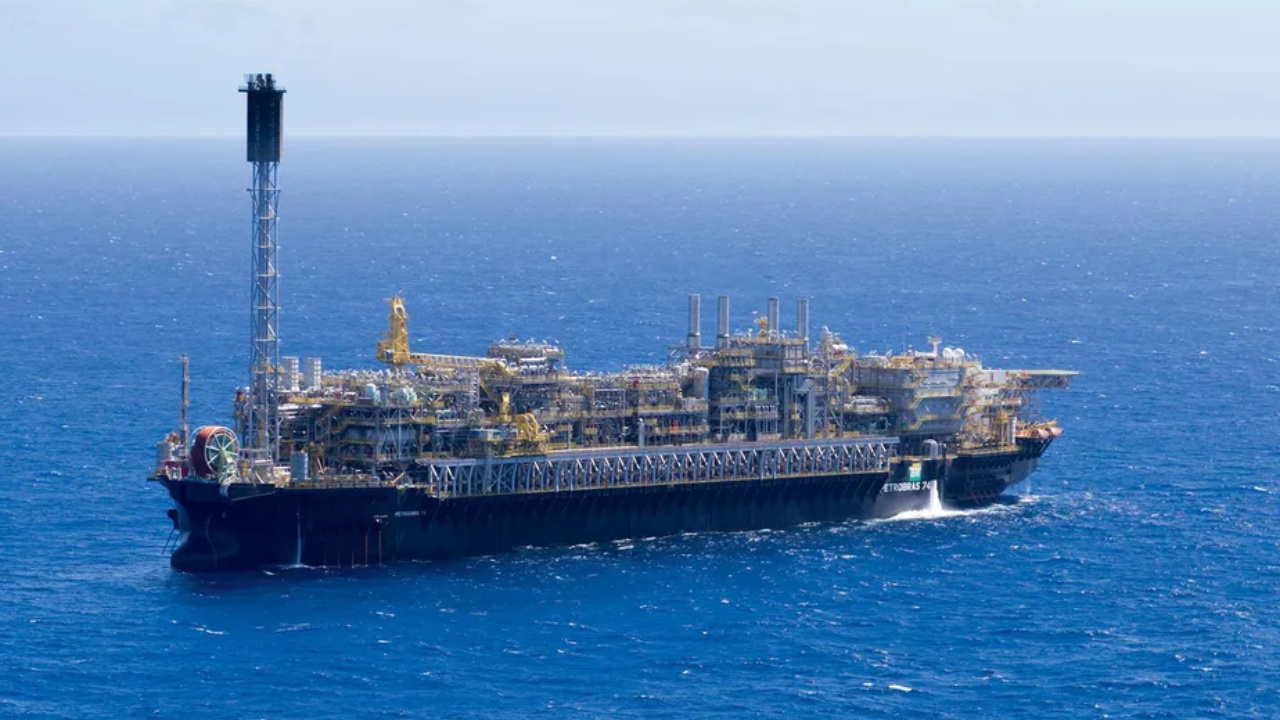
Petrobras Began Producing Oil and Gas from the P-78 Platform in the Búzios Field, in the Pre-Salt of the Santos Basin, Expanding Productive Capacity and Natural Gas Supply in Brazil.
The Brazilian oil sector ended 2025 with significant advancement in the pre-salt. On the last day of the year, Petrobras began producing oil and gas from the P-78 platform in the Búzios field, located in the Santos Basin. The project reinforces the importance of the field, considered the largest in the country in terms of reserve volume and production, in addition to significantly increasing the state-owned company’s installed capacity.
This move occurs in a context of seeking greater operational efficiency and sustained growth in oil and natural gas production. At the same time, the commissioning of the P-78 strengthens the gas export infrastructure to the continent, contributing to the expansion of the national energy supply.
P-78 Capacity Expands Oil Production in Búzios
The Búzios 6 unit, identified as P-78, has the capacity to produce up to 180,000 barrels of oil per day, in addition to processing 7.2 million cubic meters of gas daily. As a result, the FPSO increases the total installed capacity of the field to about 1.15 million barrels of oil per day.
-
A study confirms that the natural gas sector will reduce greenhouse gas emissions in Brazil by 0.5% and accelerate the energy transition by 2026.

-
Petrobras implements a severe adjustment and confirms a 55% increase in the price of aviation kerosene with a proposal for installment payments for the companies.

-
The rise in oil prices could ensure an extra revenue of R$ 100 billion for the Federal Government, indicates a recent economic study.

-
Naturgy begins an investment of R$ 1.6 million to expand the gas network in Niterói and benefit thousands of new residences and businesses.


In addition to oil production, the project stands out for the possibility of exporting natural gas to the continent through the interconnection with the ROTA 3 gas pipeline. This system can increase the gas supply in Brazil by up to 3 million cubic meters per day, strengthening the domestic market and diversifying the utilization of pre-salt resources.
Petrobras Goals and Strategic Role of Búzios
According to Petrobras President, Magda Chambriard, the start of production from the P-78 marks a direct advancement in the company’s goals for the following year. “With the first oil from the P-78, we start the year already advancing in the main goal we have for 2026: the increase in Petrobras oil and gas production. We project to produce 2.5 million barrels of oil per day throughout this year, and a large part will come from Búzios, the largest field in the country in reserves and production. In addition, we are also increasing the supply of natural gas to the Brazilian market, another goal expressed in our Business Plan.”

The statement reinforces the key role of the Búzios field in the state-owned company’s growth strategy, especially regarding the consolidation of the pre-salt as the main oil production hub in Brazil.
FPSO Launches New Generation of Proprietary Projects
The P-78 is an FPSO unit, which stands for Floating Production, Storage, and Offloading system. The floating unit launches a new family of proprietary projects by Petrobras, developed from PBRef, the Basic Reference Project.
This model consolidated hundreds of lessons learned from the first units in operation in the pre-salt. As a result, the project brought relevant gains in safety, reliability, and operational standardization. Moreover, the platform underwent changes in the contracting, construction, and assembly strategy, aligned with the FORTALECE Program, also known as PROFORT.
This program defined technical requirements for quality and efficiency for the shipyards involved, going beyond traditional local content requirements. Nonetheless, the contract for the P-78 provides for a minimum commitment of 25% local content, strengthening the national productive chain.
Construction, Local Content, and Participation of Brazilian Shipyards
Of the 23 topside modules of the platform, 10 were built at the BrasFELS shipyard, located in Angra dos Reis, in the state of Rio de Janeiro. This participation reinforces the presence of the national industry in high-complexity projects in the oil and gas sector.
The adoption of a more rigorous contractual model aimed to ensure greater predictability in deadlines, as well as raise the quality standard of the delivered structures. This set of factors contributed to the robustness of the project and the efficiency of the unit from the outset of operations.
Technologies for Efficiency and Emission Reduction
The P-78 is equipped with technologies aimed at reducing emissions and increasing operational efficiency. Among the highlights are the gas recovery system for flaring, the use of variable rotation in pumps and compressors, and the energy integration between hot and cold streams in oil and gas processing.
The project also includes 13 wells, being six producers and seven injectors. All have intelligent completion systems that enhance production management capability and optimize reservoir utilization.
The unit is interconnected by rigid production, injection, and gas export pipelines, in addition to flexible lines for service conduits. Innovative technologies were employed in securing these pipes to the FPSO, enabling operation at high capacity, as planned for the field’s wells.
Arrival in Brazil and Historical Importance of the Búzios Field
Measuring 345 meters in length and 180 meters in height to the top of the flare, the P-78 arrived in Brazil in October, coming from Singapore. The vessel has already brought onboard the commissioning and operation teams, a strategy that allowed tests of the systems to advance during the transit.
This decision eliminated the need to stop in sheltered waters in the country, generating gains in safety, reliability, and operational readiness. Currently, the P-78 is the seventh platform in operation in the Búzios field.
Discovered in 2010 by well 2-ANP-1-RJS, the field is located about 180 kilometers off the coast of the state of Rio de Janeiro, in ultra-deep waters of the Santos Basin, more than 2,000 meters deep. In October 2025, Búzios surpassed the mark of 1 million barrels of oil produced per day, consolidating its position as the main asset of Brazilian pre-salt.









Seja o primeiro a reagir!