





 Portuguese
  English
  Spanish
  4 min of reading
  0 comments


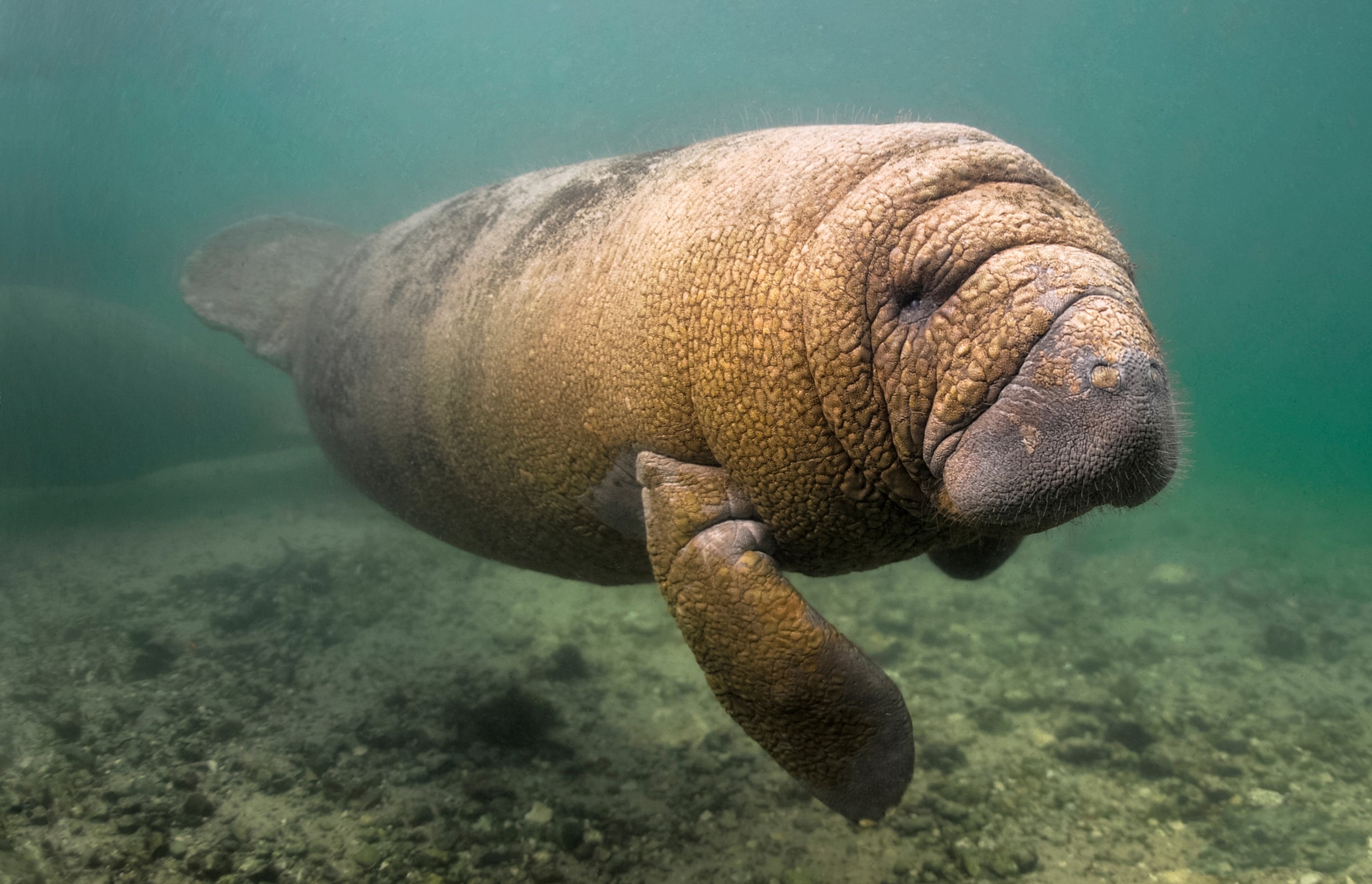
Amazonian Manatee Has Slow Reproduction, Long Gestation, and Only One Calf at a Time; Each Birth Is Crucial to Avoid Extinction.
The recent sighting of a new Amazonian manatee calf has once again drawn the attention of researchers, environmentalists, and conservation agencies to a fact that often goes unnoticed by the public: this is one of the species with the slowest reproductive cycle in all of Brazilian fauna. In a scenario of increasing pressures on the rivers, lakes, and floodplains of the Amazon, each birth becomes more than just a biological event and represents a statistical milestone of survival.
The Amazonian manatee is the largest freshwater mammal in South America. An adult can weigh over 400 kilograms and exceed 3 meters in length. Despite its impressive size, it is an extremely vulnerable animal, not due to a lack of strength but because of its life strategy: slow growth, late maturity, and infrequent reproduction.
A Reproductive Cycle That Works Against the Species
Unlike fish or reptiles that produce dozens or hundreds of offspring per season, the Amazonian manatee gives birth to only one calf per gestation.
-
With a cost per shot close to zero, the DragonFire laser could change naval warfare in 2027 and provide British ships with nearly unlimited defense against drones.

-
A British startup creates tires that generate electricity in electric vehicles when passing over potholes, speed bumps, and cracks.

-
Scientists have created robots made with living cells that have their own nervous system, swim on their own, explore the environment, and self-organize without any genetic engineering, and now they want to do the same with human cells.
-
Students create a solar-powered ambulance that operates without a plug, without fuel, and still keeps medical equipment running in remote areas.


This process lasts, on average, from 11 to 12 months, and the interval between one offspring and another can be as long as three or even four years, depending on the environmental and nutritional conditions of the female.
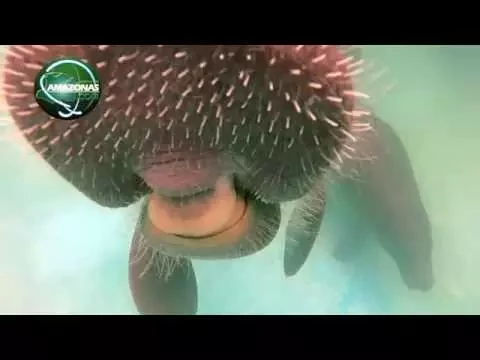

The calf is born weighing around 30 kilograms and is fully dependent on its mother for a long period. Nursing can last up to two years, during which time the female drastically reduces her chances of becoming pregnant again. This means that, over her entire reproductive life, a female can give birth to fewer than ten calves under ideal conditions, something rare in increasingly degraded natural environments.
This math explains why the species takes decades to show consistent signs of population recovery, even when protective measures are implemented.
Why Each Birth Is Treated as a “Critical Event”
In conservation biology, species with slow reproduction are classified as highly sensitive to any increase in mortality.
In the case of the Amazonian manatee, losses caused by illegal hunting, collisions with boats, fishing nets, and habitat degradation are not quickly compensated by new births.

Therefore, when researchers confirm the birth of a calf in a natural setting or under monitoring, the record has scientific weight. It indicates not only that the female survived but also that she found minimum conditions of tranquility, food, and water quality to complete a long and risky gestation.
In regions where these records become rare, the absence of calves for several consecutive years is already enough to raise alerts about possible local population collapse.
Invisible Pressures in the Amazon Rivers
Although often associated with remote and “untouched” areas, the Amazonian manatee suffers direct impacts from human presence.
Dams alter the natural flood regime, reducing feeding areas. Intensive river navigation increases the risk of aquatic collisions. Fishing nets, even when not intended for the species, function as lethal traps.
Additionally, deforestation along the banks affects aquatic vegetation, the base of the manatee’s diet. Without sufficient food, females delay sexual maturity or interrupt reproductive cycles, further exacerbating population slowness.
Conservation That Requires Decades, Not Years
Unlike fast-reproducing species, the success of conservation efforts for the Amazonian manatee cannot be measured in electoral cycles or short-term projects. Monitoring, rescue, and reintroduction programs need to be continuous and intergenerational.
When a calf survives the first few months of life—the period of greatest risk—researchers know they are facing a real but still fragile gain. It can take more than a decade to bring this individual to adulthood and ensure that it reproduces on its own.
That is why experts warn: simply reducing threats is already a victory, but the effective recovery of the species depends on prolonged environmental stability, something increasingly rare in contemporary Amazonia.
A Silent Giant That Measures the State of the Forest
The Amazonian manatee functions, in practice, as an ecological thermometer. Where it can reproduce, the rivers still maintain some balance. Where it disappears, environmental collapse has already begun.
Thus, when a new calf is recorded, the data goes beyond mere curiosity: it reveals that, despite all the pressures, there are still pockets of resilience in the largest tropical forest on the planet.
The question that remains is whether these pockets will be able to withstand long enough for a species that lives at a slow pace to continue existing in a world that is changing too fast.







-

-

-

-

-

31 pessoas reagiram a isso.