





 Portuguese
  English
  Spanish
  6 min of reading
  0 comments


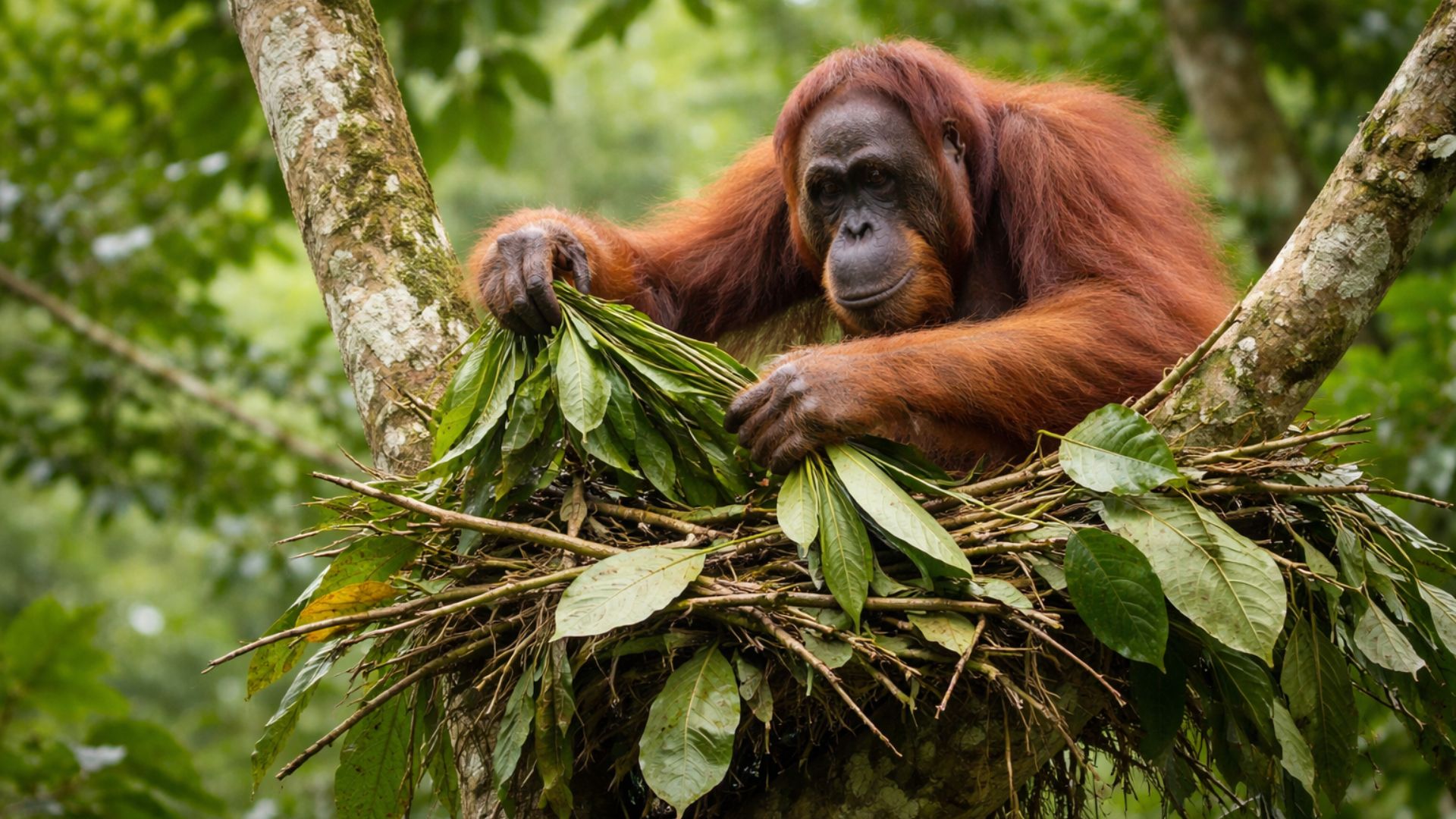
Daily Ritual in the Canopy Reveals Practical Intelligence, Strategic Rest, and Surprising Use of Leaves as Tools in a Species That Learns Through Observation and Has Been Recorded Treating Wounds with Medicinal Plants While Losing Territory in Southeast Asian Tropical Forests.
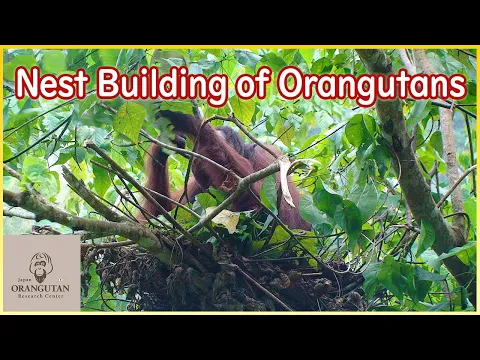
In the canopy of the Southeast Asian tropical forest, one of the best-known great apes in the world repeats a daily ritual that leaves visible clues of its presence: the orangutan prepares a new nest to sleep, weaving branches and leaves until forming a stable platform, typically built in the canopy, where the risk of predators and the discomfort of the ground decrease.
This routine is not a whim, but part of a survival strategy that combines safety, thermal comfort, and energy conservation in an environment where each movement is costly.
New Nest Every Night and Life in the Canopy
The frequent construction of nests is connected to another striking trait of the species: the predominantly solitary life.
-
He started running at 66 years old, broke records at 82, and is now a subject of study for having a metabolic age comparable to that of a 20-year-old, in a case that is intriguing scientists and inspiring the world.

-
Oldest tree on the planet reappears after 130 years of searches: Wattieza, 385 million years old, was 10 meters tall and had no leaves or seeds; Gilboa fossils in New York solved the mystery in 2007.

-
A 48-square-meter house assembled in hours with 4,000 bricks made of recycled plastic that does not absorb moisture, has natural thermal insulation, and costs less than 90,000 reais in a complete kit.

-
Luciano Hang revealed that Havan’s air fleet has already accumulated more than 20,000 landings, 10,000 flight hours, and 6 million kilometers traveled, and he says that without the planes, the company would never have grown so quickly.


Unlike other great apes that spend the day in large groups, many orangutans feed and move more independently, and the nightly “room” at the top of the trees becomes a center for rest and protection.
In regions with taller forests, these nests can be built well above the ground, and the choice of location depends on factors such as branch stability, leaf coverage, and proximity to food.
What seems like just an improvised bed gains complexity when observed closely.
Research in primatology describes nests with layers, reinforcements, and details that improve insulation and reduce discomfort, such as “lining” with softer leaves.

The ability to repeat the process night after night, with speed and precision, requires spatial memory, coordination, and environmental awareness, as well as the selection of appropriate materials to support the animal’s weight.
Learning from Mother and Behavior Transmitted by Observation
This sophistication does not come ready-made.
Studies on behavioral development show that infants spend years alongside their mothers, during which they learn routes, food sources, and techniques through observation.
The nest-building process is a classic example: young ones observe, pay attention, and gradually attempt to reproduce the architecture with errors and adjustments, until they gain autonomy to build reliable platforms.
In practice, the “manual” for the nest is transmitted within the mother-infant relationship, a long bond that makes the species particularly sensitive to any factors that increase the mortality of adult females.
Leaves Become Gloves, Shelter, and Tools in Daily Life
Besides sleeping high, the orangutan also transforms vegetation into tools for daily tasks.
Field observations and widely documented records in scientific literature and conservation institutions describe the use of leaves as protection for handling thorny or irritating objects, as a barrier against rain, and even as a “cloth” to clean the face and hands after eating.
These choices are easy to understand but difficult to execute without planning: one must recognize which leaf serves best for each function, harvest at the right moment, and use it without losing efficiency during movement.

Part of the scientific interest in these behaviors lies in the variation between populations.
There are known differences in the repertoire of object use and in the manner of resource exploration depending on the region and availability of plants, which supports the debate on “cultures” in non-human primates, when a group maintains consistent practices that do not appear as frequently in another.
In the case of orangutans, the very routine of building daytime nests for resting and more elaborate nighttime nests may also vary in form and frequency, depending on the environment and type of forest.
Naps During the Day and the Cost of Living in the Forest
Rest, indeed, is a central resource for the orangutan, not just at night.
A study published in Current Biology described that wild orangutans can compensate for poor nights’ sleep with naps during the day, adjusting their rest time according to environmental conditions and the effort made.
In an animal living in trees, traveling great distances in search of food, and facing variations in temperature and rain, daytime napping appears as a measurable response to more demanding days, with a direct impact on physical recovery.
Medicinal Plant Applied to Wound Surprises Researchers
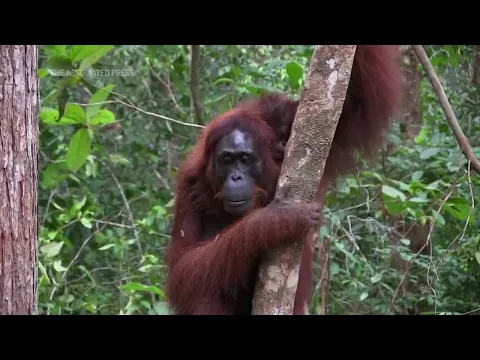
This set of skills gained an even more striking chapter when researchers recorded a rare behavior in the wild: the active treatment of a wound with a plant known for its biological properties.
A study published in Scientific Reports described the case of a Sumatran orangutan observed chewing leaves from a vine and applying the material to the injured area, like a kind of poultice, in an episode monitored by researchers in the field.
The account draws attention for bringing together apparent intention, selection of plant, and directed application to the wound, in a context that strays from common feeding actions.
The record does not turn orangutans into “doctors,” nor does it erase the differences between animal behavior and human practices, but it reinforces the complexity of the repertoire of a great primate already known for solving practical problems with what it has around.
In journalistic terms, the value of the episode lies in the fact that it was formally described by scientists, with detailed observation and peer-reviewed publication, which gives public and verifiable weight to the account.
Forests in Decline and the Direct Impact on Lifestyle
Despite the fascination that orangutans evoke, their reality off-camera is one of constant pressure.
The three currently recognized species, restricted to areas of Indonesia and Malaysia, appear in international conservation assessments as critically endangered.

Institutions such as the International Union for the Conservation of Nature associate the decline mainly with habitat loss and fragmentation, as well as hunting and conflicts with humans in areas of agricultural expansion, factors that reduce continuous territory and hinder movement through connected canopies.
When the forest fragments, life in the trees changes its rules.
The safe crossing through the canopy is interrupted, the animal begins to descend to the ground in some sections, and the energy cost of foraging for food increases.
At the same time, the removal of suitable trees for resting compromises the availability of stable nesting sites, which may force poorer choices on rainy nights or in areas with higher human activity.
Another sensitive point is the reproductive rhythm.
Orangutans have long intervals between births, and infants depend on their mothers for many years, meaning that the loss of an adult female has a prolonged impact on population replacement.
In practical terms, each forest loss and each increase in local risk affect not only the individual but also the group’s “time” to recover over generations.
The image of the orangutan as a silent and “calm” animal also often hides the daily effort behind each choice.
Eating, moving, finding the right tree, building a nest, and still reserving energy to learn and observe are tasks that depend on a functional forest.
It is in this contrast that curiosity becomes news: the same primate that improvises gloves and an umbrella with leaves, that sleeps on platforms built by itself, and that can surprise by applying plant material to a wound is the one that suffers most when the environment loses continuity.








-

-

3 pessoas reagiram a isso.