





 Portuguese
  English
  Spanish
  6 min of reading
  1 comment


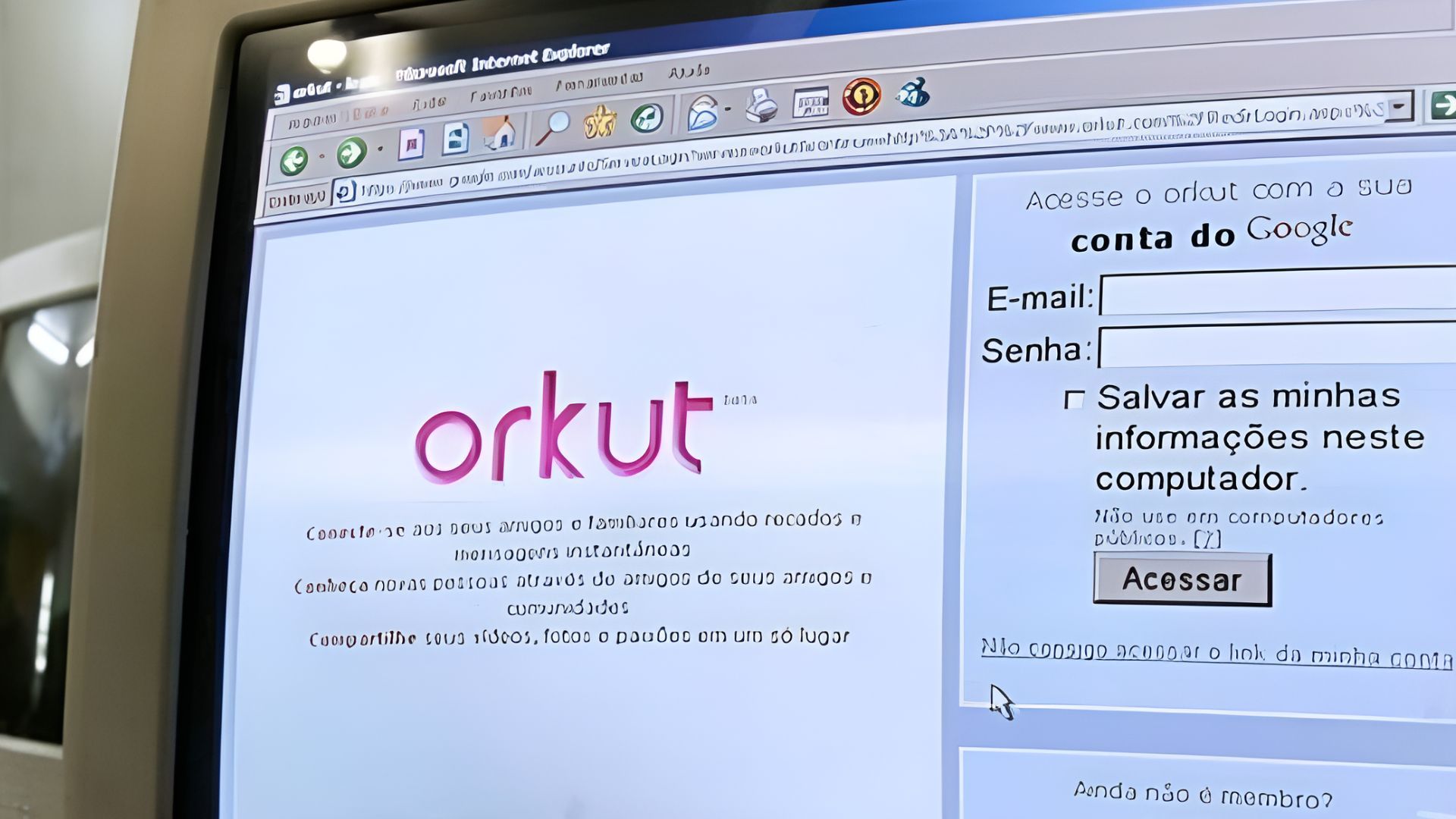


Orkut Creator Presents New Network Inspired by Friendship and Kindness, Criticizes Engagement Based on Anger and Warns About the Impact of Artificial Intelligence on Online Trust During Technology Event in Rio de Janeiro.
The Turkish engineer Orkut Büyükkökten, creator of Orkut, stated that he is working on the development of a new social network inspired by the principles that marked the platform in the 2000s, aiming to encourage connections and reduce dynamics of hostility in the online environment.
The statement was made during Voices 2025, a technology and innovation event held on December 10, 2025, at the Museum of Art of Rio (MAR), in Rio de Janeiro.
In his speech, Büyükkökten said he sees the current internet dominated by “anger, hate, and negativity”, but argued that it is still possible to rebuild healthier digital spaces.
-
With a cost per shot close to zero, the DragonFire laser could change naval warfare in 2027 and provide British ships with nearly unlimited defense against drones.

-
A British startup creates tires that generate electricity in electric vehicles when passing over potholes, speed bumps, and cracks.

-
Scientists have created robots made with living cells that have their own nervous system, swim on their own, explore the environment, and self-organize without any genetic engineering, and now they want to do the same with human cells.

-
Students create a solar-powered ambulance that operates without a plug, without fuel, and still keeps medical equipment running in remote areas.


Although he is frequently questioned about a return of Orkut, he did not confirm the relaunch of the site in the same format and name, describing the project as a new network, guided by values that prioritize human bonds.
Criticism of the Engagement Model of Current Platforms
While participating in Voices 2025, Büyükkökten presented a critical reading of the evolution of digital platforms and how, in his view, the business logic has shaped the user experience.
According to the creator of Orkut, the design of networks has come to prioritize engagement and profitability metrics, rather than favoring meaningful interactions.
In this context, he summed up the change of focus with a direct phrase: “Networks have been adjusted for engagement, not for human connection”.
The criticism included elements associated with how platforms keep users connected for long periods, such as infinite scrolling and targeted advertising.
Büyükkökten also associated the success of these mechanisms with the exploitation of intense and polarized emotions.
For him, the competition for attention has turned negative feelings into a tool to increase reach and audience retention, which tends to deteriorate the quality of conversations in digital spaces.
How the Internet Would Have “Lost Its Way,” According to the Orkut Founder
In the engineer’s view, the turning point occurred when profit became the main criterion for guiding product decisions.
He stated that, from this logic, platforms began to operate as optimized systems to keep the user engaged, even if it reinforces frictions and conflicts in interactions.
Explaining this dynamic, Büyükkökten stated: “Nothing captures attention more than anger”.
The phrase was used to illustrate how content that provokes strong reactions can gain more distribution and, consequently, fuel cycles of confrontation and aggressive discourse.
Although the criticism is broad and does not cite a specific company, the central idea presented by him is that the architecture of platforms influences collective behavior.
In this reasoning, recommendation tools, publication formats, and visibility incentives end up interfering with how people converse, group together, and perceive themselves in the digital environment.
New Network Inspired by Orkut Without a Promise of Nostalgia
Despite the recurring public interest in a return of Orkut, Büyükkökten did not treat the project as a simple revival of the past.
He indicated that the network in development is inspired by principles associated with the original experience, but in a different context and with updated concerns, especially about social health and safety.
The creator of Orkut also maintained that the so-called “light era” of the internet has not completely disappeared.
In his view, part of what existed in previous networks can be recovered if there are product choices that favor coexistence, belonging, and trust.
Addressing the goal of the new project, Büyükkökten stated that the focus would not be nostalgia, but “healing”.
The proposal, according to his speech, seeks to build a digital experience guided by values such as friendship, kindness, and compassion, without relying on hostility as a growth engine.
Epidemic of Loneliness and the Impact of Social Networks
Another emphasis of the speech was the concern with social isolation and the feeling of disconnection that, according to him, has intensified in contemporary life, even in hyperconnected environments.
Büyükkökten presented the new project as a response to this reality, citing a “epidemic of loneliness” as one of the problems he intends to address.
His reading is that the internet can both expand encounters and deepen distances, depending on how it is designed.
Instead of rewarding confrontations, the creator of Orkut stated he wants to encourage lasting relationships and less performative interactions, with space for communities and common interests.
The original Orkut became known, especially in Brazil, for bringing people together in thematic communities and for giving visibility to profiles linked to circles of friendship.
The platform was deactivated in 2014, and the question of a return has become frequent since then, driven by nostalgia movements and by the discontent of part of the public with the climate of disputes in current networks.
Artificial Intelligence, Fake Profiles, and the Crisis of Trust
Büyükkökten also addressed a topic that has been gaining space in the debate about social networks: the avalanche of content generated by artificial intelligence.
In his view, the multiplication of texts, images, and synthetic profiles can deepen distrust and make it more difficult to distinguish what is authentic from what is automated.
He described this scenario as an environment in which “it is not possible to trust what you see or who is on the other side of the screen”.
The concern includes everything from the use of AI to create false identities to the circulation of materials fabricated with a realistic appearance, which can affect personal relationships, public debates, and the credibility of platforms themselves.
Still, the engineer did not present technology merely as a threat.
Büyükkökten stated that AI can help make the internet more human, as long as it is guided by ethical values.
At this point, he associated the discussion with governance and product design choices, suggesting that tools can be used to protect users, reduce abuses, and improve the quality of interactions.
What Has Been Officially Said About the Project So Far
So far, there is no public confirmation of a launch date, final format, or official name for the network described by Büyükkökten at Voices 2025.
Previously disclosed information on the subject indicates that he has been working on a new project and that the address orkut.com had displayed, in recent years, a message from the founder himself suggesting that “he is building something new”.
In light of this, the return mentioned by the public is based more on the expectation created around a new version inspired by Orkut than on a formal announcement of a relaunch with the original platform, in the same molds.
What we have, for now, is the indication of a project in development and the declared intent to prioritize bonds and trust at a time marked by weariness on social networks.
If the promise is to rebuild less hostile digital environments and focus more on real relationships, how will this new project demonstrate, in practice, that it can break with the incentives that today make anger yield more reach than empathy?







Vai ser muito legal porque agente amava fala com as vcs com orkut. Excelente obg por volta orkut para agente muita saudade este aplicativo. Feis parte da minha vida toda a dolecesa