





 Portuguese
  English
  Spanish
  3 min of reading
  0 comments


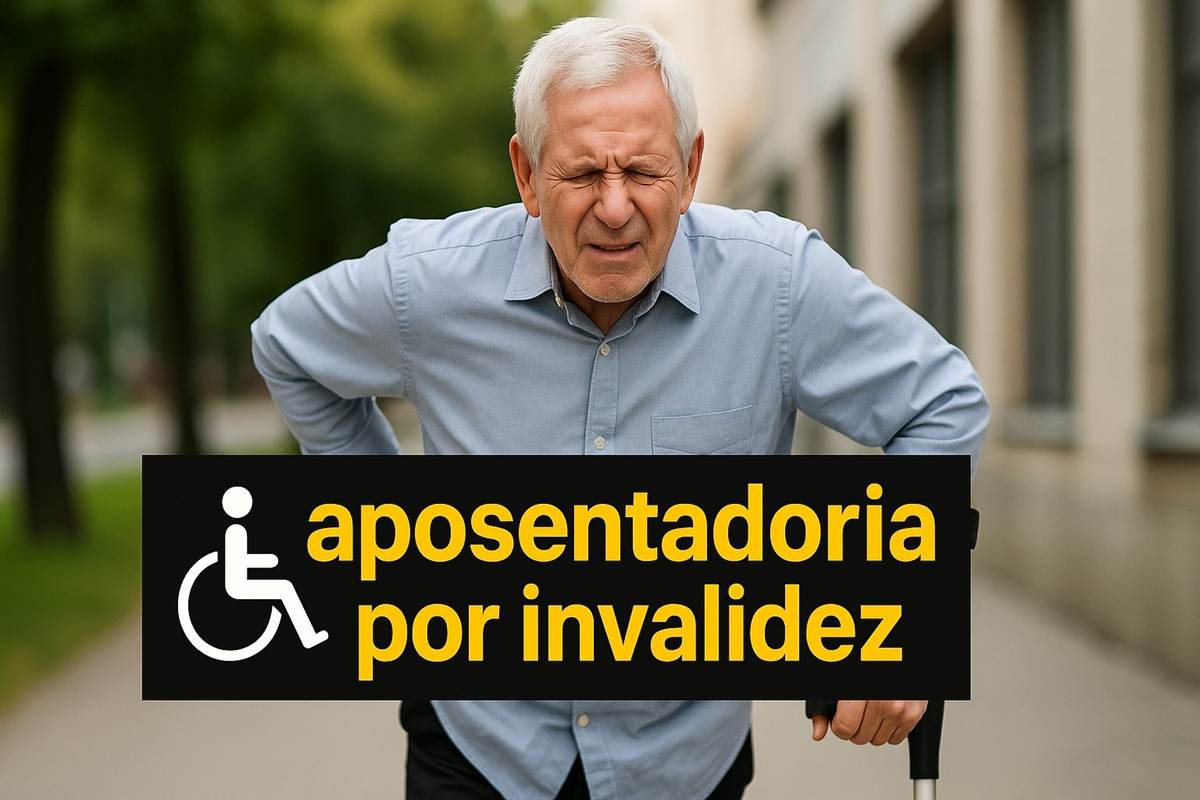
Advanced orthopedic conditions can fully limit movements, cause persistent pain, and prevent any professional activity, leading workers to seek recognition of permanent disability by INSS
The explanation about disability retirement begins with the definition itself: it is the situation in which the worker cannot perform their professional activity, cannot perform another function to replace the previous one, and also does not achieve rehabilitation.
For this to be recognized, specific reports must prove the condition, and the examination by the INSS evaluates whether there is permanent incapacity.
The topic is presented focusing on orthopedic pathologies that produce intense limitations and prevent continuity at work.
-
The new Civil Code could revolutionize marriages in Brazil with “express divorce” and changes that could exclude spouses from inheritance.

-
Banco do Brasil sues famous influencer for million-dollar debt and intensifies debate on delinquency, risks of seizure, and direct impact on Gkay’s credibility.

-
The Senate approves a bill that criminalizes misogyny, hatred, or aversion towards women, and includes the crime in the Racism Law with a penalty of up to 5 years.

-
Chamber Approves Bill That Allows Pepper Spray for Women Over 16 and Imposes Strict Rules for Purchase, Possession, and Use as Self-Defense


Conditions That Compromise Labor Capacity
The first point highlighted is severe osteoarthritis, identified as advanced osteoarthritis. This joint wear can occur in the knee, spine, hips, shoulders, and any other joint. When the deformity is significant and makes essential movements difficult, work tasks become unfeasible.
If there is proof that no possible adaptation exists, disability retirement may be indicated.
The second ailment is disabling disc herniation. The intervertebral disc acts as a shock absorber between the bones of the spine.
When the internal content dislocates and compresses the nerves, intense pain, leg weakness, and persistent numbness occur. In cases where neither rehabilitation nor surgery restore function, the limitation prevents professional performance and may justify the benefit.
Inflammatory and Structural Changes of the Spine
Ankylosing spondylitis appears as the third pathology. This chronic inflammation affects the spine and causes fusion of the vertebrae, creating what is called a bamboo spine.
Mobility becomes compromised, movements become stiff, and work activities become impossible, as the body loses the ability to adapt to simple daily demands.
Next is severe osteoporosis, characterized by pronounced bone fragility. The ease of fractures, combined with the deformities that may arise, creates a scenario of continuous risk and limits essential actions.
Structural loss hinders mechanical efforts, and given the impossibility of recovering bone strength, retirement may be considered.
Irreversible Shoulder Injuries and Disorders Affecting the Bones
The rotator cuff syndrome with total irreversible rupture is presented as the fifth condition. The cuff is made up of four muscles responsible for lifting and rotating the shoulder.
In some cases, inflammations progress to severe ruptures, and even surgery does not restore functionality. When the limitation prevents raising, rotating, or supporting the arm, professional activities become unfeasible.
Paget’s disease in an advanced stage occupies the sixth position. The bone alteration causes fragility, deformities, chronic pain, and weakness, elements that deteriorate physical capacity.
Structural damage makes basic motor efforts difficult and reduces pain tolerance, which directly interferes with performance during work.
Prominent Deformities and Hip Compromise
Severe deformities in the spine appear as the seventh category. Pronounced scolioses produce deviations that hinder wide movements.
Pronounced kyphosis leaves the posture inclined and leads to loss of balance. When the curvature prevents simple gestures such as bending, turning, or carrying objects, labor function becomes impractical.
Avascular necrosis of the femoral head concludes the list. It is the death of bone in the hip region. The structural damage causes continuous pain, joint deformity, and severe limitation for walking, sitting, or standing for long periods. In situations where rehabilitation and surgery do not improve function, the incapacity is considered definitive.
Evaluation and Criteria for the Benefit
The confirmation of any of these conditions requires regular medical follow-up. The documentation must demonstrate that the disease is serious, limits professional exercise, and does not allow for rehabilitation.
The evaluation by INSS analyzes the reports presented and verifies whether the attempted treatments, including surgeries, have failed to restore functional capacity.
The eight described pathologies are among the main orthopedic causes that can lead to disability retirement.
Other diseases may also result in benefits, but each case depends on clinical evaluation, the progression of the condition, and the expert analysis.
Medical advice is essential to clarify doubts and guide those seeking to understand whether they meet the required criteria.









-

-

2 pessoas reagiram a isso.