





 Portuguese
  English
  Spanish
  6 min of reading
  1 comment


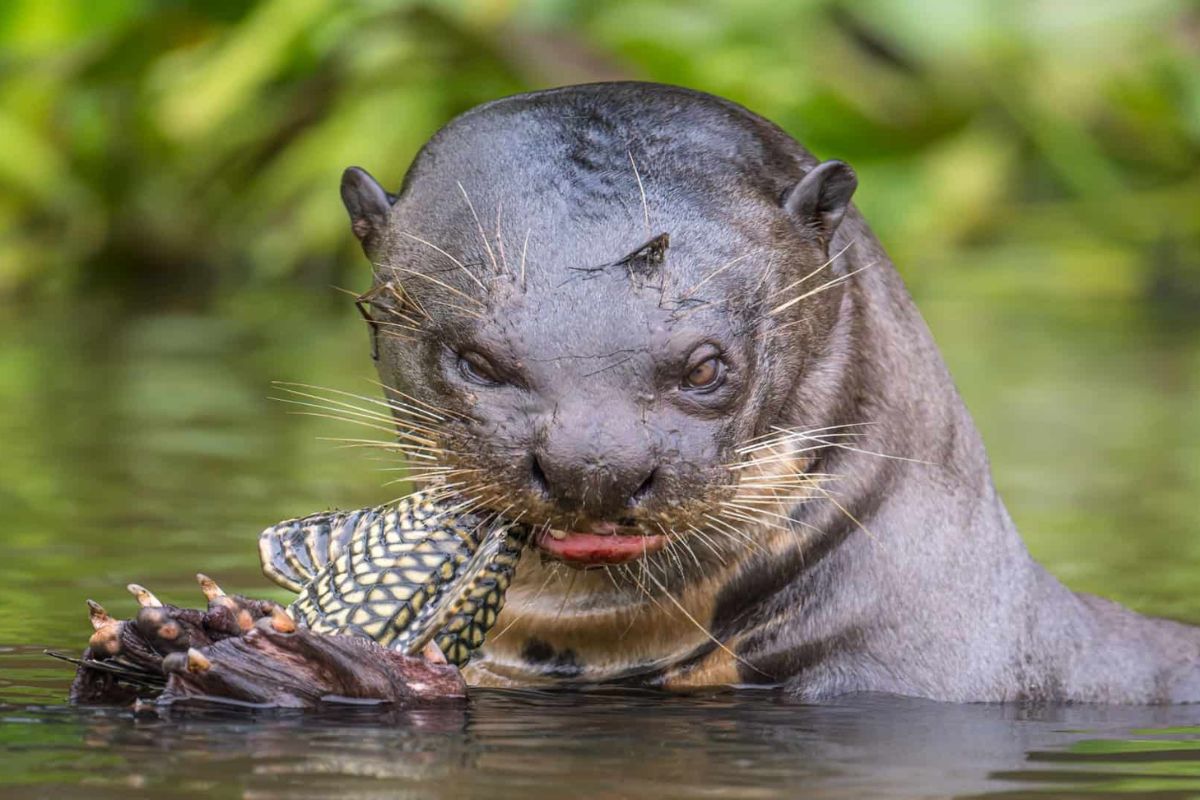


In The Pantanal, Giant River Otters Form Strong Groups of Up to 12 Individuals and, in River Disputes, Surround Jaguars with High-Pitched Screams and Bites. Records Show Groups Taking Down Caimans and a Stand-Off with the Jaguar Ousado for Almost Three Hours. Their Courage Contrasts with Threats Such as Habitat Loss and Pollution.
The Giant River Otters Have Become Protagonists in a Scene That Seems Exaggerated for Those Who Imagine the Food Chain as a Straight Line: in Disputes in The Pantanal Rivers, Cooperative Groups Surround Jaguars, Sustaining a Barrier of Intimidation for Hours and Even Taking Down Caimans When the Opportunity Arises.
The Most Iconic Episode Involves the Jaguar Ousado, Which Attempted to Approach a Territory of Giant River Otters in The Canal do Caxiri and Was Repelled for Almost Three Hours. The Same Bravery That Challenges Predators Explains Why The Species Draws Attention as a Force of River Ecosystems, But Also Why Giant River Otters Are Near Extinction Due to Habitat Loss, Pollution and Conflicts with Humans.
Giant River Otters at the Center of Rivers: More than Just “Residents,” a Force of the Ecosystem
The Giant River Otter, Like the Jaguar and the Caiman, Is Described as One of the Protagonist Animals of Brazil’s Aquatic Ecosystems.
-
A Brazilian millionaire couple restores a farm over 150 years old in the interior of São Paulo and transforms the historic property with Portuguese tiles, antique furniture, and new spaces into a refuge that blends tradition, comfort, and sophistication.

-
Submerged city in a lake in Minas reveals intact streets, preserved vehicles, and houses after more than 60 years, impressing divers.

-
Yellowstone has started to rise again in an area of the caldera, and the movement rekindles fears surrounding the U.S. supervolcano, as scientists monitor the deformation and try to understand what is happening underground.
-
Woman arrested after receiving $1.2 million due to banking error and not returning the amount.


What Puts Giant River Otters in The Spotlight Is Their Fearless Behavior: In The Pantanal and The Amazon, They Do Not Operate Merely as a Constant Presence in The Rivers, but as A Force That Commands Respect from The Most Feared Predators in The Continent.
This Combination of Charisma and Presence Helps Explain Why Giant River Otters Have Been Gaining Attention Among Researchers and Nature Enthusiasts Around the World.
The Curiosity Is Not Just Aesthetic: The Interest Grows Because The Animal, Besides Being Strong, Plays an Important Role in River Ecosystems, in Rich and Highly Competitive Environments.
Who Are The Giant River Otters: The Largest Otter in The World and a Body Made for The River
Scientifically Known as Pteronura brasiliensis, The Giant River Otter Can Reach Up to 1.8 Meters in Length, Being Presented as The Largest Otter Species in The World.
It Is A Semi-Aquatic Mammal, Adapted to River Environments and Associated with Large Basins and River Networks in South America.
The Text Also Places The Species in Large Water Systems of The Continent, Mentioning Occurrences in Rivers Related to The Basins of The Amazon, Orinoco, and La Plata.
This Reinforces A Central Point: Giant River Otters Depend on Rivers and Preserved Banks, Which Makes Them Sensitive to Any Intense Human Alteration in The Environment.
Aquatic Packs: Why Giant River Otters Confront Jaguars and Change The Game
What They Lack in Individual Size Compared to A Large Feline, Giant River Otters Compensate with A Rigid Social Structure and Powerful Vocalizations.
While The Jaguar and The Pantanal Caiman Are Described as Solitary Hunters, Giant River Otters Operate in Family Groups of Up to 12 Individuals, Functioning as A Highly Efficient “Aquatic Pack.”
This Organization Alters The Balance of Risk. A Solitary Predator Weighs Costs and Benefits. When It Encounters a Noisy, Coordinated, and United Group, the Costs Can Become Too High, Even for A Jaguar.
This Is Why The Strategy of Giant River Otters Tends to Be Offensively Appearing But Defensively Logical: Make The Attacker Back Down Before The Confrontation Becomes A Real Attack.
The Tactic That Frightens: Cooperation, Intimidating Shouts and Surrounding from Multiple Angles
The Defense Strategy of Giant River Otters Is Based on Cooperation. When A Group Senses The Presence of A Jaguar on The Bank, The Reaction Described Is Not Fleeing.
On The Contrary, Giant River Otters Approach, Emitting High-Pitched Screams and Intimidating Huffs, Signaling to The Predator That The Cost of An Attack Will Be High.
In Shallow or Deep Waters, Giant River Otters Surround The Opponent and Attack from Different Angles with Bites, Creating A Psychological and Physical Barrier That Is Difficult to Break.
The Reported Pattern Is Consistent: Faced with the Surrounding and Collective Pressure, The Jaguar Tends to Retreat and Return to The Forest.
The Case of Ousado in The Pantanal: Almost Three Hours of Pressure from The Giant River Otters
In The Canal do Caxiri, in The Pantanal, The Jaguar Known as Ousado Attempted to Approach A Territory of Giant River Otters and Was Repelled. The Confrontation Lasted Almost Three Hours, with The Giant River Otters Maintaining A Defensive Barrier Described as Impassable.
Reports Associated with The Giant River Otter Project Indicate That Interactions Like This Help Understand Ecological Balance.
The Conclusion Is Direct and Uncomfortable for Those Who Rely Solely on Raw Strength: It Is Not Always the Animal with The Strongest Bite That Prevails, but The One That Maintains The Best Group Strategy.
It Is Not Just Bravado: Giant River Otters Also Take Down Caimans in The River

Although Fish Represent The Largest Part of Their Diet, Giant River Otters Are Described as Opportunity-Driven and Ferocious Predators.
Groups Have Been Seen Taking Down Small to Medium-Sized Caimans, Confirming That The “Aquatic Pack” Serves Not Only for Defense.
The Reported Technique Is Objective. Giant River Otters Attack The Tail of The Reptile or Soft Parts to Immobilize It and Then Use Powerful Jaws to Pierce The Armor.
This Ability to Face An Armored Animal Is Presented as The Reason for The Regional Nickname: In Many Areas, Giant River Otters Are Referred to as “Water Jaguars.”
Water Sentinels: What The Presence of Giant River Otters Indicates About The Environment
Beyond The Confrontation, The Text Highlights An Ecological Function: Giant River Otters Are Described as Sentinels of Water Quality.
When They Are Present, It Signals A Healthy Ecosystem, with Conditions That Support Top Predators and Complex Food Chains.
The Problem Is That This “Good News” Is Becoming Increasingly Rare. Human Pressure Is Indicated as A Factor That Has Been Drastically Reducing Original Populations, Affecting The Future of The Species and The Stability of The Ecosystems That They Help Sustain.
Why Giant River Otters Are Near Extinction: Habitat Loss, Mercury and Conflict with Fishermen
Despite All Their Bravery, The Text Clearly States That There Are Threats That Screams Cannot Avert. Among The Main Factors Cited Are Habitat Loss, Pollution of Rivers by Mercury From Gold Mining, and Conflicts with Fishermen, Which Place The Species in A Vulnerable Situation.
The Scenario Is Broadened by Other Associated Pressures: Deforestation, Pollution of Rivers and Lakes, Fragmentation of Natural Areas, and Illegal Hunting, Either for Fur or As A Result of Conflicts.
Together, These Elements Explain Why Giant River Otters May Dominate A Confrontation in The River but Still Be Near Extinction When The Problem Is The Ongoing Human Impact.
What Is Being Done: Monitoring, Education and Protecting Riverbanks
The Mentioned Response Involves The Work of Environmental Organizations and Researchers in Monitoring and Education Programs, Focusing on Reducing Conflict and Increasing Protection.
Among The Strategies Cited Are Creating Protected Areas, Restoring Riverbanks, and Sustainable Management Projects for Water Resources.
Do You Think That Giant River Otters Should Be Treated As A Symbol of Conservation in The Pantanal, Even When They Come into Direct Conflict with Fishermen and Other Human Activities in The Rivers?





Deve