





 Portuguese
  English
  Spanish
  4 min of reading
  2 comments


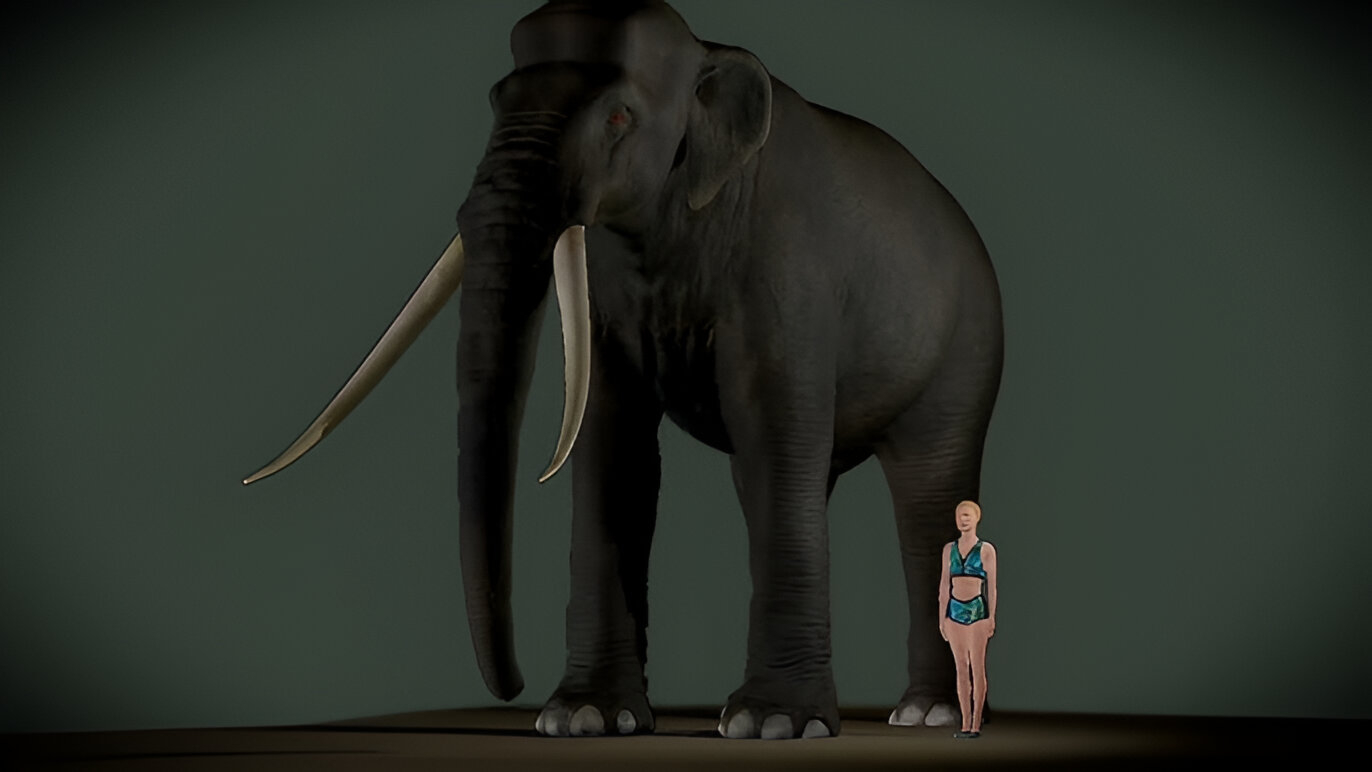


Fossil Found in South Asia Indicates That the Palaeoloxodon Namadicus May Have Been the Largest Elephant in History, Surpassing Mammoths and African Elephants.
The debate about which was the largest elephant to ever walk the Earth has gained a new protagonist in recent decades. For a long time, the symbolic title was shared between the modern African elephant and large prehistoric mammoths. However, fossil evidence found in South Asia has placed an even more impressive candidate at the center of the scientific discussion: the Palaeoloxodon namadicus, an extinct elephant that may have reached dimensions never before recorded among proboscideans.
Bone remains discovered mainly in India and adjacent regions indicate an animal of colossal proportions, capable of surpassing in mass, height, and body volume any known living or extinct elephant with relative certainty. Although estimates are still being debated, the numbers associated with this species catch the attention even among paleontologists accustomed to prehistoric giants.
What Was the Palaeoloxodon Namadicus
The Palaeoloxodon namadicus belongs to the group of straight-tusked elephants, known as Palaeoloxodon, which inhabited vast areas of Eurasia during the Pleistocene. Unlike mammoths, adapted to cold climates, this elephant lived in tropical and subtropical regions, in open environments and forests of South Asia.
-
Marine fossils found at over 8,800 meters altitude on Everest and in large mountain ranges have proven that entire continents move, oceans disappear, and tectonic plates collide over millions of years, revolutionizing science in the 20th century.
-
What if the Sun disappeared suddenly? Simulation shows Earth in darkness within minutes, extreme cold, and rapid collapse of life on the planet.

-
A 2,400-year-old iron foundry has been discovered in Senegal with 100 tons of slag, 35 furnace bases, and signs of nearly eight centuries of continuous metallurgical activity.

-
Four humans are flying towards the Moon inside the Orion capsule launched by the SLS rocket, and on April 6, Artemis II will disappear behind the far side of the Moon without communication with Earth for nearly an hour.



The species existed until about 24,000 years ago, coexisting for a time with archaic humans and possibly with the first Homo sapiens who arrived in the region.
Its extraordinary size may have been an adaptation to environments rich in vegetation, where the large size offered competitive advantages and protection against predators.
Estimated Dimensions That Defy Logic
The most accepted estimates suggest that the Palaeoloxodon namadicus could reach over 4.5 meters in height at the shoulders, easily surpassing the modern African elephant, which rarely exceeds 4 meters.
In terms of weight, some studies suggest values between 6 and 7 tons, while bolder—and still controversial—hypotheses suggest even greater body mass.
The tusks are also impressive. Fossil fragments indicate long, thick, and slightly curved tusks, with lengths that could approach or even exceed 3 meters, making them not only defensive weapons but also tools for digging and manipulating the environment.
Direct Comparison With Modern Elephants and Mammoths
When compared to the African elephant, currently the largest living land animal, the Palaeoloxodon namadicus stands out in practically all physical parameters.
Even the largest recorded African males, weighing about 6 tons, seem smaller when confronted with the average estimates of the extinct Asian elephant.
In relation to mammoths, such as the Mammuthus Trogontherii or the Mammuthus Primigenius, the difference is also significant. While some mammoths reached high weights, their body structure was more compact, adapted to the cold, while the Palaeoloxodon had a taller, longer, and bulkier body.
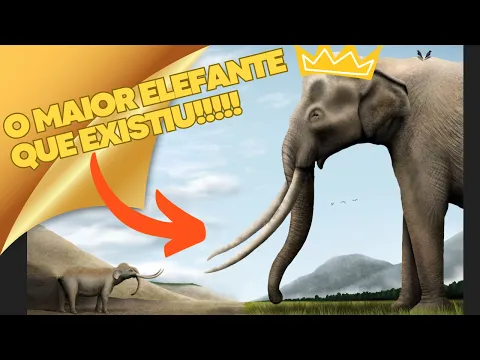
This comparison reinforces the hypothesis that it was not just a large elephant, but possibly the largest terrestrial mammal non-sauropod that ever existed.
The Ecological Role of an Absolute Giant
An animal of this size would have had a profound impact on the ecosystem in which it lived. The Palaeoloxodon namadicus likely consumed hundreds of kilograms of vegetation daily, modifying landscapes, creating clearings, and directly influencing the distribution of plants and other animals.
Just as modern elephants are considered “ecosystem engineers,” this prehistoric elephant may have shaped entire environments, influencing waterways, migration routes, and the very structure of vegetation.
Why Is There Still Scientific Debate
Despite its impressive size, the status of “largest elephant in history” is not yet absolute consensus. This is because many fossils attributed to the Palaeoloxodon namadicus are fragmentary, requiring reconstructions based on comparisons with related species.
Moreover, there are debates about the correct identification of some bones, which may belong to exceptional individuals or even to closely related species. Still, even in the most conservative estimates, the Palaeoloxodon namadicus remains at the top of the list of the most massive elephants ever known.
A Colossus That Redefines the Limits of Megafauna
Regardless of the controversies, the Palaeoloxodon namadicus represents the pinnacle of terrestrial megafauna. Its existence shows that the Earth once supported mammals much larger than anything alive today, challenging our perception of the biological limits of the planet.
More than just a record-holder, this extinct elephant symbolizes an era when giants dominated entire continents and reinforces how the extinction of megafauna radically transformed modern ecosystems.
With each new fossil studied, the Palaeoloxodon namadicus solidifies itself not only as a contender for the title of largest elephant in history but also as one of the greatest symbols of the lost grandeur of terrestrial life.









El elefante africano más grande cazado fue un ejemplar de fines del siglo XIX que medía 4 metros de alto y pesaba 10 toneladas(FAUNA, ebciclopedia de los animales). El mamút americano se calcula un peso de hasta 15 toneladas y más de 4 metros de alto. El mamífero de tierra más grande que ha existido es el llamado jirafa- rinoceronte(se me olvidó el nombre) que pesaba entre 20 a 30 toneladas, medía 6 metros de alto y 8 de largo. Se deduce que la información es sesgada, incompleta y con falta de mucha información para comparar con seriedad. Teniendo internet con toda la información a mano no debería pasar eso. Saludos desde Chile
Es enserio fabuloso no eso es son buenos 🐆🐘